
Cognitive · Neuropeptide
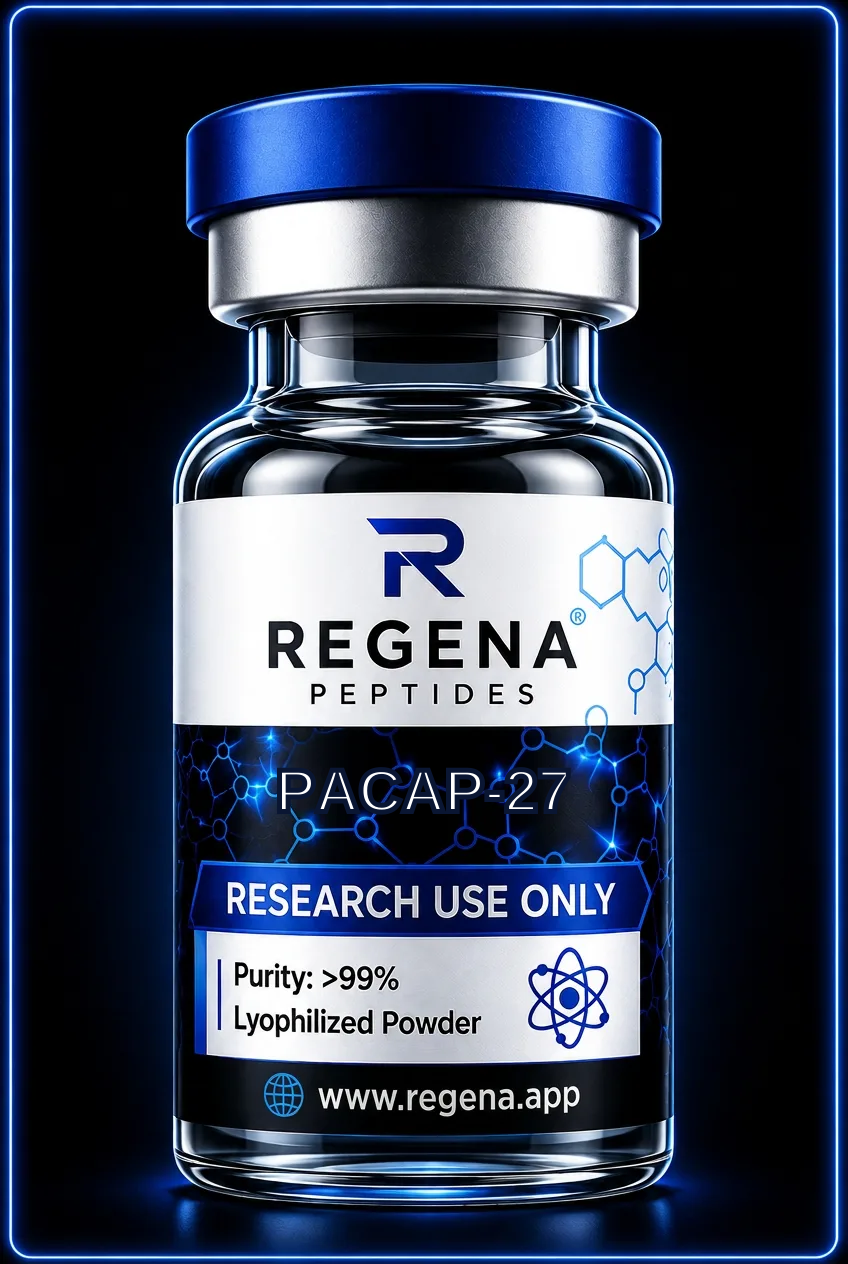
PACAP-27
Also known as Pituitary adenylate cyclase-activating polypeptide-27
PACAP-27 is a 27-amino-acid fragment of PACAP-38, sharing sequence homology with VIP and acting on the same family of receptors.
- Length
- 27 amino acids
- Half-life
- Not well characterised, but presumed to be very short.
- Mechanism
- Acts as an agonist at PAC1, VPAC1, and VPAC2 receptors, though with generally lower affinity for PAC1 than PACAP-38.
- Studied in
- Utilised as a tool compound to differentiate signaling pathways related to the VIP/PACAP family of receptors in neurological and endocrine systems.
About PACAP-27
PACAP-27 represents the N-terminal 27 amino acids of PACAP-38 and is structurally homologous to Vasoactive Intestinal Peptide (VIP). It is a naturally occurring, C-terminally amidated peptide found alongside the more abundant PACAP-38 form. Its distribution in tissues mirrors that of PACAP-38, though its relative concentration can vary.
Like its longer counterpart, PACAP-27 binds to PAC1, VPAC1, and VPAC2 receptors, activating adenylyl cyclase. However, its binding affinity for the PAC1 receptor is lower than that of PACAP-38. This differential affinity makes it a useful pharmacological tool for dissecting the specific contributions of PACAP receptors versus VIP receptors in various experimental systems.
Laboratory notes
- PACAP-27 generally exhibits a shorter biological half-life than PACAP-38 in biological systems.
- Its high homology with VIP means that cross-reactivity must be considered when interpreting results in systems expressing both VPAC and PAC1 receptors.
- Reconstituted solutions should be handled using low-protein-binding tubes and pipette tips to prevent adsorption and loss of material.
Storage and reconstitution basics: storage guide.
Questions about PACAP-27
How does PACAP-27 activity compare to VIP?
PACAP-27 and VIP have similar affinities for VPAC1 and VPAC2 receptors, but PACAP-27 also activates the PAC1 receptor, which VIP binds to with very low affinity.
Is PACAP-27 as potent as PACAP-38?
Generally, PACAP-27 is considered less potent than PACAP-38, especially in systems where the PAC1 receptor mediates the primary response.
What is the primary use of PACAP-27 in research?
It is often used in comparative studies with PACAP-38 and VIP to elucidate the specific roles of the PAC1, VPAC1, and VPAC2 receptors in a given biological process.
Is PACAP-27 for human use?
No. It is supplied strictly for in-vitro laboratory research and is not for human or animal consumption.
Related research peptides
All products are sold for laboratory research use only. Not for human consumption, not a medicine, not for diagnosing, treating or preventing any condition.