
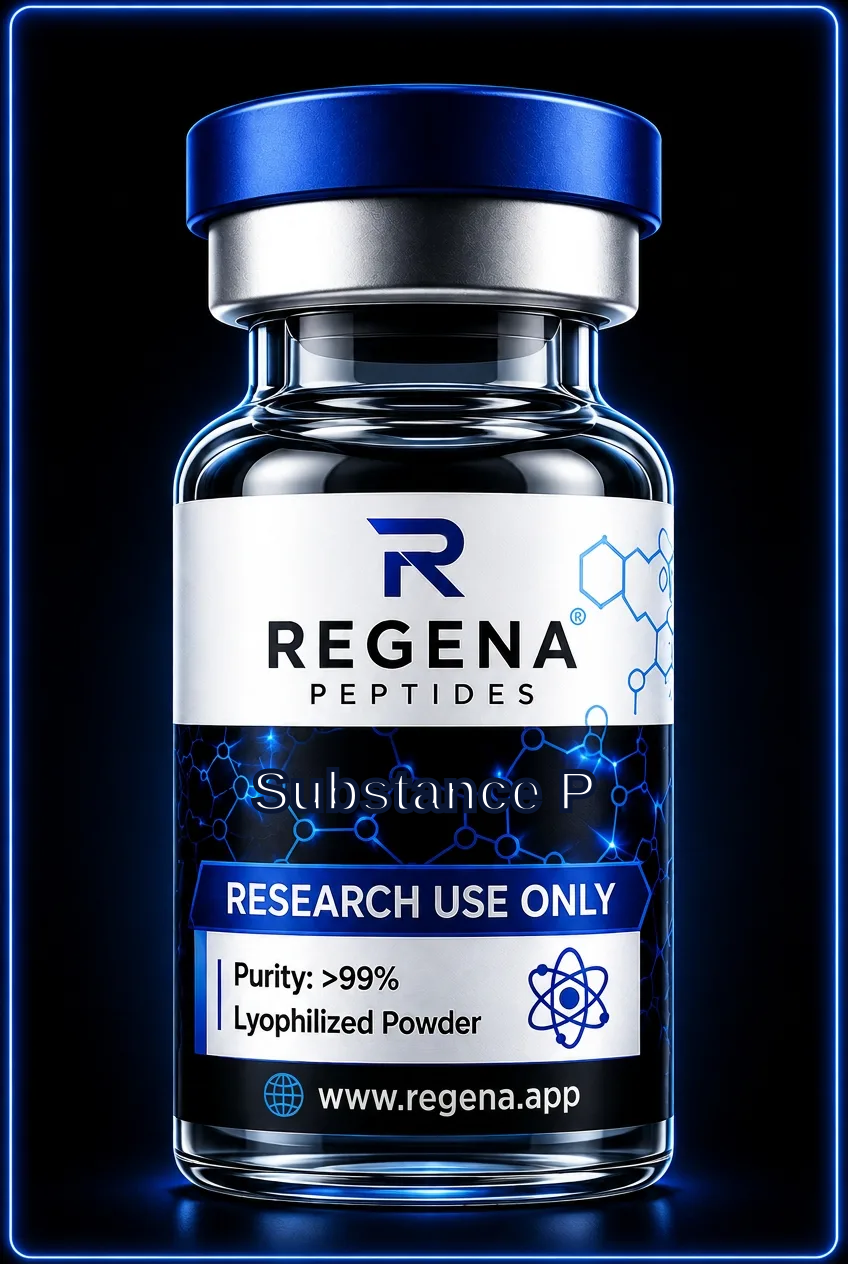
Cognitive · Neuropeptide fragment
Substance P (1-4)
Also known as SP(1-4)
An N-terminal tetrapeptide fragment of Substance P, SP(1-4) is studied for its biological activities independent of the classical NK-1 receptor.
- Length
- 4 amino acids
- Half-life
- Not well characterised
- Mechanism
- This N-terminal fragment of Substance P interacts with cellular targets distinct from the NK-1 receptor, modulating specific signaling pathways.
- Studied in
- It is investigated in cellular models to understand the non-tachykinin activities of Substance P fragments, including their effects on specific cell types.
About Substance P (1-4)
Substance P (1-4) is a tetrapeptide, Arg-Pro-Lys-Pro, that constitutes the N-terminal sequence of the full 11-amino acid tachykinin, Substance P. Unlike the full-length peptide, whose canonical actions are mediated by the neurokinin-1 (NK-1) receptor, this fragment does not bind with high affinity to tachykinin receptors. Instead, it is understood to have its own distinct biological profile and cellular targets.
Research into Substance P (1-4) focuses on its non-classical, non-tachykinin functions. In laboratory studies, it is used to investigate cellular mechanisms that are modulated by N-terminal fragments of Substance P. These lines of inquiry are separate from the study of pain and inflammation associated with full-length Substance P and NK-1 receptor activation, providing a tool to explore alternative signaling roles.
Laboratory notes
- This fragment lacks the C-terminal sequence required for high-affinity binding to and activation of the NK-1 receptor.
- Biological effects are highly concentration-dependent and cell-type specific.
- Experiments often use full-length Substance P and NK-1 antagonists as controls to differentiate fragment-specific effects.
Storage and reconstitution basics: storage guide.
Questions about Substance P (1-4)
Does Substance P (1-4) activate the NK-1 receptor?
No, it lacks the necessary C-terminal domain and does not effectively bind to or activate the NK-1 receptor. Its activities are considered non-tachykininergic.
What is the purpose of studying this specific fragment?
It allows researchers to investigate whether the N-terminal portion of Substance P has intrinsic biological activities that are separate from the well-known functions of the full-length peptide.
What is the sequence of this peptide?
The amino acid sequence is Arg-Pro-Lys-Pro, corresponding to the first four residues of Substance P.
Is Substance P (1-4) for human use?
No. It is supplied strictly for in-vitro laboratory research and is not for human or animal consumption.
Related research peptides
All products are sold for laboratory research use only. Not for human consumption, not a medicine, not for diagnosing, treating or preventing any condition.