
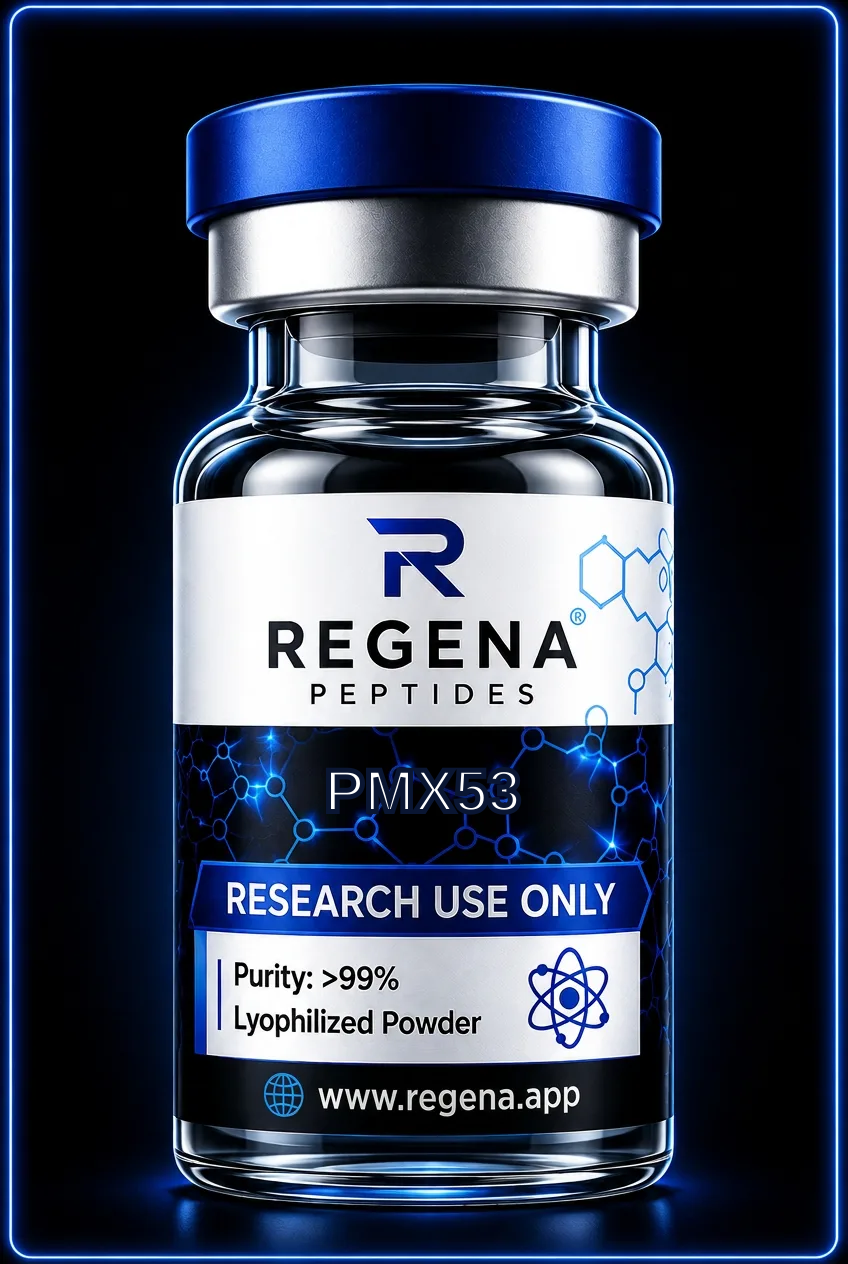
Immune · Cyclic peptidomimetic C5aR1 antagonist
PMX53
Also known as PMX-53
A cyclic, C5a-derived peptidomimetic used to investigate C5aR1 signalling and complement-dependent cell responses.
- Length
- 6 amino acid residues
- Half-life
- Not well characterised
- Mechanism
- PMX53 antagonises complement C5a receptor 1 (C5aR1/CD88), limiting C5a-dependent receptor activation and downstream signalling. Its activity is species-dependent and should not be assumed to transfer between receptor orthologues.
- Studied in
- Laboratory studies use PMX53 in receptor-binding assays, neutrophil chemotaxis experiments and animal models investigating C5aR1-dependent inflammatory signalling.
About PMX53
PMX53 emerged from structure–activity studies of the receptor-interacting C-terminal region of C5a. Its commonly reported structure is Ac-Phe-[Orn-Pro-D-Cha-Trp-Arg], where D-Cha denotes D-cyclohexylalanine and the bracketed segment forms a lactam ring. Cyclisation links the ornithine side-chain amino group to the terminal arginine carboxyl group. This produces a constrained six-residue peptidomimetic rather than a miniature, naturally occurring complement fragment, with an acetylated phenylalanine outside the ring.
Research applications centre on separating C5aR1-dependent responses from other components of complement activation. Relevant readouts include intracellular calcium mobilisation, leukocyte migration, receptor binding and downstream kinase signalling. PMX53 is not a general complement inhibitor: it does not directly prevent C3 or C5 cleavage. Differences between species, receptor expression levels and assay conditions can alter apparent antagonist potency, making matched receptor controls particularly important in comparative laboratory studies.
Laboratory notes
- Confirm identity, purity, counterion and peptide content from lot-specific analytical documentation before comparing preparations.
- Validate solubility in the chosen assay buffer and include a matched vehicle control.
- Check activity against the receptor orthologue used; include viability and receptor-negative controls when interpreting functional inhibition.
Storage and reconstitution basics: storage guide.
Questions about PMX53
What does D-Cha mean in the PMX53 sequence?
D-Cha is D-cyclohexylalanine, a non-proteinogenic amino acid with a hydrophobic cyclohexyl side chain.
Does PMX53 stop complement cleavage?
Its principal experimental target is C5aR1, downstream of C5 cleavage. It is not classified as a C3 or C5 convertase inhibitor.
Why are species-matched controls necessary?
C5aR1 sequence differences can substantially change antagonist recognition, so activity established with one receptor orthologue does not establish equivalent activity with another.
Is PMX53 for human use?
No. It is supplied strictly for in-vitro laboratory research and is not for human or animal consumption.
Related research peptides
All products are sold for laboratory research use only. Not for human consumption, not a medicine, not for diagnosing, treating or preventing any condition.