
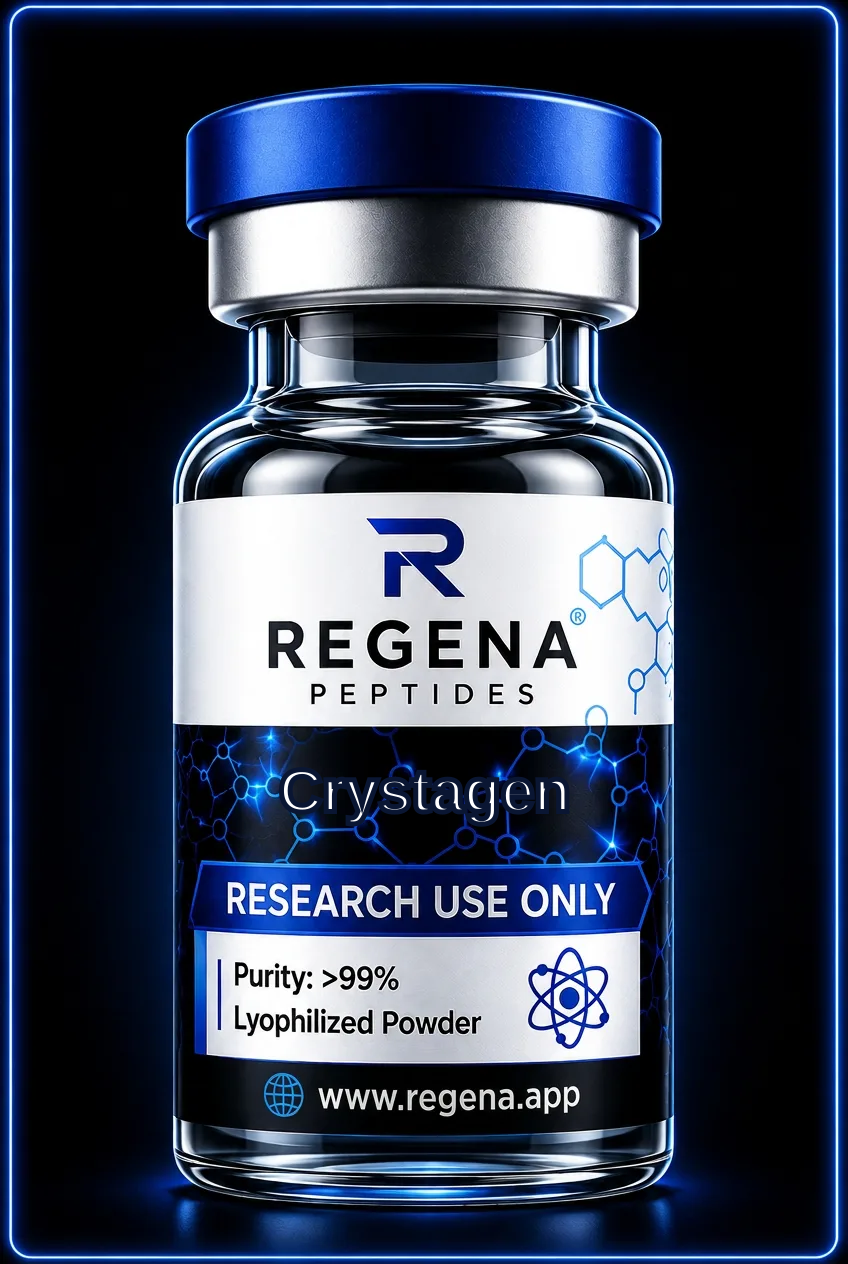
Immune · Synthetic tripeptide studied as a peptide bioregulator
Crystagen
Also known as EDP; Glu-Asp-Pro
An acidic tripeptide, Glu-Asp-Pro, investigated in exploratory immune-related models without an established receptor target.
- Length
- 3 amino acids
- Half-life
- Not well characterised
- Mechanism
- A specific receptor and a reproducible receptor-mediated signalling mechanism have not been established. Published bioregulator studies describe changes in cellular activity and gene expression, but these observations do not establish a direct molecular target.
- Studied in
- Exploratory cell-culture and animal studies investigate immune-associated cellular responses, although independent mechanistic validation remains limited.
About Crystagen
Crystagen is generally identified in peptide bioregulator literature as the synthetic tripeptide glutamyl-aspartyl-proline, abbreviated EDP. Its two acidic residues distinguish it chemically from many positively charged signalling peptides. The name belongs to a literature on short synthetic peptides associated with tissue-derived peptide preparations, rather than a well-established family of receptor-selective ligands. Identity should therefore be anchored to an explicit sequence and analytical specification, not the product name alone.
Research descriptions link EDP with immune-associated cellular activity and regulation of gene expression. However, a defined binding partner, quantitative receptor affinity and a broadly reproduced signalling pathway have not been established. Experimental work should distinguish sequence-specific effects from changes caused by medium composition, pH or impurities. Comparisons with scrambled-sequence controls and constituent amino acids can help assess whether an observed response depends on the intact tripeptide rather than its breakdown products.
Laboratory notes
- Confirm EDP sequence, terminal chemistry and counterion using the supplier's analytical documentation; the research name alone is insufficient.
- Check pH after dissolution and dilution, particularly in weakly buffered assays, because the sequence contains two acidic side chains.
- For immune-cell assays, include endotoxin testing and matched vehicle controls to exclude non-peptide stimulation.
Storage and reconstitution basics: storage guide.
Questions about Crystagen
Does Crystagen have an established receptor?
No specific receptor has been convincingly established. Cellular responses should not be presented as evidence of receptor binding without direct binding and functional validation.
Is EDP a protein fragment with a universally accepted parent sequence?
The bioregulator designation does not establish a uniquely verified parent protein. The defined chemical identity is the Glu-Asp-Pro tripeptide.
Which controls are useful for sequence-specific experiments?
Useful controls include vehicle, a composition-matched scrambled peptide, the constituent amino acids and an assessment of peptide integrity during incubation.
Is Crystagen for human use?
No. It is supplied strictly for in-vitro laboratory research and is not for human or animal consumption.
Related research peptides
All products are sold for laboratory research use only. Not for human consumption, not a medicine, not for diagnosing, treating or preventing any condition.