
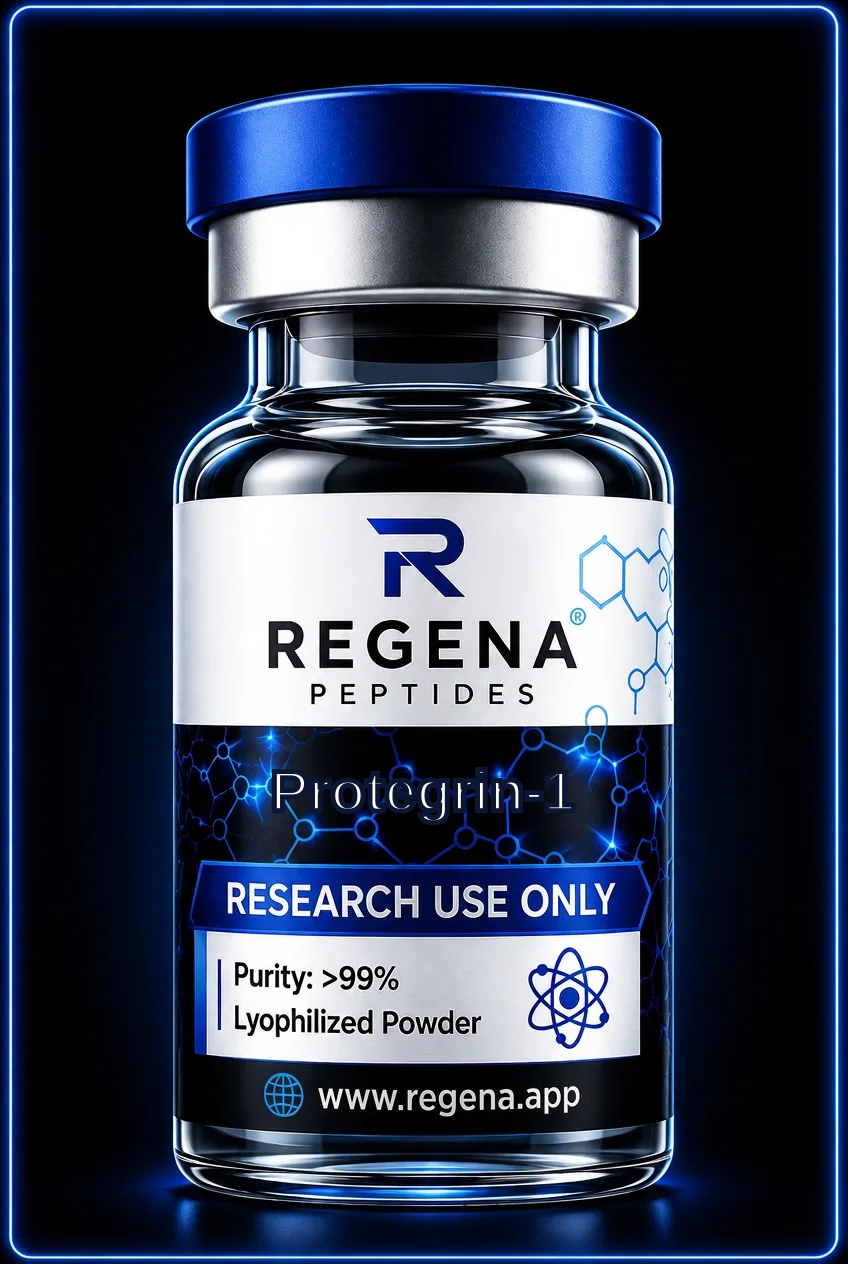
Antimicrobial · Antimicrobial Peptide (AMP)
Protegrin-1
Also known as PG-1
A porcine-derived AMP with a rigid beta-sheet structure, known for its potent microbicidal activity through membrane pore formation.
- Length
- 18 amino acids
- Half-life
- Not well characterised
- Mechanism
- Protegrin-1 forms oligomeric pores or channels in microbial membranes, causing rapid permeabilisation and cell death.
- Studied in
- Research focuses on its potent, broad-spectrum microbicidal activity against bacteria, fungi, and enveloped viruses, and its robust structure for biophysical studies.
About Protegrin-1
Protegrin-1 (PG-1) is a member of the cathelicidin family of antimicrobial peptides, originally isolated from porcine leukocytes. It is a small, 18-amino-acid peptide rich in cysteine and arginine residues. Two disulfide bonds create a rigid, antiparallel β-sheet structure, which is critical for its function.
The primary mechanism of PG-1 is the rapid disruption of microbial membranes. It binds to the membrane surface and inserts, forming pores that lead to leakage of cellular contents and dissipation of electrochemical gradients. Due to its potent and broad-spectrum activity against bacteria (including antibiotic-resistant strains), fungi, and some enveloped viruses, it is a benchmark compound in the study of AMPs and peptide-membrane interactions.
Laboratory notes
- Protegrin-1's rigid structure, conferred by two disulfide bonds, makes it stable across a range of temperatures and pH values in experimental settings.
- Its high cationic charge (net charge of +7) contributes to strong binding to anionic microbial membranes; activity can be sensitive to high salt concentrations.
- Its cytotoxicity against mammalian cells should be evaluated in parallel to its antimicrobial activity to determine its in-vitro selectivity.
Storage and reconstitution basics: storage guide.
Questions about Protegrin-1
What is the source of Protegrin-1?
It was originally isolated from the leukocytes (white blood cells) of pigs (*Sus scrofa*). It is part of the animal's innate immune defense.
How is its structure similar to Gomesin?
Both Protegrin-1 and Gomesin are short, cationic peptides that feature a rigid beta-sheet/beta-hairpin structure stabilised by two disulfide bridges. This structural similarity underlies their shared mechanism of membrane disruption.
What does 'broad-spectrum microbicidal' mean?
It means the peptide is capable of killing a wide variety of microorganisms, including Gram-positive and Gram-negative bacteria, as well as fungi. This is a key characteristic investigated in AMP research.
Is Protegrin-1 for human use?
No. It is supplied strictly for in-vitro laboratory research and is not for human or animal consumption.
Related research peptides
All products are sold for laboratory research use only. Not for human consumption, not a medicine, not for diagnosing, treating or preventing any condition.