
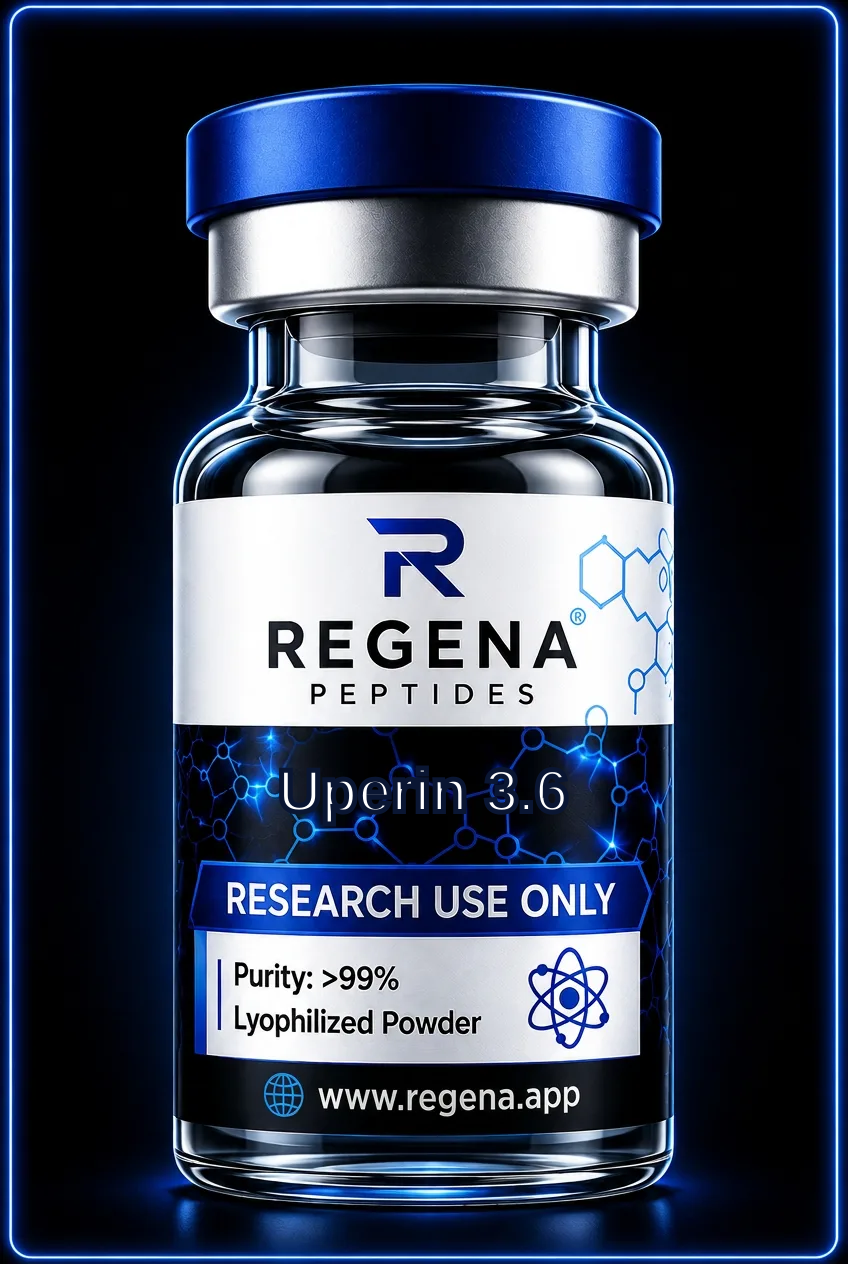
Antimicrobial · Amphipathic helical peptide
Uperin 3.6
A 25-amino acid antimicrobial peptide from the Uperoleia species of frog, studied for its membrane-disrupting properties against microbial targets.
- Length
- 25 amino acids
- Half-life
- Not well characterised
- Mechanism
- This peptide forms amphipathic alpha-helices that interact with and disrupt microbial cell membranes, leading to pore formation and leakage of cellular contents.
- Studied in
- Laboratory studies investigate its activity spectrum against various bacterial strains and its mechanism of membrane permeabilization using synthetic lipid vesicles.
About Uperin 3.6
Uperin 3.6 is a host defense peptide originally isolated from the skin secretions of the Australian frog Uperoleia mjobergii. Structurally, it is a cationic, 25-residue peptide that adopts an amphipathic alpha-helical conformation upon contact with membrane-mimetic environments such as lipid bilayers. This structural arrangement is critical for its biological function.
The primary mechanism involves electrostatic attraction to negatively charged microbial membranes, followed by insertion into the lipid bilayer. This insertion leads to membrane destabilization, pore formation, and ultimately, cell lysis. Its activity has been evaluated in vitro against a range of Gram-positive and Gram-negative bacteria.
Laboratory notes
- Solubility should be tested in small amounts; typically reconstituted in sterile water or dilute acetic acid for stock solutions.
- Peptide solutions are susceptible to proteolytic degradation; consider protease inhibitors for long-term cell culture experiments.
- Store lyophilised powder at -20°C to -80°C for maximum stability.
Storage and reconstitution basics: storage guide.
Questions about Uperin 3.6
What is the origin of Uperin 3.6?
Uperin 3.6 is a natural peptide isolated from the skin secretions of the Australian toadlet, Uperoleia mjobergii.
What is its primary structural feature?
Its key feature is the formation of an amphipathic alpha-helix, which facilitates its interaction with and disruption of microbial lipid membranes.
Is this peptide selective for certain membrane types?
It generally shows selectivity for negatively charged membranes, characteristic of many microbes, over the zwitterionic membranes of mammalian cells, a subject of ongoing research.
Is Uperin 3.6 for human use?
No. It is supplied strictly for in-vitro laboratory research and is not for human or animal consumption.
Related research peptides
All products are sold for laboratory research use only. Not for human consumption, not a medicine, not for diagnosing, treating or preventing any condition.