
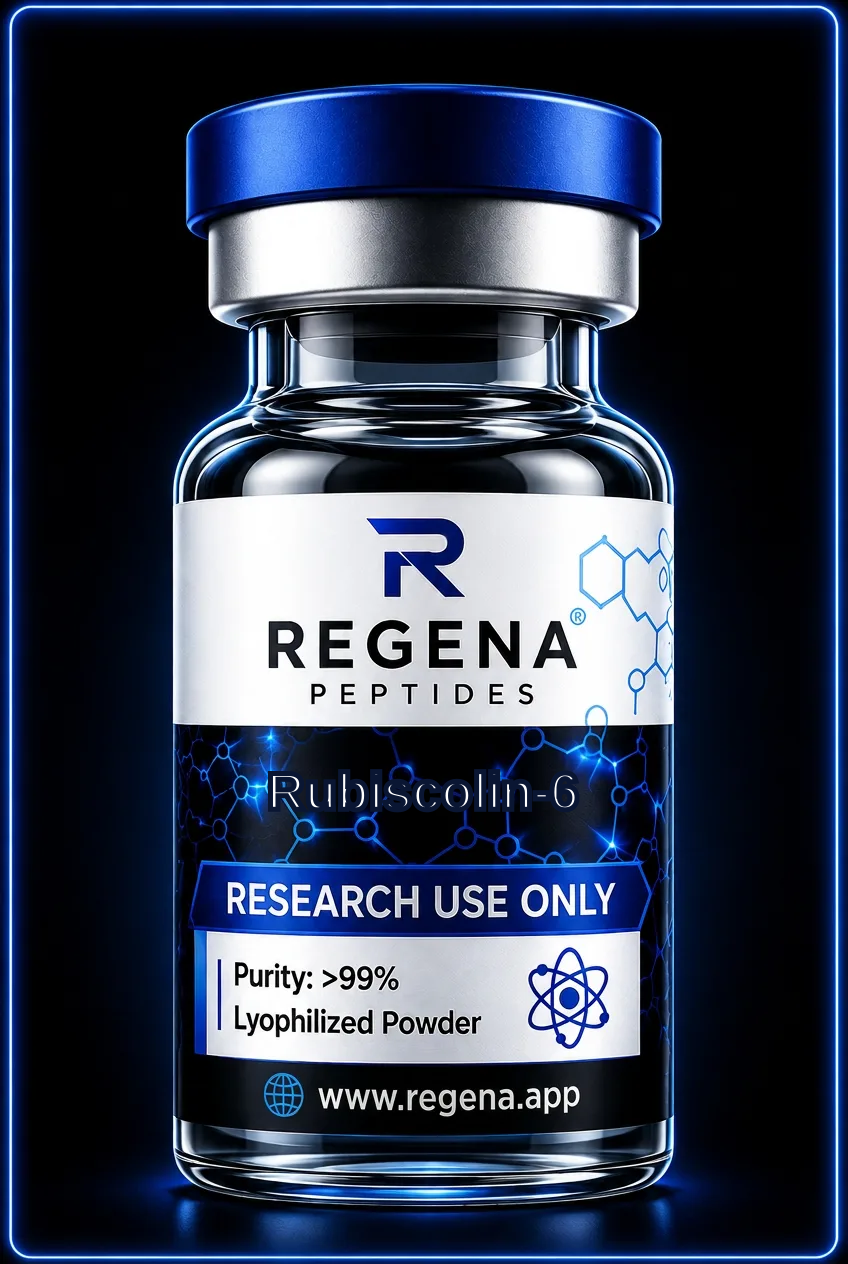
Other · Plant protein-derived opioid hexapeptide
Rubiscolin-6
Also known as —
Rubisco-derived hexapeptide studied for δ-opioid receptor activation, signalling preference and C-terminal structure–activity effects.
- Length
- 6 amino acids
- Half-life
- Not well characterised
- Mechanism
- Rubiscolin-6 activates the δ-opioid receptor (DOR; OPRD1), coupling to Gi/o-dependent signalling. Some recombinant assays report preferential G-protein signalling with limited β-arrestin recruitment, but this profile depends on the assay and comparator ligand.
- Studied in
- Recombinant DOR assays, isolated tissue preparations and rodent behavioural models investigate receptor signalling, peptide stability and sensory or memory-related processes.
About Rubiscolin-6
Rubiscolin-6 is Tyr–Pro–Leu–Asp–Leu–Phe, a linear hexapeptide with a free C-terminal carboxyl group. Reported in 2001, it was identified from pepsin-generated fragments of spinach Rubisco and maps to the enzyme's large subunit. Its sequence extends Rubiscolin-5 by one phenylalanine residue. This closely matched pair provides a straightforward experimental framework for investigating the contribution of an additional aromatic residue to opioid activity and peptide stability.
Studies characterise Rubiscolin-6 primarily as a δ-opioid receptor agonist, with experiments spanning isolated tissues and recombinant signalling platforms. Certain cellular studies describe stronger engagement of G-protein pathways than β-arrestin recruitment, but signalling bias requires matched assays and an explicit reference agonist. Rodent work also examines sensory and memory-related behaviour. Such experiments should distinguish receptor-dependent effects from differences in peptide degradation, distribution or formation of active fragments.
Laboratory notes
- Confirm the terminal phenylalanine and free-acid structure by LC–MS; distinguish intact material from truncated fragments.
- For signalling-bias experiments, compare G-protein and β-arrestin readouts under matched conditions using a defined reference agonist.
- Assess stability in the actual assay medium and minimise repeated freeze–thaw cycles by preparing suitable research aliquots.
Storage and reconstitution basics: storage guide.
Questions about Rubiscolin-6
Is Rubiscolin-6 necessarily G-protein-biased in every assay?
No. Reports of preferential G-protein signalling are system-dependent; receptor expression, assay amplification, measurement timing and the reference agonist influence the interpretation.
Which residue distinguishes it from Rubiscolin-5?
A C-terminal phenylalanine extends the shared Tyr–Pro–Leu–Asp–Leu sequence.
Can parent Rubisco be substituted for purified Rubiscolin-6 in receptor assays?
No. The intact protein does not provide a defined concentration of free Rubiscolin-6; any digest requires analytical confirmation and quantification of the released peptide.
Is Rubiscolin-6 for human use?
No. It is supplied strictly for in-vitro laboratory research and is not for human or animal consumption.
Related research peptides
All products are sold for laboratory research use only. Not for human consumption, not a medicine, not for diagnosing, treating or preventing any condition.