
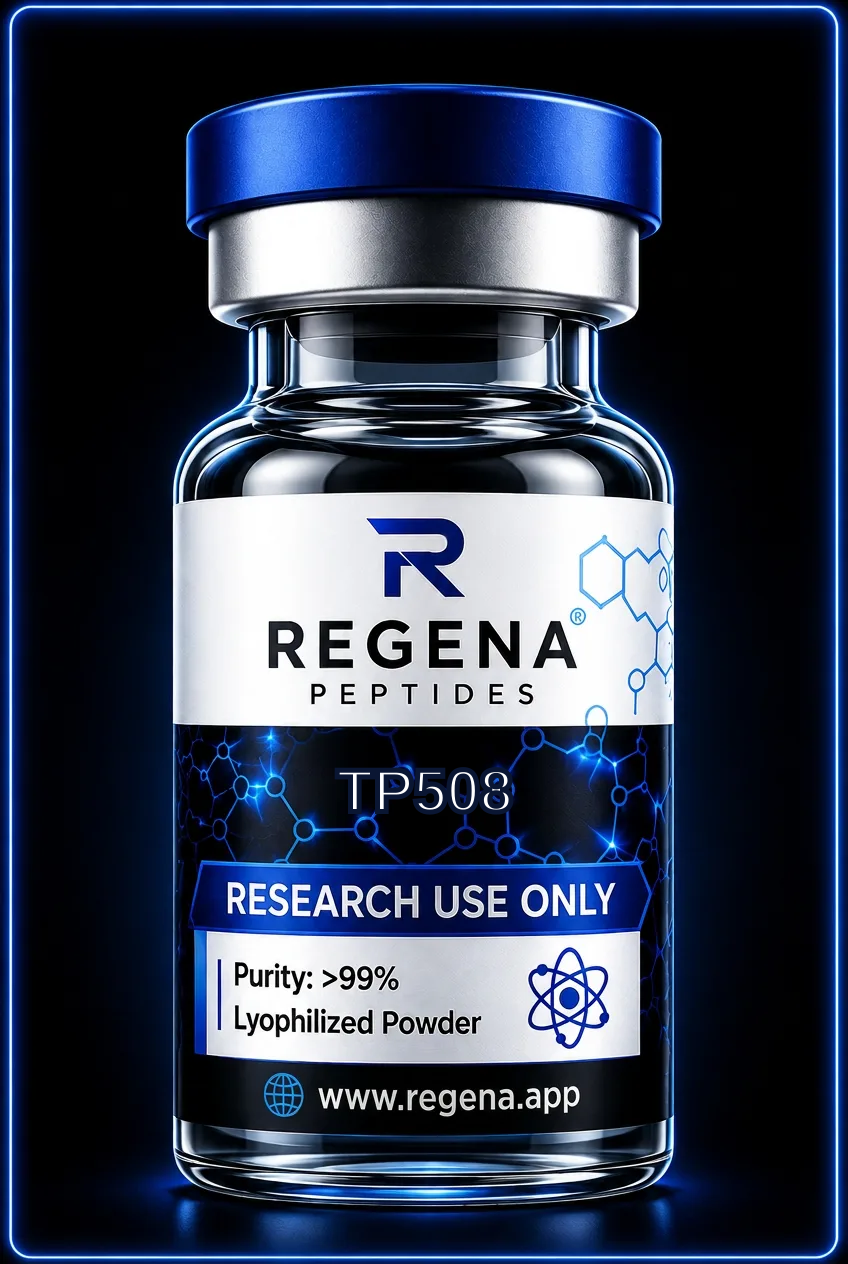
Regenerative · Synthetic thrombin-derived signalling peptide
TP508
Also known as Thrombin peptide 508; rusalatide
A 23-residue thrombin fragment used to investigate non-proteolytic signalling, integrin interactions and tissue-remodelling biology.
- Length
- 23 amino acids
- Half-life
- Not well characterised
- Mechanism
- TP508 is a non-proteolytic thrombin-derived peptide containing an RGD integrin-recognition motif; αvβ3 integrin has been implicated in its cellular interactions. It is studied for endothelial signalling, including nitric-oxide-associated pathways, rather than thrombin-like protease activity.
- Studied in
- Endothelial cultures, tissue explants and animal injury models examine TP508-associated cell migration, angiogenic signalling and tissue-remodelling processes.
About TP508
TP508 has the sequence AGYKPDEGKRGDACEGDSGGPFV and corresponds to residues 508–530 of human prothrombin. It was developed through investigations of thrombin regions that influence cellular responses independently of enzymatic coagulation activity. Unlike intact thrombin, this short fragment does not contain the complete catalytic machinery of a serine protease. Its sequence includes an RGD motif, which provides a structural basis for investigating interactions with integrins involved in cell adhesion and signalling.
Experiments have examined TP508 in endothelial cultures and animal models of tissue injury, with attention to migration, vascular responses and matrix remodelling. αvβ3 integrin involvement and endothelial nitric oxide signalling have been reported, but neither should be assumed to explain every experimental response. Integrin-blocking reagents, sequence controls and pathway-specific measurements help separate adhesion-dependent effects from other signalling events. Its single cysteine also makes oxidation state an important variable when comparing preparations.
Laboratory notes
- Monitor cysteine oxidation and possible disulphide-linked dimer formation during storage and assay preparation.
- Pair migration or adhesion assays with integrin-blocking controls and an appropriate RGD-motif control where feasible.
- Distinguish endothelial signalling measurements from coagulation assays; TP508 is not an enzymatically active substitute for thrombin.
Storage and reconstitution basics: storage guide.
Questions about TP508
What does the number 508 refer to?
It refers to the starting position of the corresponding fragment in human prothrombin numbering.
Does TP508 cleave thrombin substrates?
It lacks the complete thrombin protease structure and catalytic machinery. Its experimental role is non-proteolytic signalling rather than substrate cleavage.
Why is the RGD sequence relevant?
RGD is a recognition motif for several integrins. Its presence supports integrin-focused experiments, but does not alone establish receptor selectivity or binding affinity.
Is TP508 for human use?
No. It is supplied strictly for in-vitro laboratory research and is not for human or animal consumption.
Related research peptides
All products are sold for laboratory research use only. Not for human consumption, not a medicine, not for diagnosing, treating or preventing any condition.