
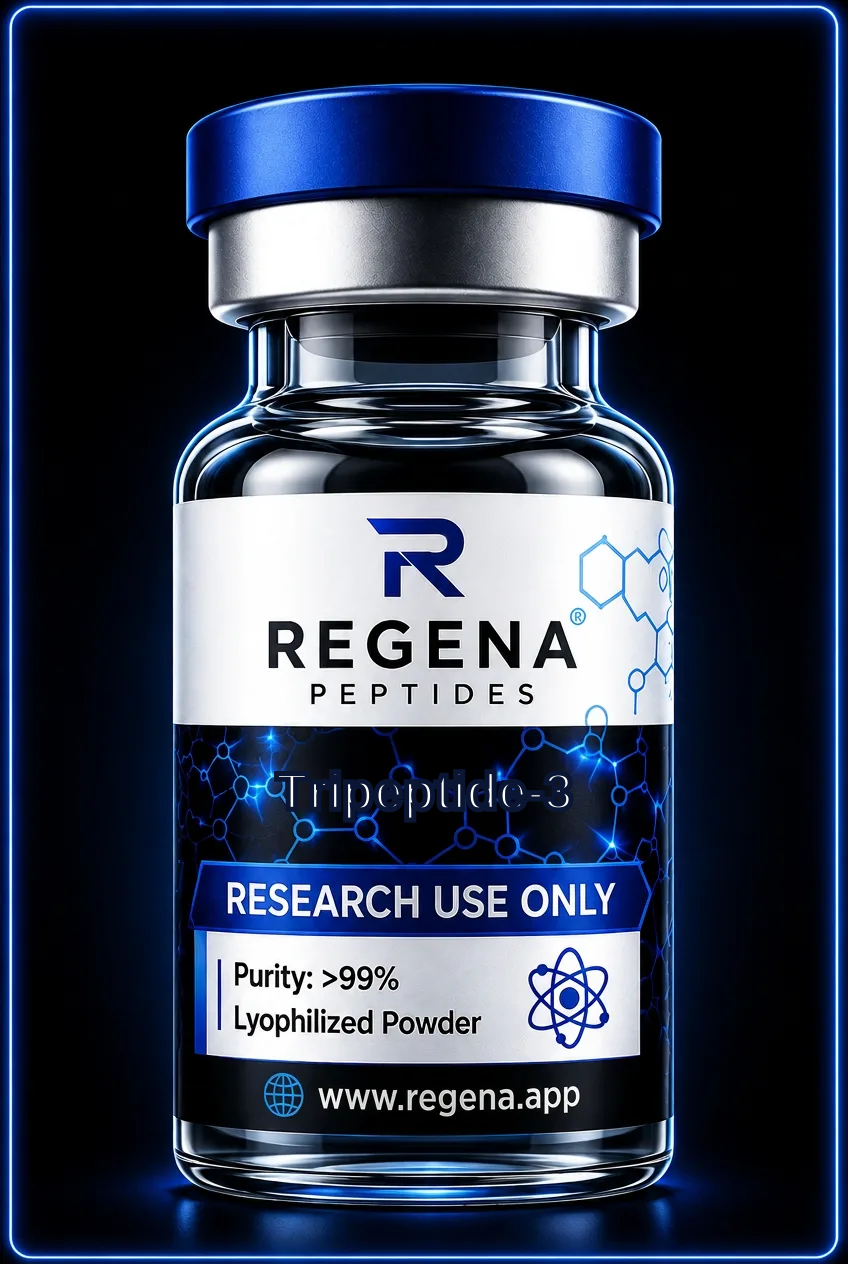
Cosmetic · Tripeptide
Tripeptide-3
Also known as Arginyl-Lysyl-Arginine, RKR
A synthetic tripeptide (Arg-Lys-Arg) that acts as a nicotinic acetylcholine receptor antagonist, used in neuromuscular junction research models.
- Length
- 3 amino acids
- Half-life
- Not well characterised
- Mechanism
- This peptide acts as a competitive antagonist of the nicotinic acetylcholine receptor (nAChR) at the post-synaptic membrane in neuromuscular junction models.
- Studied in
- It is studied in vitro for its ability to attenuate muscle cell contraction, providing a model for investigating pathways of neuromuscular signaling.
About Tripeptide-3
Tripeptide-3, composed of Arginine-Lysine-Arginine (RKR), is a synthetic peptide designed as a biomimetic of a component found in temple viper venom. Its structure functions as a small molecule antagonist in specific neurological signaling pathways. The sequence's positive charge at physiological pH contributes to its binding characteristics.
Research using this peptide centers on its interaction with the muscular nicotinic acetylcholine receptor (nAChR). In vitro models, such as co-cultures of neurons and myotubes, are employed to investigate its capacity to inhibit acetylcholine binding and subsequent muscle cell contraction, serving as a tool to study neuromuscular blockade.
Laboratory notes
- Tripeptide-3 is highly hydrophilic due to its three basic amino acid residues; ensure complete solubilization in aqueous buffers.
- For cell culture assays measuring muscle contraction, a baseline activity level should be established before peptide application.
- Due to its mechanism, it is critical to use it in well-defined systems, such as isolated muscle strips or innervated cell cultures, to observe its specific effects.
Storage and reconstitution basics: storage guide.
Questions about Tripeptide-3
What is the amino acid sequence of Tripeptide-3?
The sequence is Arginyl-Lysyl-Arginine, often abbreviated as RKR.
What is the mechanism of action for Tripeptide-3 in laboratory models?
It functions as a reversible, competitive antagonist of the nicotinic acetylcholine receptor (nAChR), blocking the receptor site and preventing ion channel opening in response to acetylcholine.
Why is this peptide studied in vitro?
It provides a specific and reversible tool for researchers to modulate and study neuromuscular transmission and muscle cell contraction dynamics without using more complex biological toxins.
Is Tripeptide-3 for human use?
No. It is supplied strictly for in-vitro laboratory research and is not for human or animal consumption.
Related research peptides
All products are sold for laboratory research use only. Not for human consumption, not a medicine, not for diagnosing, treating or preventing any condition.