
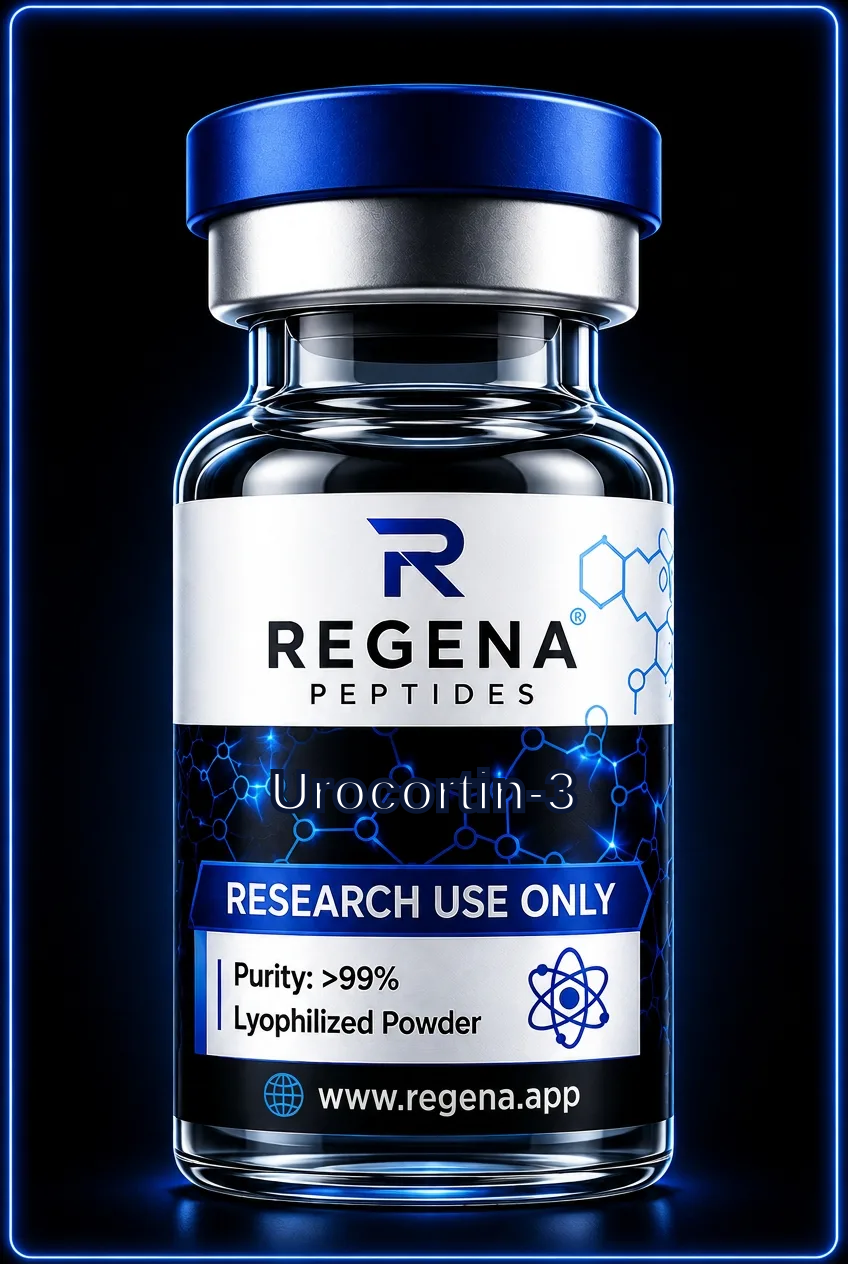
Metabolic · Neuropeptide
Urocortin-3
Also known as UCN3, Stresscopin
Urocortin-3 is a highly selective peptide agonist for the CRF-R2 receptor, researched for its role in pancreatic function and metabolism.
- Length
- 38 amino acids
- Half-life
- Not well characterised
- Mechanism
- Functions as a highly selective endogenous agonist for the corticotropin-releasing factor receptor 2 (CRF-R2).
- Studied in
- Used in metabolic and neuroscience research to investigate CRF-R2-mediated regulation of pancreatic beta-cell function, glucose homeostasis, and social behaviors.
About Urocortin-3
Urocortin-3 is a neuropeptide in the CRF family that, like Urocortin-2, acts as a specific ligand for the CRF-R2 receptor with negligible affinity for CRF-R1. Its expression pattern is distinct, with high concentrations found in hypothalamic and limbic brain areas, as well as significant expression in peripheral tissues like the pancreas.
The specific localisation of Urocortin-3 and its receptor in pancreatic islets has made it a key focus of diabetes and metabolic research. Scientists use synthetic Urocortin-3 in vitro on isolated islets and in vivo in animal models to study its role in modulating insulin and glucagon secretion. Its application helps to define the importance of local CRF-R2 signalling in the endocrine pancreas.
Laboratory notes
- Like Urocortin-2, this peptide is a specific tool for investigating CRF-R2-mediated effects.
- The distinct tissue expression pattern of Urocortin-3 compared to Urocortin-2 makes it a subject of specific interest in pancreatic and neuroscience research.
- For reproducible results, use high-purity peptide and confirm CRF-R2 expression in the experimental model (e.g., cell line, tissue).
Storage and reconstitution basics: storage guide.
Questions about Urocortin-3
What is the main difference between Urocortin-2 and Urocortin-3?
Both are selective CRF-R2 agonists, but they have different amino acid sequences and distinct patterns of endogenous expression in the brain and peripheral tissues, suggesting different physiological roles.
Why is Urocortin-3 studied in diabetes research?
It is highly expressed in pancreatic islets and activates CRF-R2 receptors on beta-cells, which has been shown in lab models to modulate insulin secretion.
What does 'Stresscopin' refer to?
Stresscopin and stresscopin-related peptide are alternative names for Urocortin-3 and Urocortin-2, respectively, reflecting their discovery and relation to the CRF/stress system.
Is Urocortin-3 for human use?
No. It is supplied strictly for in-vitro laboratory research and is not for human or animal consumption.
Related research peptides
All products are sold for laboratory research use only. Not for human consumption, not a medicine, not for diagnosing, treating or preventing any condition.