
Cardiovascular · Chromogranin A-derived regulatory polypeptide
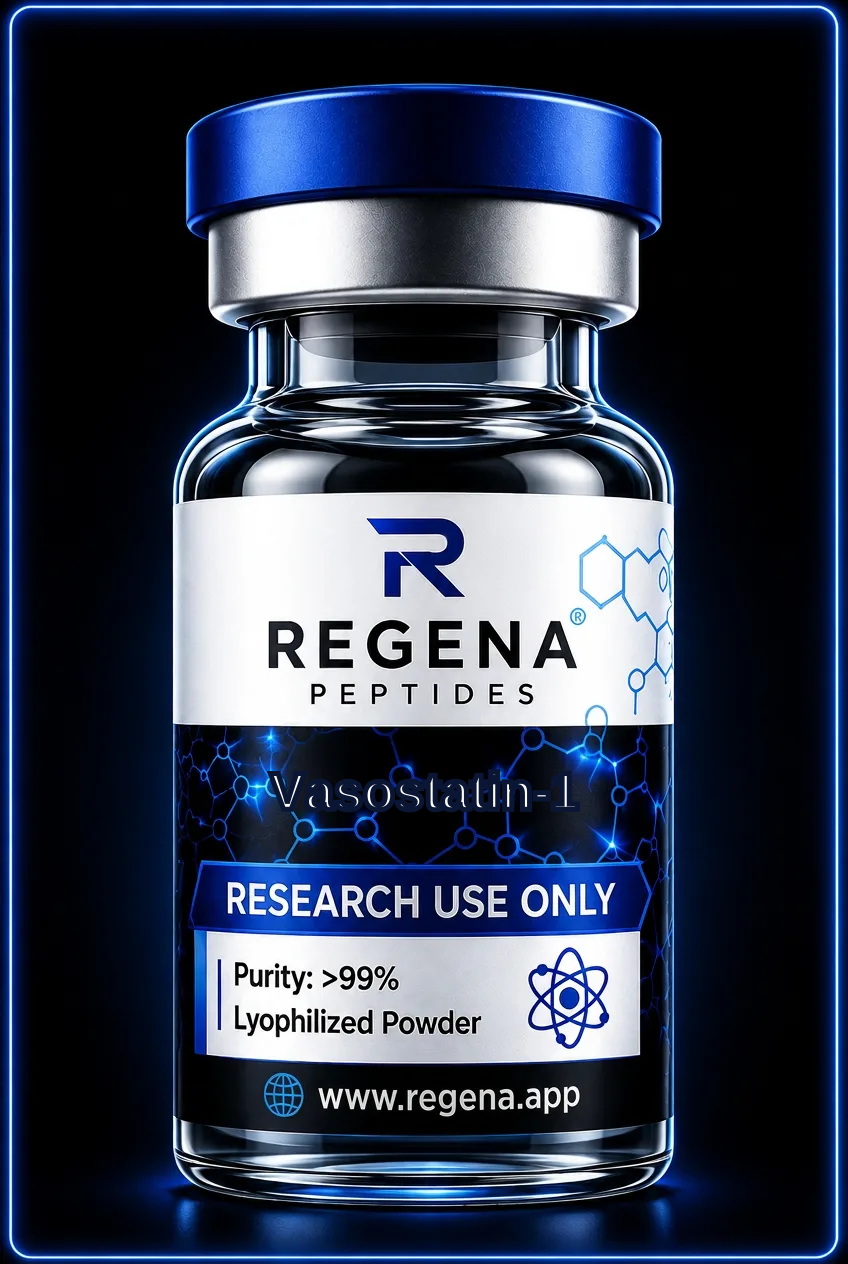
Vasostatin-1
Also known as VS-1; chromogranin A (1–76); CgA1–76
An N-terminal chromogranin A fragment studied for endothelial signalling, vascular reactivity and membrane interactions.
- Length
- 76 amino acids
- Half-life
- Not well characterised
- Mechanism
- Vasostatin-1 modifies endothelial signalling, membrane interactions and vascular responses through mechanisms that depend on the experimental preparation. No single cognate receptor is established; calcium-dependent interactions and nitric oxide-associated signalling have been implicated.
- Studied in
- Endothelial cultures, isolated vascular preparations and microbial assays are used to investigate barrier regulation, vascular reactivity and sequence-dependent antimicrobial activity.
About Vasostatin-1
Vasostatin-1 corresponds to residues 1–76 of mature chromogranin A, a secretory granule protein found in neuroendocrine cells. Its name arose from experiments examining the vascular actions of N-terminal chromogranin A fragments. The sequence contains a conserved disulphide-linked region, and its biochemical behaviour depends on species origin, folding and proteolytic processing. It should not be confused with vasostatin-2, a longer N-terminal fragment, or with an unrelated calreticulin-derived fragment also called vasostatin.
Experimental work examines how this fragment influences endothelial permeability, cell adhesion and responses in isolated vascular tissue. Nitric oxide signalling has been implicated in some preparations, but a universally accepted receptor has not been identified. Membrane association and interactions with extracellular components may contribute to its activity. Separate studies investigate antimicrobial properties of chromogranin A-derived sequences; findings for shorter fragments should not automatically be attributed to intact vasostatin-1 without direct testing.
Laboratory notes
- Confirm species, residue numbering and terminal chemistry: chromogranin A precursor numbering differs from mature-protein numbering.
- Check disulphide status and aggregation, particularly when comparing recombinant material with chemically synthesised preparations.
- Use endotoxin-controlled material and matched buffer controls in endothelial assays; endotoxin can independently alter barrier and signalling readouts.
Storage and reconstitution basics: storage guide.
Questions about Vasostatin-1
Is vasostatin-1 the same as calreticulin-derived vasostatin?
No. Vasostatin-1 is a chromogranin A fragment, whereas calreticulin-derived vasostatin has a different sequence origin and molecular structure.
Does vasostatin-1 have a defined receptor?
No single cognate receptor is established. Published mechanisms involve context-dependent membrane interactions and downstream signalling rather than one confirmed receptor pathway.
Why does species identification matter?
Chromogranin A sequences vary between species. Sequence differences can affect folding, proteolysis and assay behaviour, so comparisons require a documented source sequence.
Is Vasostatin-1 for human use?
No. It is supplied strictly for in-vitro laboratory research and is not for human or animal consumption.
Related research peptides
All products are sold for laboratory research use only. Not for human consumption, not a medicine, not for diagnosing, treating or preventing any condition.