
Cardiovascular · Synthetic peptide
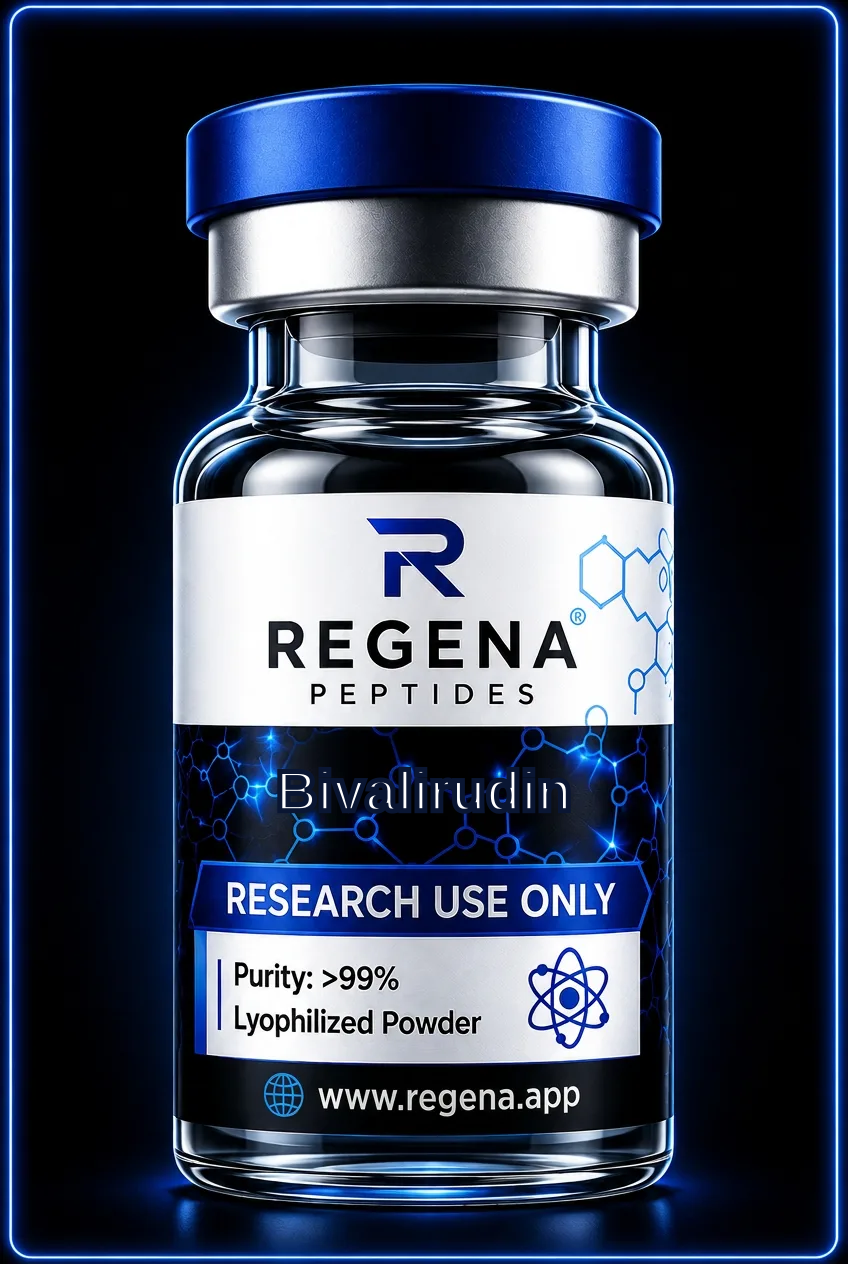
Bivalirudin
Also known as Hirulog-1
A 20-amino acid synthetic peptide and direct thrombin inhibitor used as a reference anticoagulant in coagulation research models.
- Length
- 20 amino acids
- Half-life
- Approximately 25 minutes in plasma
- Mechanism
- Bivalirudin is a specific and reversible direct thrombin inhibitor (DTI) that binds to both the catalytic site and the anion-binding exosite 1 of thrombin.
- Studied in
- It is used as a reference anticoagulant in laboratory assays measuring blood coagulation parameters, such as activated partial thromboplastin time (aPTT).
About Bivalirudin
Bivalirudin is a synthetic 20-amino acid peptide designed as a specific and reversible direct inhibitor of thrombin. Its structure is analogous to hirudin, a naturally occurring anticoagulant found in leech saliva. As a reference compound with a clinical history, it is a well-characterized tool for coagulation research.
The peptide functions by binding directly to thrombin, inhibiting its ability to convert fibrinogen into fibrin, which is the final step in the coagulation cascade. Unlike indirect inhibitors, its action is independent of antithrombin III. This direct mechanism makes it a valuable reagent for in-vitro studies of thrombosis and hemostasis, particularly in assays evaluating clotting times in plasma samples.
Laboratory notes
- Bivalirudin solutions should be prepared fresh; peptide bonds can be susceptible to hydrolysis upon prolonged storage in aqueous solution.
- Reconstitute in sterile water or 0.9% NaCl before further dilution to working concentrations.
- The anticoagulant effect can be monitored in vitro using standard coagulation assays like aPTT or ecarin clotting time (ECT).
Storage and reconstitution basics: storage guide.
Questions about Bivalirudin
What is Bivalirudin's mechanism of action?
It is a direct thrombin inhibitor, binding reversibly to the catalytic site and exosite 1 of thrombin, thereby preventing fibrin formation.
Is its action reversible?
Yes, the binding is reversible. Thrombin can slowly cleave the Arg3-Pro4 bond of bivalirudin, which restores thrombin function and contributes to the peptide's short half-life.
How does it differ from heparin in laboratory studies?
Unlike heparin, which is an indirect thrombin inhibitor requiring antithrombin III, bivalirudin directly inhibits both free and clot-bound thrombin.
Is Bivalirudin for human use?
No. It is supplied strictly for in-vitro laboratory research and is not for human or animal consumption.
Related research peptides
All products are sold for laboratory research use only. Not for human consumption, not a medicine, not for diagnosing, treating or preventing any condition.