
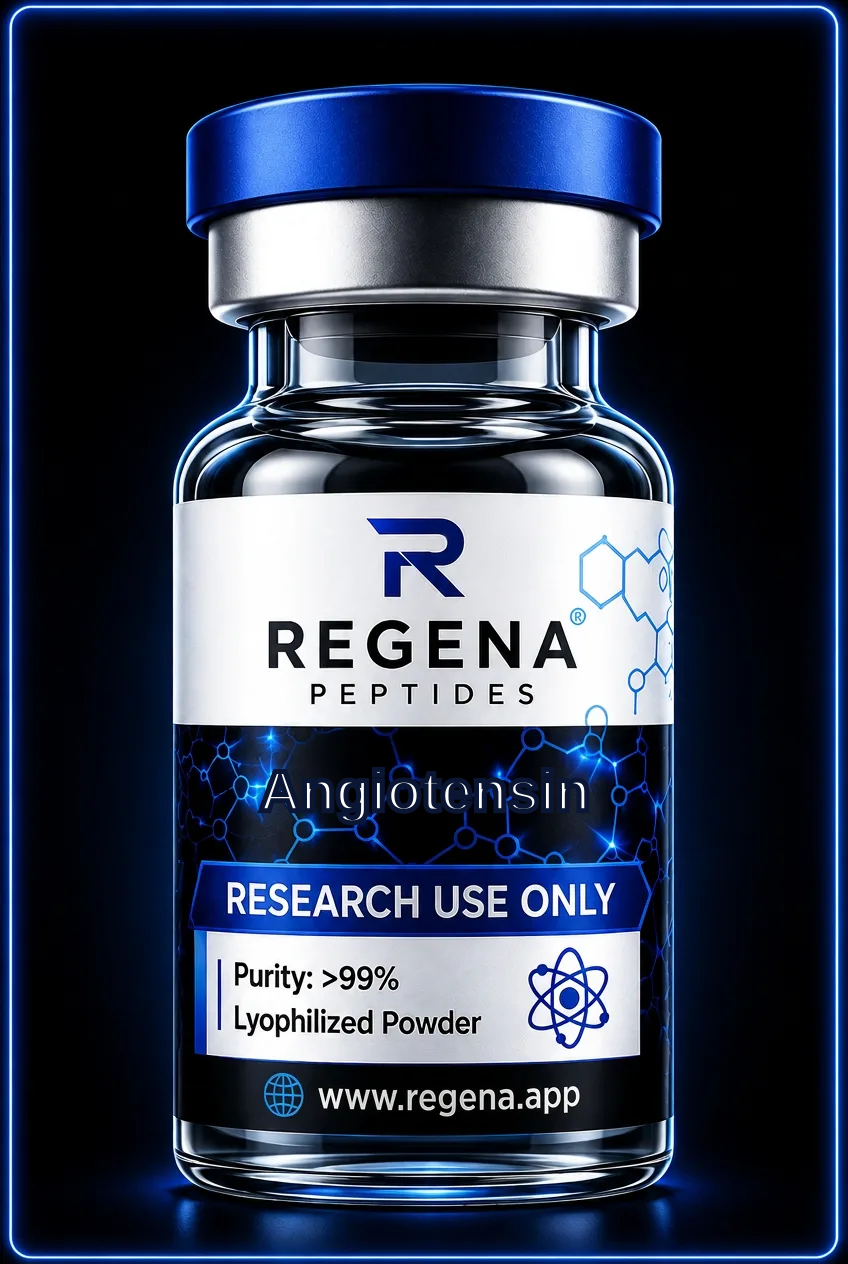
Cardiovascular · Peptide hormone fragment
Angiotensin (1-9)
Also known as Ang(1-9)
Angiotensin (1-9) is a nonapeptide of the renin-angiotensin system, studied for its counter-regulatory cardiovascular effects via the AT2 receptor.
- Length
- 9 amino acids
- Half-life
- Not well characterised, considered transient
- Mechanism
- Binds to the angiotensin type 2 receptor (AT2R) and can be converted to angiotensin (1-7), which acts on the Mas receptor.
- Studied in
- Laboratory research investigates its counter-regulatory role within the renin-angiotensin system, particularly its effects on vasodilation and anti-hypertrophic signalling in cardiovascular models.
About Angiotensin (1-9)
Angiotensin (1-9) is a nine-amino-acid peptide formed from angiotensin I by the action of carboxypeptidase A or cathepsin A. It is part of the non-canonical, or protective, axis of the renin-angiotensin system (RAS). This peptide functions as a substrate for angiotensin-converting enzyme 2 (ACE2), which cleaves it to form Angiotensin (1-7).
In experimental models, Ang(1-9) is explored for its cardiovascular effects, which generally oppose those of the classical RAS effector, Angiotensin II. It is reported to induce vasodilation and exhibit anti-hypertrophic properties in cardiac and vascular cells, primarily through activation of the AT2 receptor. Its role provides a focus for research into the regulatory balance of the RAS.
Laboratory notes
- For stability in cell culture or plasma, consider the presence of peptidases like ACE2, which will convert it to Ang(1-7).
- Reconstitute in sterile water or a weak acidic buffer (e.g., 0.1% acetic acid) to ensure full solubilisation.
- Quantification in biological samples requires specific analytical methods like LC-MS/MS to differentiate it from other angiotensin fragments.
Storage and reconstitution basics: storage guide.
Questions about Angiotensin (1-9)
What is the main pathway for Angiotensin (1-9) formation?
It is generated from Angiotensin I through enzymatic cleavage by carboxypeptidases, representing an alternative pathway to ACE-mediated conversion to Angiotensin II.
What are the downstream products of Angiotensin (1-9)?
It is a direct precursor to Angiotensin (1-7), formed by the action of ACE2.
What is the proposed functional role of Ang(1-9)?
It is considered part of the protective arm of the renin-angiotensin system, contributing to effects that counter the vasoconstrictive and pro-fibrotic actions of Angiotensin II.
Is Angiotensin (1-9) for human use?
No. It is supplied strictly for in-vitro laboratory research and is not for human or animal consumption.
Related research peptides
All products are sold for laboratory research use only. Not for human consumption, not a medicine, not for diagnosing, treating or preventing any condition.