
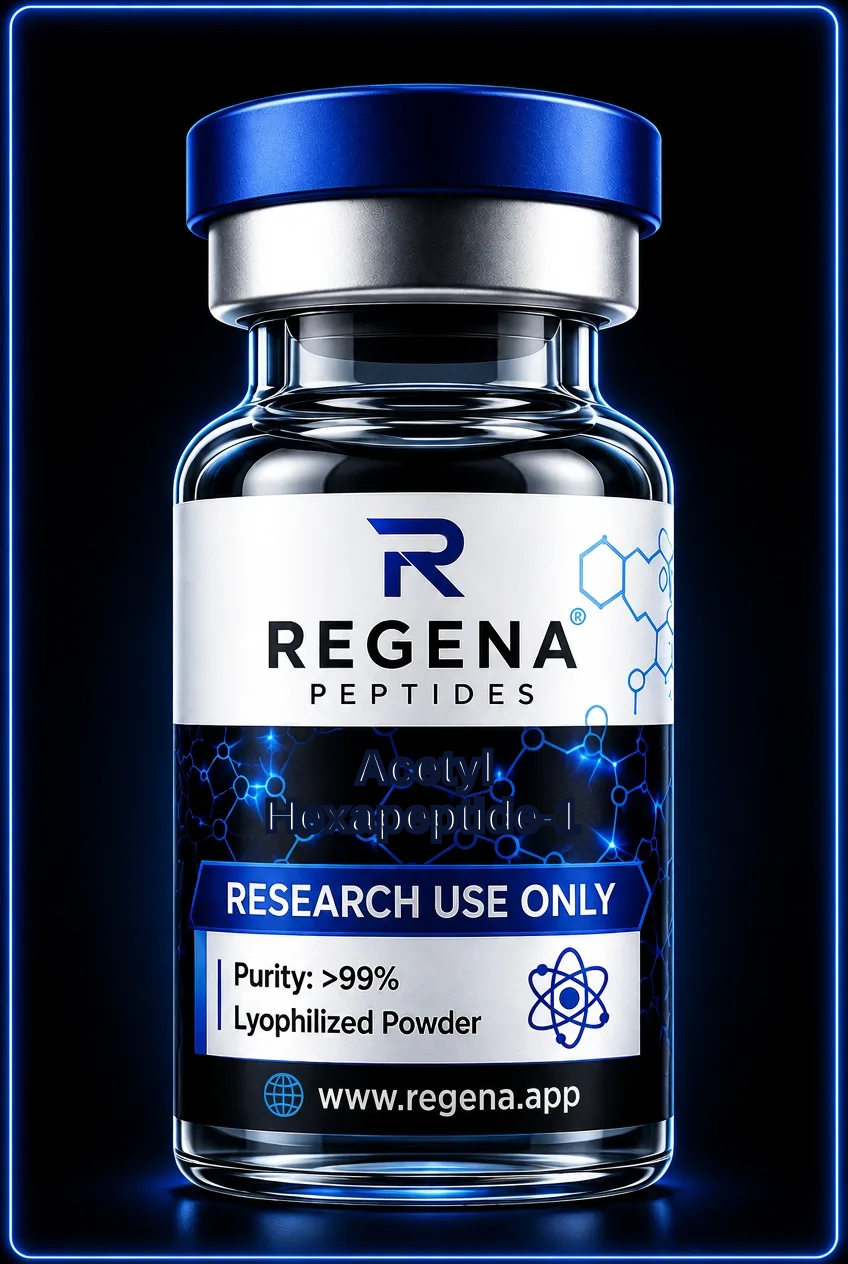
Cosmetic · N-acetylated Hexapeptide
Acetyl Hexapeptide-1
Acetyl Hexapeptide-1 is a synthetic agonist for the MC1R, used in skin cell models to study pigmentation and inflammatory responses.
- Length
- 6 amino acids
- Half-life
- Not well characterised
- Mechanism
- Acetyl Hexapeptide-1 functions as a biomimetic of α-MSH, acting as an agonist for the melanocortin 1 receptor (MC1R).
- Studied in
- It is used in melanocyte and keratinocyte co-culture systems to study melanogenesis, DNA repair mechanisms, and anti-inflammatory responses mediated by MC1R.
About Acetyl Hexapeptide-1
Acetyl Hexapeptide-1 is a synthetic hexapeptide designed to mimic the action of the endogenous alpha-melanocyte-stimulating hormone (α-MSH). Its sequence is N-Acetyl-Glu-His-D-Phe-Arg-Trp-Gly-NH2. The N-terminal acetylation and C-terminal amidation enhance its stability in experimental conditions compared to the natural hormone.
As a selective agonist for the melanocortin 1 receptor (MC1R), this peptide is a key tool for studying skin pigmentation and UV-response pathways in vitro. When applied to cultures of human melanocytes, it stimulates the MC1R signaling cascade, leading to increased synthesis of eumelanin. Researchers also use it to investigate the downstream anti-inflammatory and DNA-protective effects associated with MC1R activation in skin cells.
Laboratory notes
- To study melanogenesis, tyrosinase activity assays and melanin content quantification are standard methods used following peptide treatment in melanocyte cultures.
- The use of D-Phenylalanine in the sequence confers resistance to enzymatic cleavage, leading to a longer effective duration in cell culture compared to native α-MSH.
- When investigating anti-inflammatory effects, co-treatment with an inflammatory stimulus like UV radiation or TNF-α is a common experimental approach.
Storage and reconstitution basics: storage guide.
Questions about Acetyl Hexapeptide-1
What is the molecular target of Acetyl Hexapeptide-1?
It is an agonist for the melanocortin 1 receptor (MC1R), mimicking the action of α-MSH.
How does it differ from endogenous α-MSH?
It is a synthetic peptide with modifications, such as N-terminal acetylation and a D-amino acid substitution, which increase its stability for research applications.
What processes are studied using this peptide?
Researchers use it to study melanogenesis (pigment production), DNA repair, and anti-inflammatory responses in skin cell culture models.
Is Acetyl Hexapeptide-1 for human use?
No. It is supplied strictly for in-vitro laboratory research and is not for human or animal consumption.
Related research peptides
All products are sold for laboratory research use only. Not for human consumption, not a medicine, not for diagnosing, treating or preventing any condition.