
Cosmetic · Lipopeptide
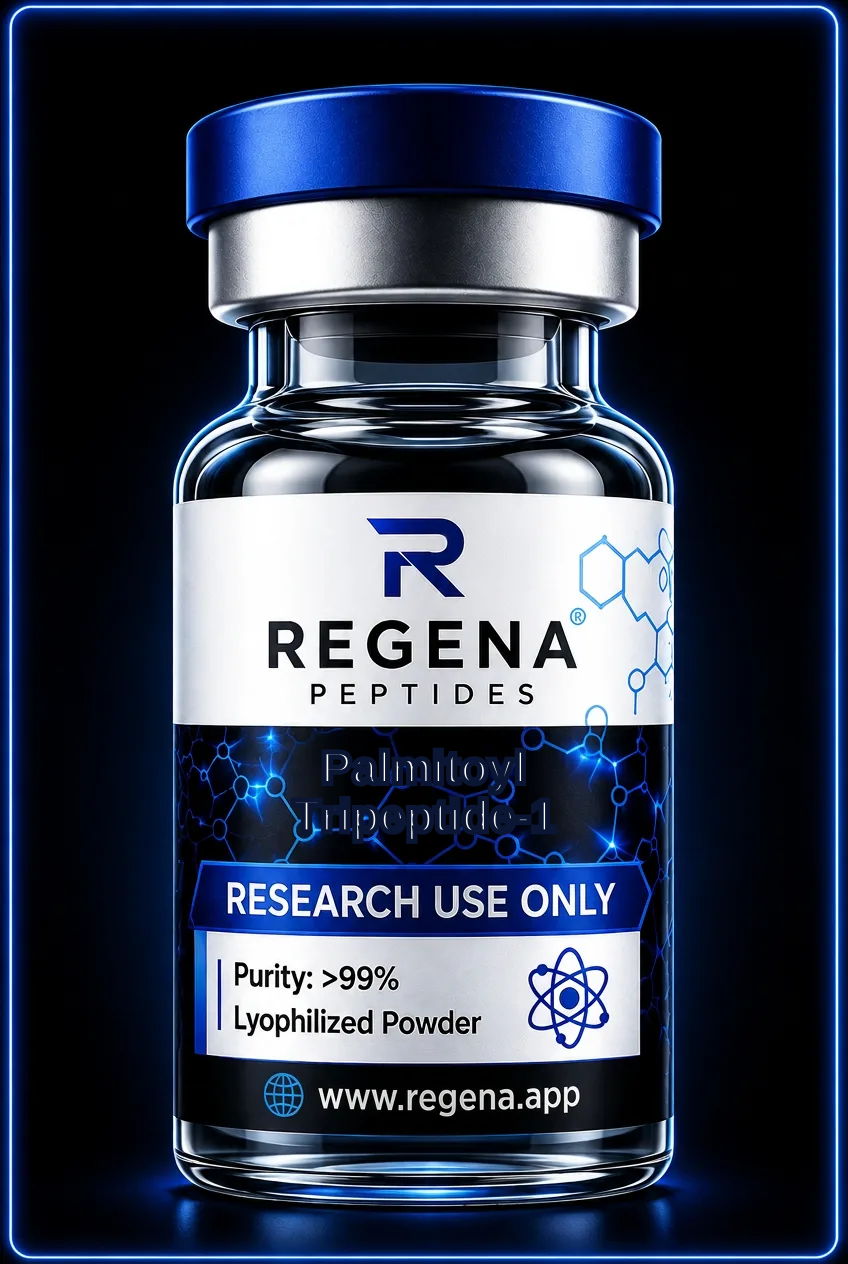
Palmitoyl Tripeptide-1
Also known as Pal-GHK
A synthetic lipopeptide (Pal-GHK) studied in vitro for its signalling properties and its ability to stimulate collagen synthesis in fibroblast cell cultures.
- Length
- 3 amino acids (plus palmitoyl group)
- Half-life
- Not well characterised
- Mechanism
- This lipopeptide is a fragment of the alpha-2 chain of type I collagen that acts as a signalling molecule to stimulate collagen synthesis in fibroblast cultures.
- Studied in
- In vitro studies on dermal fibroblast cell lines are used to investigate its role in modulating extracellular matrix production.
About Palmitoyl Tripeptide-1
Palmitoyl Tripeptide-1 is a synthetic signalling peptide created by linking the well-studied peptide Glycyl-Histidyl-Lysine (GHK) to a palmitoyl fatty acid. The GHK sequence itself is a naturally occurring fragment derived from proteins in the extracellular matrix, such as the alpha-2 chain of type I collagen. The conjugation with palmitic acid increases its oil solubility and stability in experimental formulations.
This molecule belongs to the category of 'matrikines', which are small peptide fragments of extracellular matrix proteins that can regulate cell activity. In research settings, Palmitoyl Tripeptide-1 is applied to dermal fibroblast cultures to examine its potential to stimulate the synthesis of collagen and glycosaminoglycans. Its mechanism is investigated as a positive feedback signal related to matrix breakdown and repair.
Laboratory notes
- The peptide sequence is Palmitoyl-Gly-His-Lys (Pal-GHK).
- It is often studied in combination with Palmitoyl Tetrapeptide-7, as the two are proposed to have synergistic effects in cell culture models.
- Solubility should be tested in small volumes; it is typically soluble in glycols or other organic solvents before being emulsified into aqueous systems for cell-based assays.
Storage and reconstitution basics: storage guide.
Questions about Palmitoyl Tripeptide-1
What is a 'matrikine'?
A matrikine is a peptide fragment derived from the breakdown of extracellular matrix proteins (like collagen or elastin) that can act as a cell-signalling molecule, often regulating processes like cell proliferation and matrix synthesis.
What is the difference between Palmitoyl Tripeptide-1 and GHK-Cu?
Palmitoyl Tripeptide-1 is the GHK peptide sequence attached to a palmitoyl fatty acid. GHK-Cu is the same GHK peptide sequence chelated with a copper ion. They have distinct chemical properties and are studied for different, though sometimes overlapping, biological activities.
How is its activity measured in the lab?
Researchers typically measure the upregulation of collagen I, fibronectin, or hyaluronic acid production in fibroblast cell cultures after treatment with the peptide, using techniques like ELISA or Western blot.
Is Palmitoyl Tripeptide-1 for human use?
No. It is supplied strictly for in-vitro laboratory research and is not for human or animal consumption.
Related research peptides
All products are sold for laboratory research use only. Not for human consumption, not a medicine, not for diagnosing, treating or preventing any condition.