
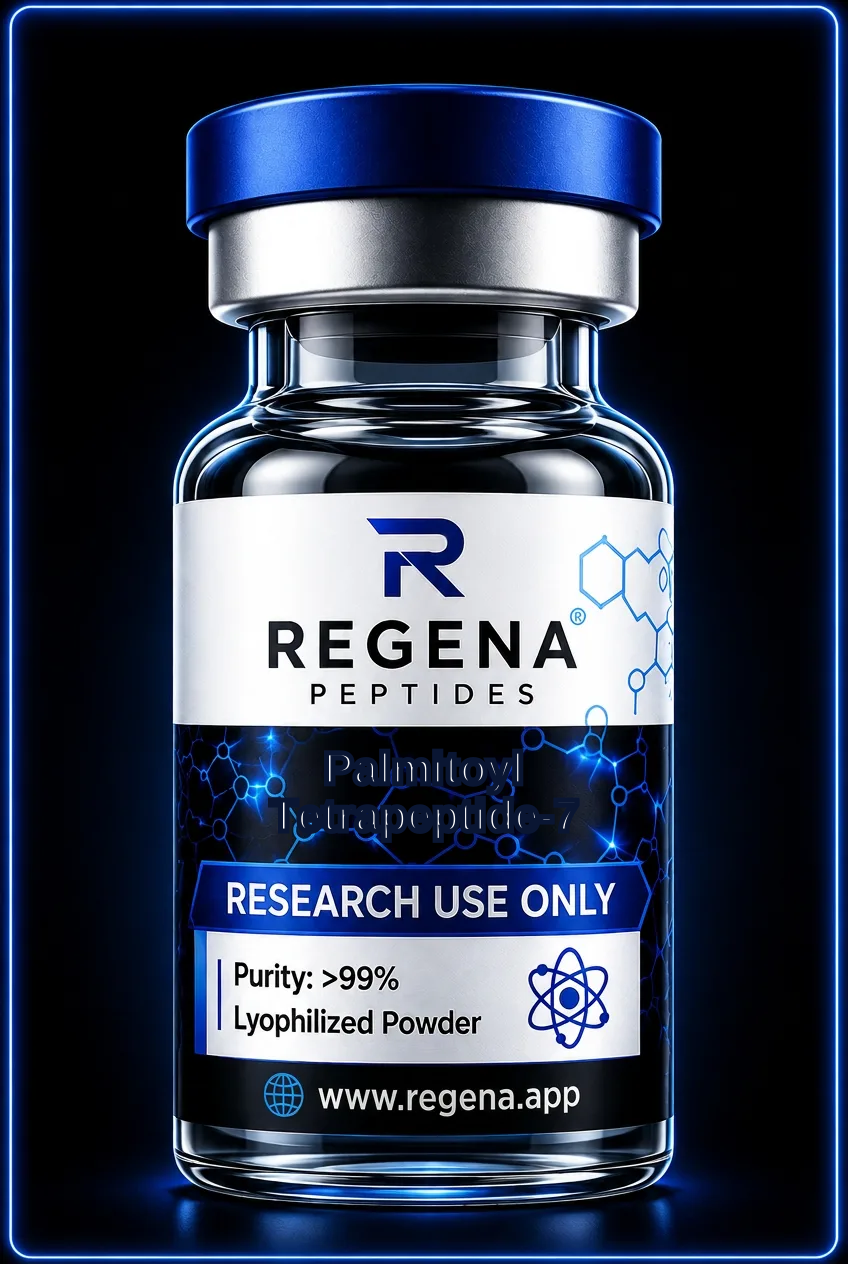
Cosmetic · Lipopeptide
Palmitoyl Tetrapeptide-7
Also known as Pal-GQPR
A synthetic lipopeptide (Pal-GQPR) researched in vitro for its potential to reduce inflammatory cytokine expression in skin cell models.
- Length
- 4 amino acids (plus palmitoyl group)
- Half-life
- Not well characterised
- Mechanism
- It is a synthetic peptide fragment that is studied for its ability to downregulate the production of interleukin-6 (IL-6) in keratinocyte and fibroblast cell cultures.
- Studied in
- Laboratory models investigate its effects on inflammatory markers, particularly the suppression of IL-6 baseline secretion and UV-induced IL-6 in skin cell cultures.
About Palmitoyl Tetrapeptide-7
Palmitoyl Tetrapeptide-7 is a synthetic compound composed of the four-amino-acid sequence Glycyl-Glutaminyl-Prolyl-Arginine (GQPR) attached to a palmitic acid molecule. The peptide sequence itself is a fragment of immunoglobulin G. The palmitoyl moiety is included to enhance its lipophilicity and stability for use in experimental topical preparations.
Research focuses on the peptide's potential to modulate inflammatory responses at the cellular level. In vitro studies apply Palmitoyl Tetrapeptide-7 to human keratinocyte or fibroblast cultures to assess its effect on the production of inflammatory mediators, most notably interleukin-6 (IL-6). These experiments often involve inducing an inflammatory state, for example via UV radiation, to observe the peptide's modulatory capacity.
Laboratory notes
- The peptide sequence is Palmitoyl-Gly-Gln-Pro-Arg (Pal-GQPR).
- Often used in conjunction with Palmitoyl Tripeptide-1 in laboratory studies to investigate potential synergistic effects on cell signalling.
- In cell culture assays, its efficacy is typically determined by measuring IL-6 levels in the culture supernatant using an ELISA kit.
Storage and reconstitution basics: storage guide.
Questions about Palmitoyl Tetrapeptide-7
What is the source of the GQPR peptide sequence?
The amino acid sequence Gly-Gln-Pro-Arg is a fragment derived from the structure of human immunoglobulin G (IgG).
What is the primary cellular marker studied with this peptide?
The most commonly measured endpoint in in vitro studies with Palmitoyl Tetrapeptide-7 is the level of interleukin-6 (IL-6), an inflammatory cytokine.
Why is this peptide often paired with Palmitoyl Tripeptide-1?
They are frequently combined in commercial cosmetic ingredient blends. In research, they are studied together to investigate if their different proposed mechanisms—matrix stimulation (Pal-GHK) and inflammation modulation (Pal-GQPR)—result in a synergistic effect in cell culture models.
Is Palmitoyl Tetrapeptide-7 for human use?
No. It is supplied strictly for in-vitro laboratory research and is not for human or animal consumption.
Related research peptides
All products are sold for laboratory research use only. Not for human consumption, not a medicine, not for diagnosing, treating or preventing any condition.