
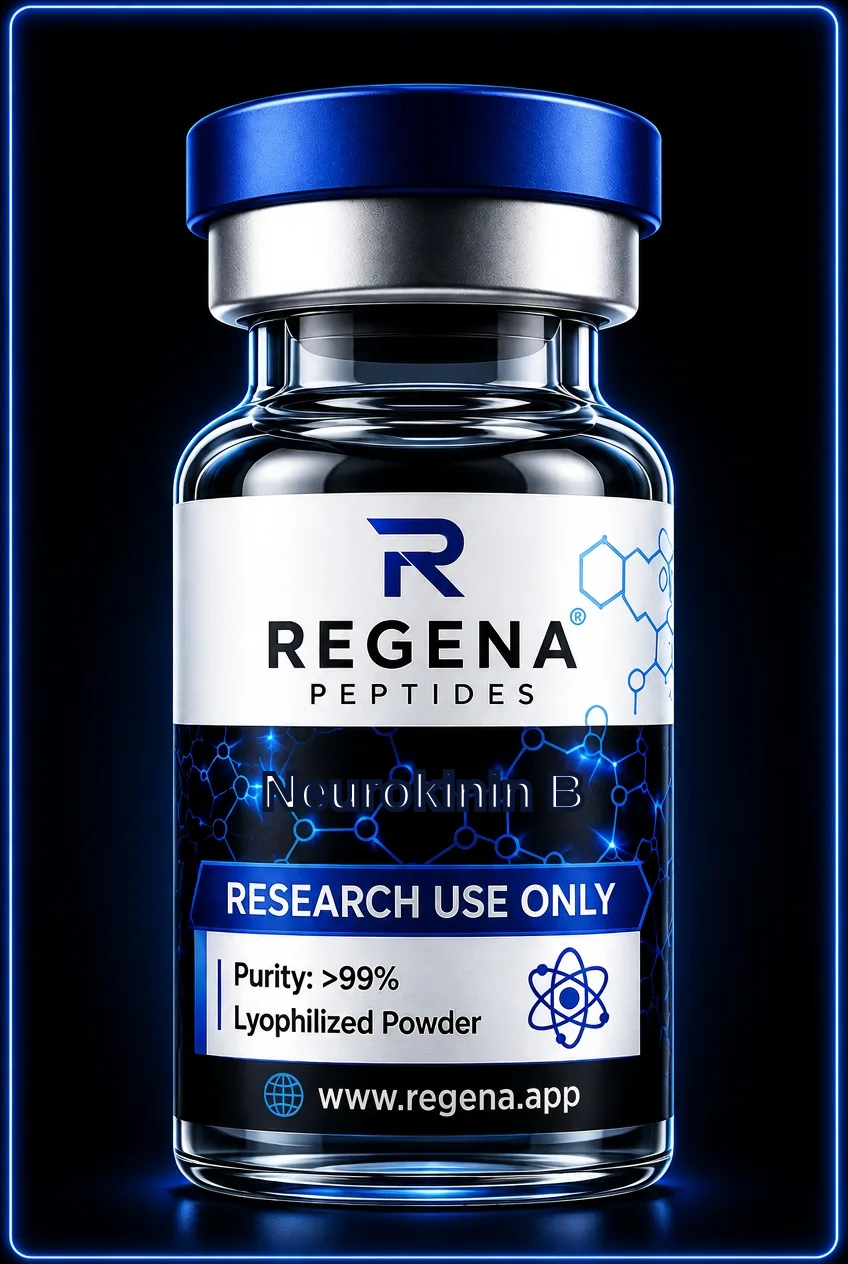
Cognitive · Tachykinin neuropeptide
Neurokinin B
Also known as NKB, Neuromedin K
Neurokinin B is a tachykinin neuropeptide that selectively activates NK3 receptors, crucial for studies of reproductive neuroendocrinology.
- Length
- 10 amino acids
- Half-life
- Very short, subject to rapid enzymatic degradation.
- Mechanism
- It is the preferred endogenous agonist for the tachykinin NK3 receptor.
- Studied in
- Investigated in endocrinology and neuroscience for its critical role in regulating gonadotropin-releasing hormone (GnRH) secretion and its involvement in neural signaling.
About Neurokinin B
Neurokinin B (NKB) is a decapeptide member of the tachykinin peptide family, alongside Substance P and Neurokinin A. Unlike the other two, NKB is encoded by a separate gene, TAC3 (or TACR3 in some species), and serves as the primary endogenous ligand for the NK3 receptor (NK3R). It is found in discrete populations of neurons in the central nervous system.
NKB and its receptor NK3R are key components of the Kisspeptin/Neurokinin B/Dynorphin (KNDy) neuronal system in the hypothalamus. In research, NKB is an essential tool for studying the neuroendocrine control of reproduction. It is applied to ex vivo tissue slices and in vitro cell models to investigate its role in modulating the pulsatile release of GnRH, a central event in reproductive physiology.
Laboratory notes
- Encoded by a different gene (TAC3) than Substance P and Neurokinin A (TAC1).
- Essential for the function of hypothalamic KNDy neurons that control the reproductive axis.
- Like other tachykinins, it possesses a C-terminal amide which is critical for its activity at the NK3 receptor.
Storage and reconstitution basics: storage guide.
Questions about Neurokinin B
What distinguishes Neurokinin B from other tachykinins?
Its primary distinction is its high selectivity as the endogenous agonist for the NK3 receptor, whereas Substance P targets NK1 and Neurokinin A targets NK2.
What is the KNDy system studied using Neurokinin B?
The KNDy system refers to a population of hypothalamic neurons that co-express Kisspeptin, Neurokinin B, and Dynorphin. These neurons are a critical control point for GnRH secretion and reproductive function.
Where is Neurokinin B primarily studied?
It is a major focus in the field of neuroendocrinology, particularly for research into the central regulation of puberty, fertility, and the reproductive axis.
Is Neurokinin B for human use?
No. It is supplied strictly for in-vitro laboratory research and is not for human or animal consumption.
Related research peptides
All products are sold for laboratory research use only. Not for human consumption, not a medicine, not for diagnosing, treating or preventing any condition.