
Cardiovascular · Vasoactive Peptide
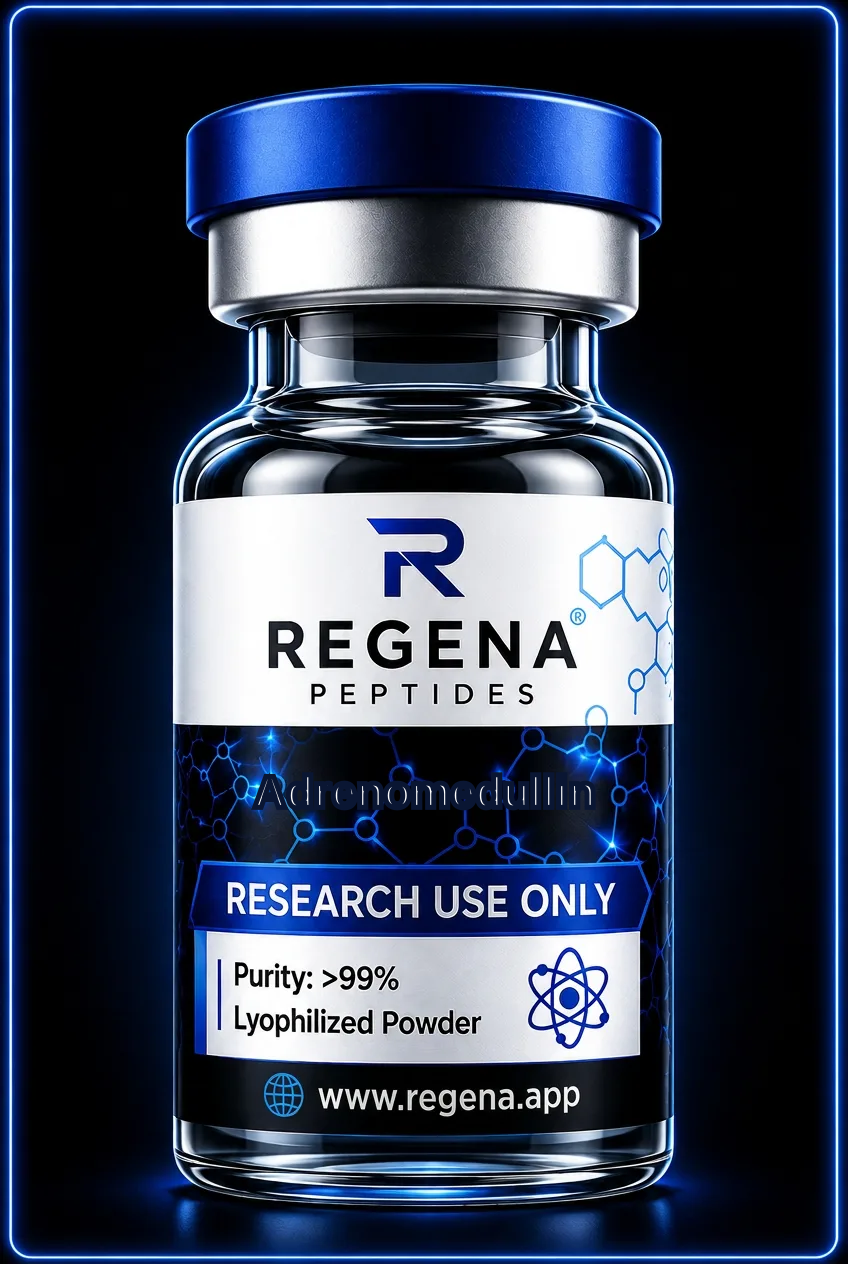
Adrenomedullin
Also known as ADM
A 52-amino-acid vasodilatory peptide that signals through CLR/RAMP complexes, investigated in models of vascular function and angiogenesis.
- Length
- 52 amino acids
- Half-life
- Approx. 20-25 minutes (plasma)
- Mechanism
- Adrenomedullin signals through a complex of the calcitonin receptor-like receptor (CLR) and a receptor activity-modifying protein (RAMP2 or RAMP3), increasing intracellular cAMP.
- Studied in
- Research applications include studying its vasodilatory, angiogenic, and anti-inflammatory properties in various cell culture and tissue models.
About Adrenomedullin
Adrenomedullin (ADM) is a 52-amino-acid peptide with significant structural homology to the calcitonin gene-related peptide (CGRP). It contains an intramolecular disulfide bond, forming a six-amino-acid ring structure that is critical for its biological activity. ADM is widely expressed in many tissues and cell types, including vascular endothelial and smooth muscle cells.
Its signaling occurs through a heterodimeric G protein-coupled receptor complex formed by the calcitonin receptor-like receptor (CLR) and a specific receptor activity-modifying protein (RAMP), typically RAMP2 or RAMP3. Ligand binding predominantly elevates intracellular cyclic adenosine monophosphate (cAMP) levels. In laboratory settings, ADM is used to investigate mechanisms of vasodilation, angiogenesis, and tissue protection.
Laboratory notes
- The biological activity of ADM is dependent on its interaction with RAMPs; ensure the cell or tissue model endogenously expresses both CLR and the appropriate RAMP for valid results.
- ADM contains a C-terminal amide, which is crucial for its stability and receptor binding. Verify the supplied peptide is amidated.
- Reconstituted solutions are best used fresh. For storage, aliquot into low-protein-binding tubes and freeze at -80°C to minimize degradation.
Storage and reconstitution basics: storage guide.
Questions about Adrenomedullin
What is the receptor for Adrenomedullin?
Adrenomedullin binds to a complex formed by the calcitonin receptor-like receptor (CLR) and either Receptor Activity-Modifying Protein 2 (RAMP2) or RAMP3.
How does ADM cause vasodilation in experimental models?
Activation of its receptor on endothelial cells can lead to nitric oxide production, while direct action on smooth muscle cells increases cAMP, both pathways contributing to relaxation.
Is Adrenomedullin related to other peptides?
Yes, it is part of the calcitonin/CGRP superfamily of peptides and shares structural and functional similarities, particularly with CGRP.
Is Adrenomedullin for human use?
No. It is supplied strictly for in-vitro laboratory research and is not for human or animal consumption.
Related research peptides
All products are sold for laboratory research use only. Not for human consumption, not a medicine, not for diagnosing, treating or preventing any condition.