
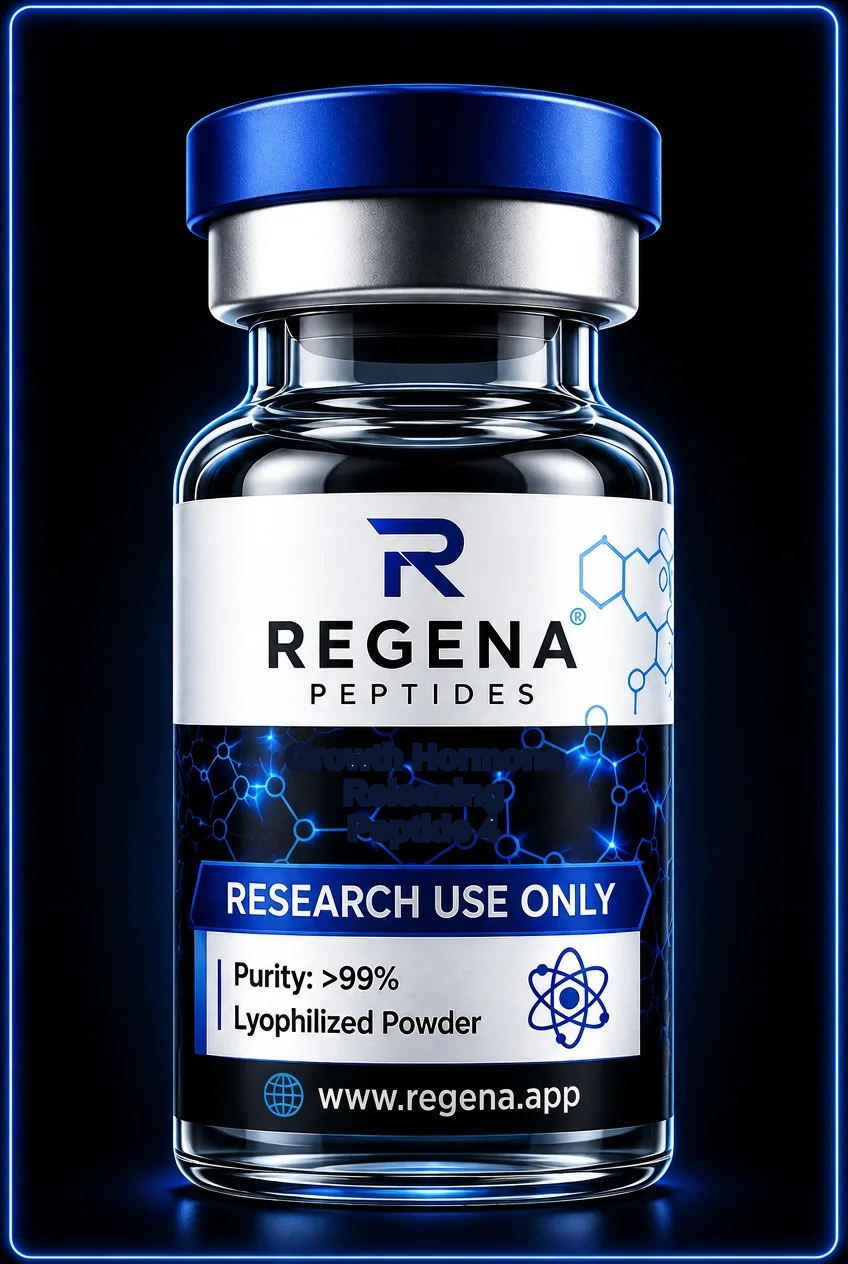
Growth Hormone · Synthetic peptide, ghrelin mimetic
Growth Hormone Releasing Peptide 4
Also known as GHRP-4
GHRP-4 is a synthetic hexapeptide and potent GHSR-1a agonist, used in research to stimulate growth hormone release and study ghrelin receptor function.
- Length
- 6 amino acids
- Half-life
- Not well characterised
- Mechanism
- Acts as a potent agonist of the growth hormone secretagogue receptor (GHSR-1a), also known as the ghrelin receptor.
- Studied in
- Employed in laboratory models to investigate the stimulation of growth hormone release from the pituitary and to study the GHSR-1a signalling pathway.
About Growth Hormone Releasing Peptide 4
Growth Hormone Releasing Peptide 4 (GHRP-4) is a synthetic hexapeptide belonging to the GHRP family. It is not an endogenous molecule but was developed as a research chemical to probe the mechanisms of growth hormone (GH) secretion. Structurally, it is distinct from the native Growth Hormone-Releasing Hormone (GHRH).
In a research setting, GHRP-4 functions as a potent agonist of the growth hormone secretagogue receptor type 1a (GHSR-1a). This is the same receptor activated by the endogenous hormone ghrelin. Its use in pituitary cell cultures or in vivo animal models allows for the study of GHSR-1a activation, downstream signalling cascades, and the pulsatile release of GH, independent of the GHRH receptor pathway.
Laboratory notes
- GHRP-4 is a synthetic peptide and not found endogenously in any species.
- Its action is synergistic with GHRH; co-administration in experimental models results in a greater GH release than either peptide alone.
- Like other GHRPs, it is a small peptide and should be handled carefully to prevent degradation; store lyophilised at -20°C and reconstituted aliquots at -80°C.
Storage and reconstitution basics: storage guide.
Questions about Growth Hormone Releasing Peptide 4
Is GHRP-4 a natural hormone?
No, it is a synthetic peptide designed as a research tool to act on the ghrelin receptor.
What is the primary molecular target of GHRP-4?
It is a selective agonist for the growth hormone secretagogue receptor (GHSR-1a).
How does GHRP-4's mechanism differ from Sermorelin?
GHRP-4 acts on the GHSR-1a receptor, while GHRH analogues like Sermorelin act on the GHRH receptor. These two pathways work synergistically to stimulate GH release.
Is Growth Hormone Releasing Peptide 4 for human use?
No. It is supplied strictly for in-vitro laboratory research and is not for human or animal consumption.
Related research peptides
All products are sold for laboratory research use only. Not for human consumption, not a medicine, not for diagnosing, treating or preventing any condition.