
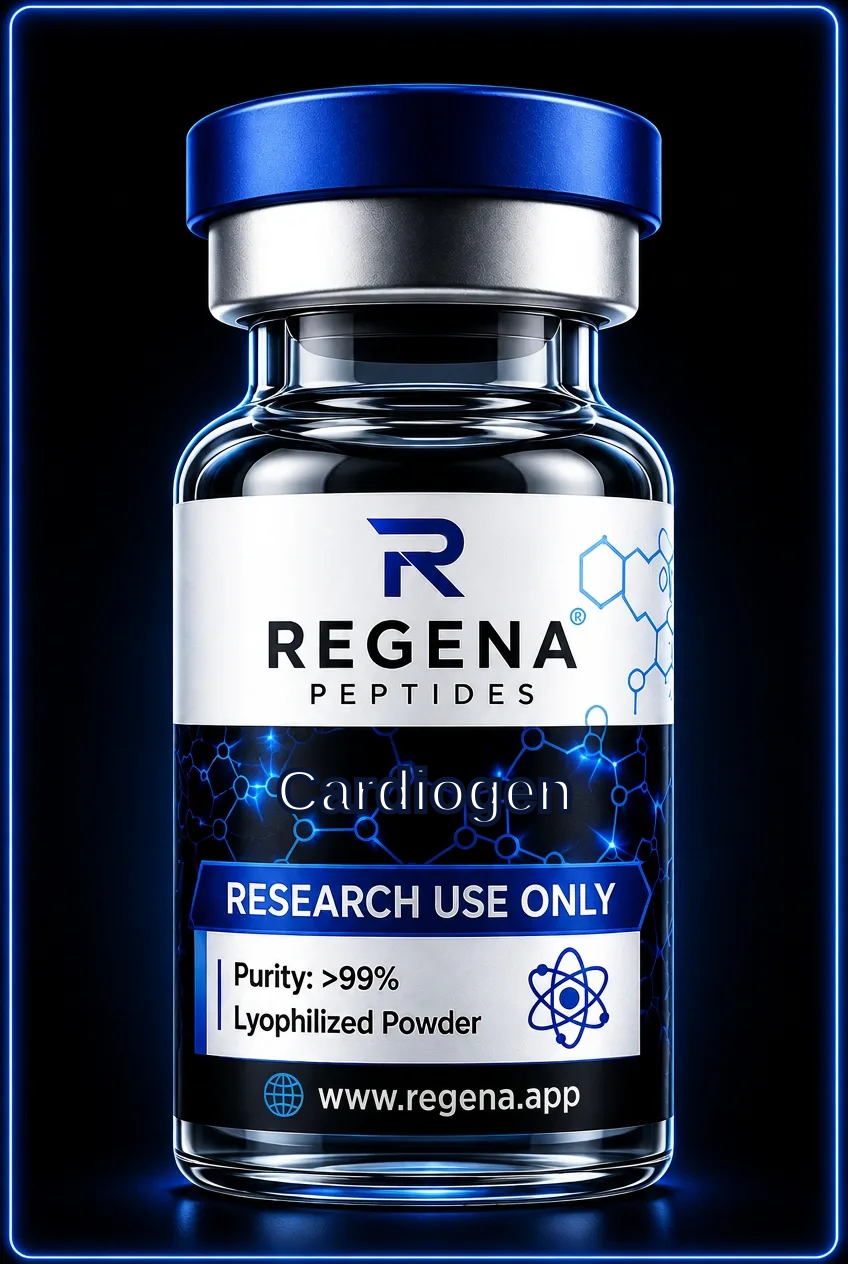
Cardiovascular · Synthetic tetrapeptide studied as a peptide bioregulator
Cardiogen
Also known as AEDR; Ala-Glu-Asp-Arg
An AEDR tetrapeptide studied in cardiac experimental systems, with no established direct receptor target.
- Length
- 4 amino acids
- Half-life
- Not well characterised
- Mechanism
- Cardiogen has been studied for modulation of gene-expression and cell-state markers in cardiac experimental systems. Its direct molecular target remains unresolved, and no specific receptor-mediated mechanism is established.
- Studied in
- Reported laboratory studies investigate cardiac-cell cultures and animal cardiac-tissue models using molecular, morphological and cell-population endpoints.
About Cardiogen
Cardiogen denotes the synthetic tetrapeptide Ala-Glu-Asp-Arg, abbreviated AEDR. It appears in the short-peptide bioregulator literature associated with cardiac-tissue research. The four-residue sequence is chemically distinct from native cardiac hormones and should not be classified as one without evidence of a corresponding endogenous signalling role. Its tissue-associated name does not demonstrate selective uptake or binding. A definitive discovery narrative requires the original synthesis and characterisation reference rather than later catalogue descriptions.
Experimental reports discuss changes in cardiac-cell phenotypes and molecular markers, but these findings do not define a single causal pathway. In particular, transcriptional responses are not equivalent to proof of direct DNA binding or receptor engagement. Cardiac cultures can contain multiple cell populations, making cell identity an important interpretive variable. Studies should therefore resolve which populations contribute to each endpoint and separate changes in proliferation, viability and differentiation from a narrowly defined signalling response.
Laboratory notes
- Verify AEDR rather than similarly named peptides; confirm terminal groups and expected molecular mass against the certificate of analysis.
- Document cardiomyocyte and non-myocyte content in mixed cultures before interpreting bulk expression measurements.
- Pair molecular endpoints with cell-identity and viability measurements, using a matched vehicle and an appropriate sequence control.
Storage and reconstitution basics: storage guide.
Questions about Cardiogen
Is Cardiogen a native cardiac hormone?
It is generally described as a synthetic short research peptide. Its name and experimental context do not establish an endogenous hormonal function.
Why does cardiac-culture composition matter?
Bulk measurements can reflect cardiomyocytes, fibroblasts or other cells. A change in their relative abundance can resemble a change in expression within individual cells.
Does Cardiogen have a confirmed receptor target?
No specific receptor target is established. Mechanistic descriptions should remain limited to the experimental endpoints actually measured.
Is Cardiogen for human use?
No. It is supplied strictly for in-vitro laboratory research and is not for human or animal consumption.
Related research peptides
All products are sold for laboratory research use only. Not for human consumption, not a medicine, not for diagnosing, treating or preventing any condition.