
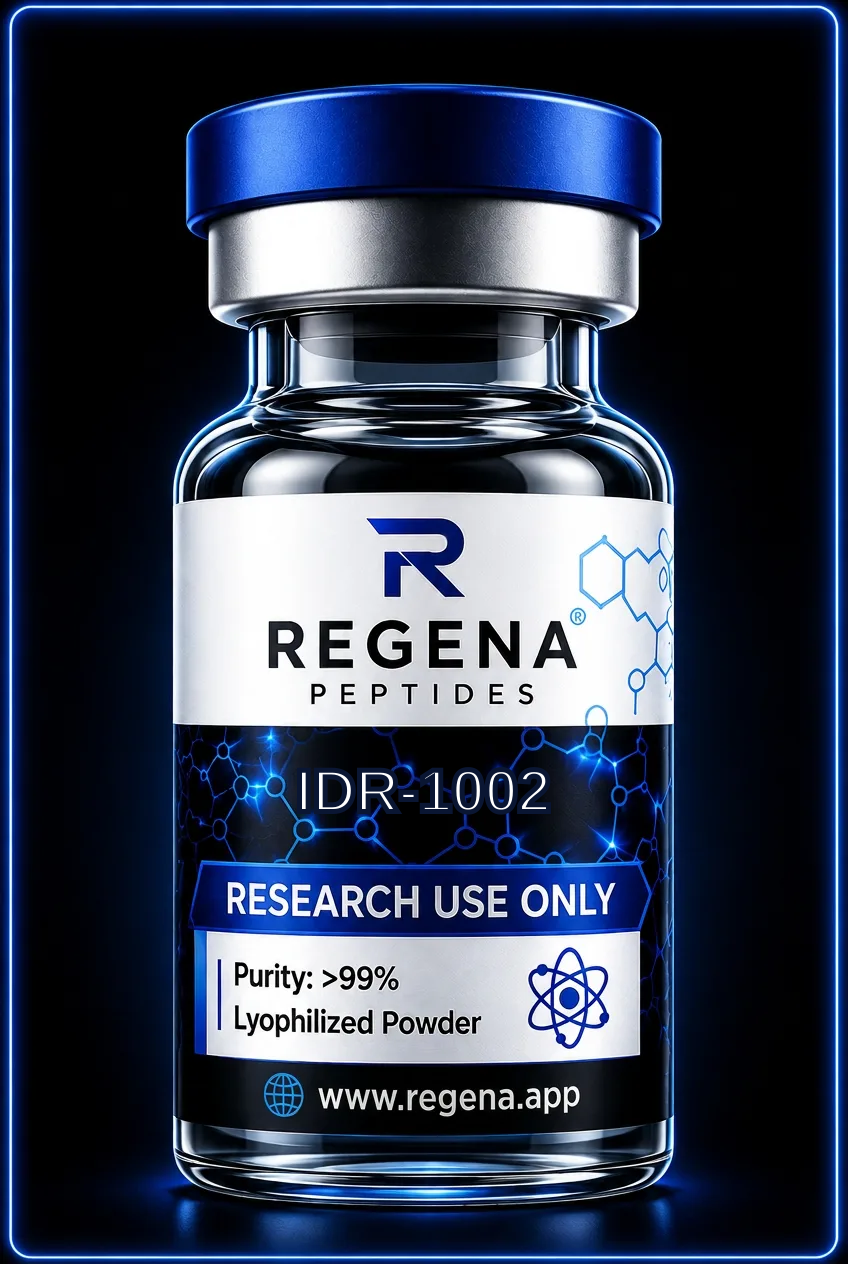
Immune · Synthetic cationic innate defence regulator peptide
IDR-1002
Also known as Innate defence regulator 1002
A 12-residue synthetic peptide used to investigate chemokine responses and context-dependent regulation of innate immune signalling.
- Length
- 12 amino acids
- Half-life
- Not well characterised
- Mechanism
- IDR-1002 alters innate immune-cell responses, including chemokine production and signalling associated with MAP kinase pathways. Its activity is context-dependent, and no single definitive receptor has been established.
- Studied in
- Monocyte and macrophage cultures, microbial-stimulus assays and animal infection or inflammation models examine IDR-1002-dependent innate immune responses.
About IDR-1002
IDR-1002 has the sequence VQRWLIVWRIRK and is commonly synthesised as a C-terminally amidated peptide. It was developed within synthetic innate defence regulator programmes exploring short, host-defence-peptide-inspired sequences. Two tryptophan residues, several hydrophobic residues and positively charged side chains give it an amphipathic interaction profile. Its designation reflects its selection as an experimental immune-modulating peptide, rather than identifying a natural gene product or implying a single antimicrobial mode of action.
Laboratory investigations focus on how IDR-1002 changes the response of innate immune cells to microbial stimuli. Reported observations include chemokine induction and altered inflammatory signalling, with MAP kinase pathways implicated in particular cell systems. These responses vary with cell type, stimulus and incubation conditions. Direct antimicrobial activity is not an adequate substitute for measuring immune modulation, and pathway activation alone does not identify a receptor. Mechanistic comparisons therefore require matched cellular controls and independent viability measurements.
Laboratory notes
- Use material with documented endotoxin testing, since trace contamination can confound innate immune-cell readouts.
- Protect tryptophan-containing preparations from unnecessary light and oxidative exposure, and check aged stocks for chemical changes.
- Include peptide-only, stimulus-only and combined-condition controls, with matched viability measurements and sampling times.
Storage and reconstitution basics: storage guide.
Questions about IDR-1002
How does IDR-1002 differ structurally from IDR-1018?
Both contain 12 residues, but their sequences differ. IDR-1002 is VQRWLIVWRIRK and contains two tryptophans; IDR-1018 is VRLIVAVRIWRR and contains one.
Why is endotoxin characterisation particularly important?
Innate immune cells respond strongly to bacterial endotoxin. Contamination can imitate or obscure peptide-associated cytokine and signalling changes.
Does reduced cytokine release prove pathway-specific modulation?
No. Reduced release can also reflect loss of cell viability, assay interference or changes in stimulus availability. Orthogonal signalling and viability assays are needed.
Is IDR-1002 for human use?
No. It is supplied strictly for in-vitro laboratory research and is not for human or animal consumption.
Related research peptides
All products are sold for laboratory research use only. Not for human consumption, not a medicine, not for diagnosing, treating or preventing any condition.