
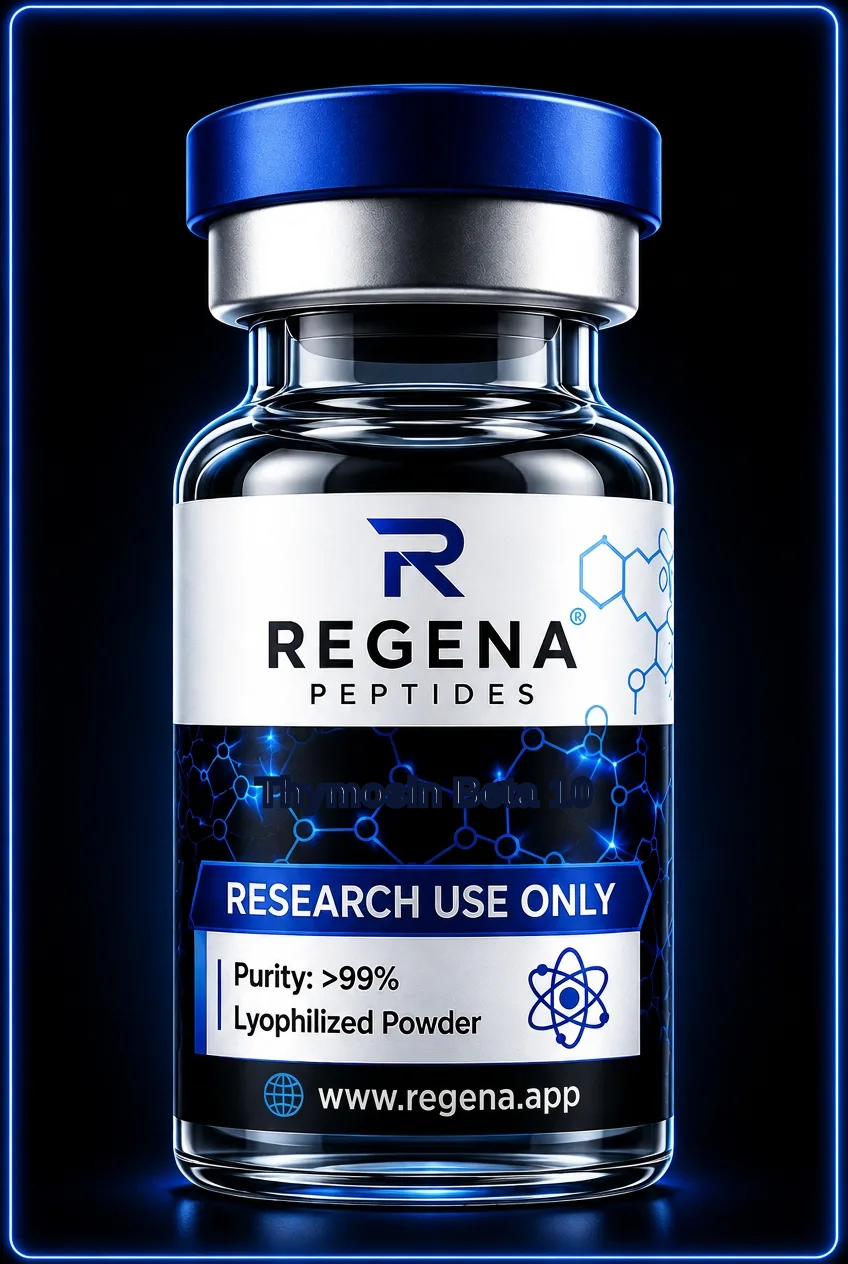
Immune · Actin-sequestering protein
Thymosin Beta 10
Also known as TB10
A 42-amino-acid peptide that regulates actin dynamics, studied in models of cell migration, angiogenesis, and neuronal development.
- Length
- 42 amino acids
- Half-life
- Not well characterised
- Mechanism
- Binds to monomeric globular actin (G-actin), preventing its assembly into filamentous actin (F-actin) and thereby regulating cytoskeletal dynamics.
- Studied in
- Investigated in models of cell motility, angiogenesis, and tissue repair, particularly in the context of neuronal development and cancer cell biology.
About Thymosin Beta 10
Thymosin Beta 10 is a 42-amino-acid polypeptide belonging to the beta-thymosin family of actin-sequestering proteins. It shares significant sequence homology with other beta-thymosins, such as Thymosin Beta 4, and is found in various cell types and tissues. Its primary intracellular function is the maintenance of the pool of monomeric G-actin.
By binding to G-actin, Thymosin Beta 10 inhibits polymerization, a critical process for the formation of the actin cytoskeleton. This mechanism makes it a key regulator of cellular architecture, motility, and division. Consequently, it is a subject of in vitro research in fields studying angiogenesis, wound healing, and neuronal migration, where cytoskeletal rearrangement is fundamental.
Laboratory notes
- It shares approximately 75% sequence identity with Thymosin Beta 4 (TB-4), leading to some overlap in research applications.
- Due to its hydrophilic nature, it is readily soluble in aqueous buffers such as sterile water or phosphate-buffered saline (PBS).
- Quantification is typically performed using HPLC or ELISA specific for the peptide sequence.
Storage and reconstitution basics: storage guide.
Questions about Thymosin Beta 10
What distinguishes Thymosin Beta 10 from Thymosin Beta 4?
While both are actin-sequestering proteins, they have different amino acid sequences, expression patterns, and may exhibit distinct binding affinities and biological activities in specific cellular contexts, which is a subject of comparative research.
What is actin sequestration?
Actin sequestration is a cellular process where proteins, like Thymosin Beta 10, bind to actin monomers to prevent them from polymerizing into filaments. This allows the cell to maintain a ready supply of actin monomers that can be rapidly released and assembled where needed.
In what types of assays is Thymosin Beta 10 used?
It is commonly used in cell migration (scratch wound) assays, tube formation assays to study angiogenesis, and in cell culture to examine its effects on cytoskeletal structure using immunofluorescence microscopy.
Is Thymosin Beta 10 for human use?
No. It is supplied strictly for in-vitro laboratory research and is not for human or animal consumption.
Related research peptides
All products are sold for laboratory research use only. Not for human consumption, not a medicine, not for diagnosing, treating or preventing any condition.