
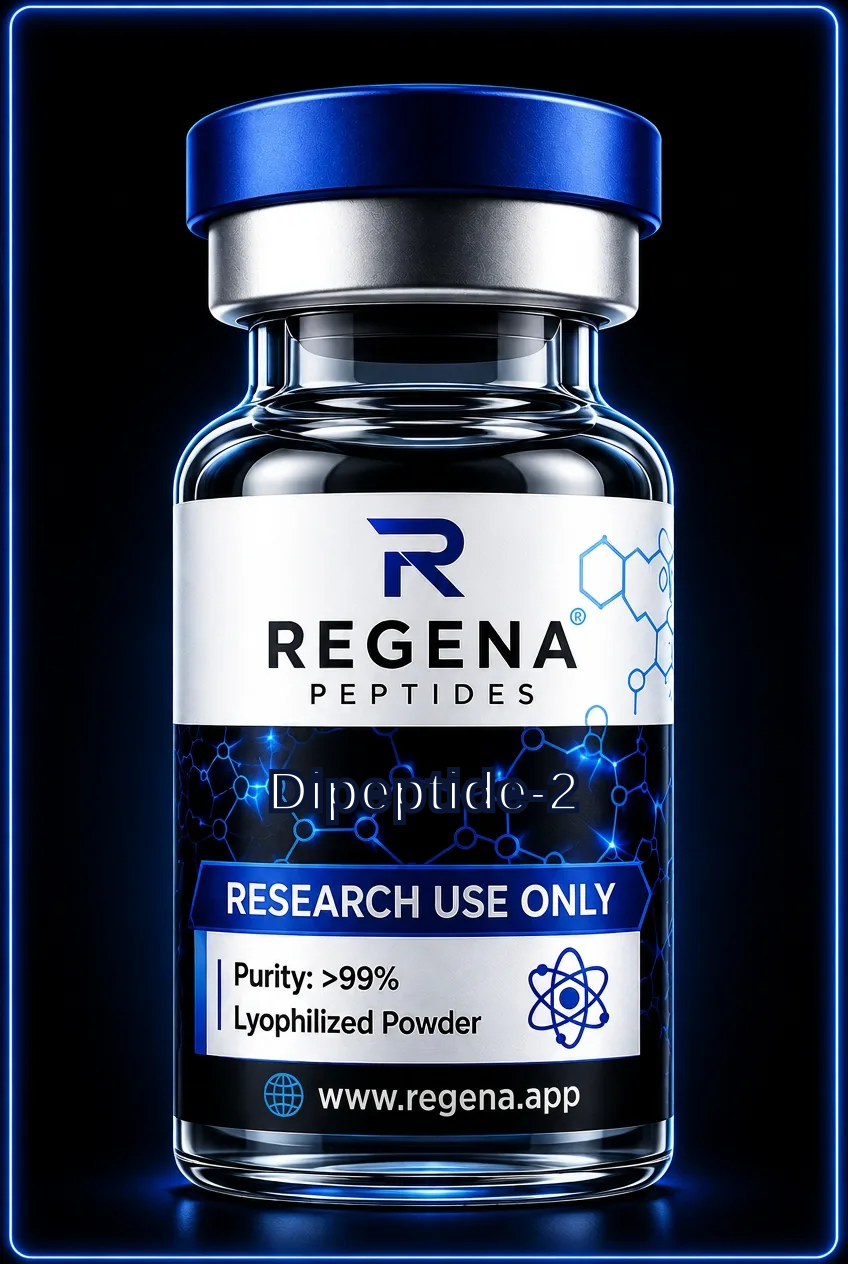
Cosmetic · Dipeptide
Dipeptide-2
Also known as Valyl-Tryptophan, Val-Trp
A dipeptide (Val-Trp) supplied for laboratory research into angiotensin-converting enzyme (ACE) inhibition and fluid balance in cellular models.
- Length
- 2 amino acids
- Half-life
- Not well characterised
- Mechanism
- Dipeptide-2 is proposed to inhibit the angiotensin-converting enzyme (ACE), potentially influencing fluid balance regulation in cellular models.
- Studied in
- Laboratory research primarily investigates its effects on lymphatic drainage and fluid retention in ex vivo skin explant models.
About Dipeptide-2
Dipeptide-2 is a synthetic peptide composed of the amino acids valine and tryptophan. Its simple dipeptide structure, Val-Trp, makes it a small and readily studied molecule in various in vitro assays. The sequence is of interest for its potential interaction with specific enzymes involved in physiological fluid regulation pathways.
Research models often use Dipeptide-2 to explore the mechanisms of angiotensin-converting enzyme (ACE) inhibition. Cellular and tissue-level studies focus on its influence on protein glycation and microcirculation, providing a model compound for investigating pathways related to fluid homeostasis in skin biology.
Laboratory notes
- Supplied as a white lyophilised powder; reconstitute with bacteriostatic water or a suitable sterile buffer for in vitro use.
- Dipeptide-2 solutions should be stored at 2-8°C for short-term use and below -20°C for long-term stability.
- In assays, its small size requires sensitive detection methods such as LC-MS/MS for accurate quantification.
Storage and reconstitution basics: storage guide.
Questions about Dipeptide-2
What is the molecular structure of Dipeptide-2?
Dipeptide-2 is a simple peptide consisting of two amino acids, L-Valine and L-Tryptophan, joined by a peptide bond. Its sequence is abbreviated as Val-Trp or VW.
What is the primary research application for this peptide?
It is primarily used as a research tool in cell culture and tissue models to study the inhibition of the angiotensin-converting enzyme (ACE) and its effects on localized fluid dynamics.
Is Dipeptide-2 stable in solution?
Like most peptides, Dipeptide-2 is susceptible to degradation in solution, particularly by proteases. For best results, use freshly prepared solutions or store aliquots frozen at -20°C or below.
Is Dipeptide-2 for human use?
No. It is supplied strictly for in-vitro laboratory research and is not for human or animal consumption.
Related research peptides
All products are sold for laboratory research use only. Not for human consumption, not a medicine, not for diagnosing, treating or preventing any condition.