
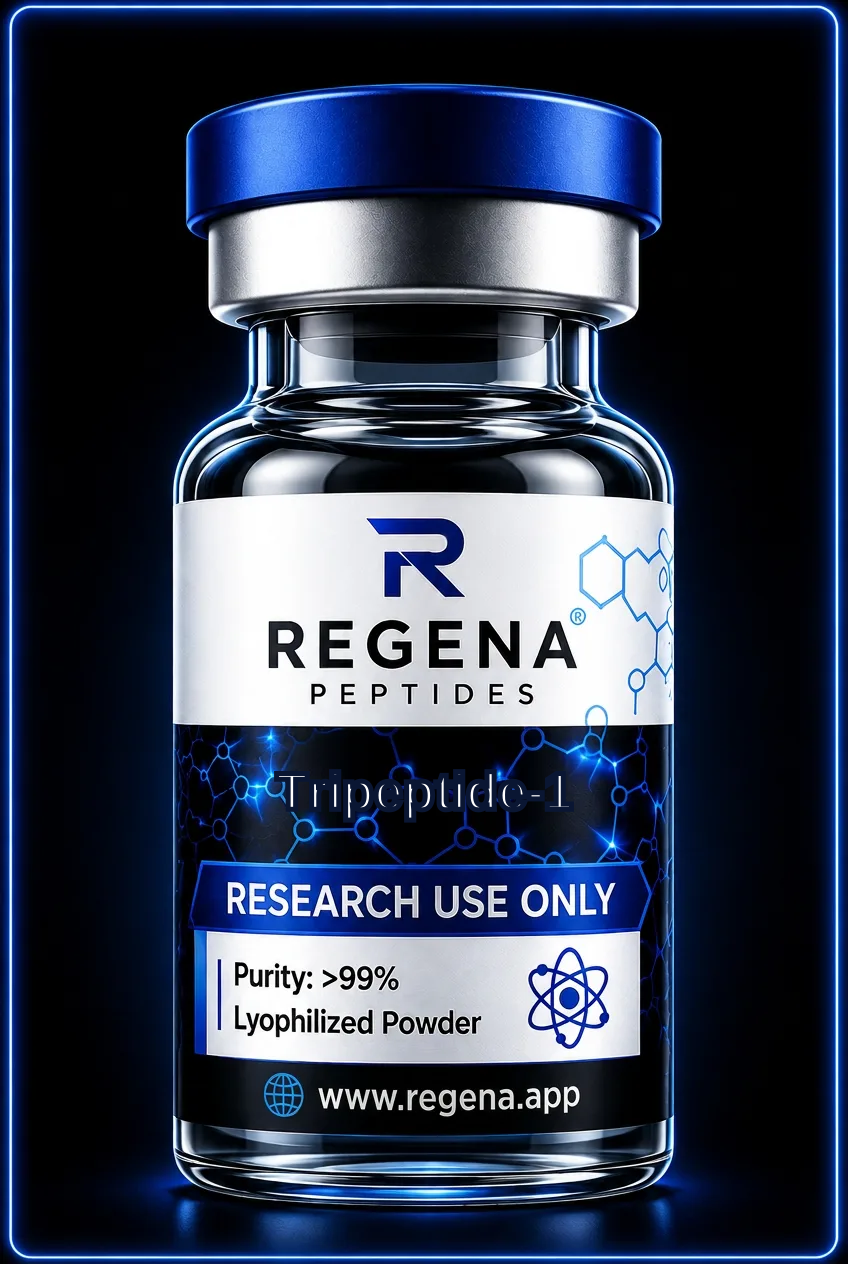
Cosmetic · Tripeptide
Tripeptide-1
Also known as Glycyl-Histidyl-Lysine, GHK
A tripeptide (Gly-His-Lys) studied for its role in extracellular matrix synthesis and tissue remodeling, often complexed with copper (GHK-Cu).
- Length
- 3 amino acids
- Half-life
- Not well characterised
- Mechanism
- This peptide is a component of the GHK-Cu complex, which modulates the expression of numerous genes related to extracellular matrix protein synthesis and tissue remodeling.
- Studied in
- In vitro studies focus on its role in stimulating collagen, elastin, and glycosaminoglycan synthesis in fibroblast cell cultures.
About Tripeptide-1
Tripeptide-1, with the amino acid sequence Glycyl-Histidyl-Lysine (GHK), is a small, naturally occurring peptide fragment first isolated from human plasma. It is known for its high affinity for copper(II) ions, forming the GHK-Cu complex. This peptide is a subject of extensive research due to its involvement in multiple biological pathways.
Laboratory investigations utilize Tripeptide-1, both in its free form and as GHK-Cu, to examine mechanisms of tissue repair and regeneration. Research in fibroblast cell lines has demonstrated its capacity to modulate the synthesis of key extracellular matrix components, including collagen and elastin, making it a standard reference compound for studies on skin matrix biology.
Laboratory notes
- Tripeptide-1 is often studied complexed with copper ions (as GHK-Cu) to investigate its full range of biological activities.
- Store the lyophilised powder desiccated and protected from light at -20°C.
- When preparing solutions, use high-purity water and sterile, non-pyrogenic labware to avoid contamination.
Storage and reconstitution basics: storage guide.
Questions about Tripeptide-1
What is the difference between Tripeptide-1 and GHK-Cu?
Tripeptide-1 is the peptide with the sequence Gly-His-Lys (GHK). GHK-Cu is the complex formed when GHK chelates a copper(II) ion. Most of its studied biological activity is attributed to this copper-bound form.
What is the sequence of Tripeptide-1?
The amino acid sequence is Glycyl-Histidyl-Lysine, abbreviated as GHK.
What type of in vitro models are used to study Tripeptide-1?
Common models include primary human dermal fibroblast cultures, keratinocyte cell lines, and 3D skin equivalent models to analyze its effects on gene expression and protein synthesis.
Is Tripeptide-1 for human use?
No. It is supplied strictly for in-vitro laboratory research and is not for human or animal consumption.
Related research peptides
All products are sold for laboratory research use only. Not for human consumption, not a medicine, not for diagnosing, treating or preventing any condition.