
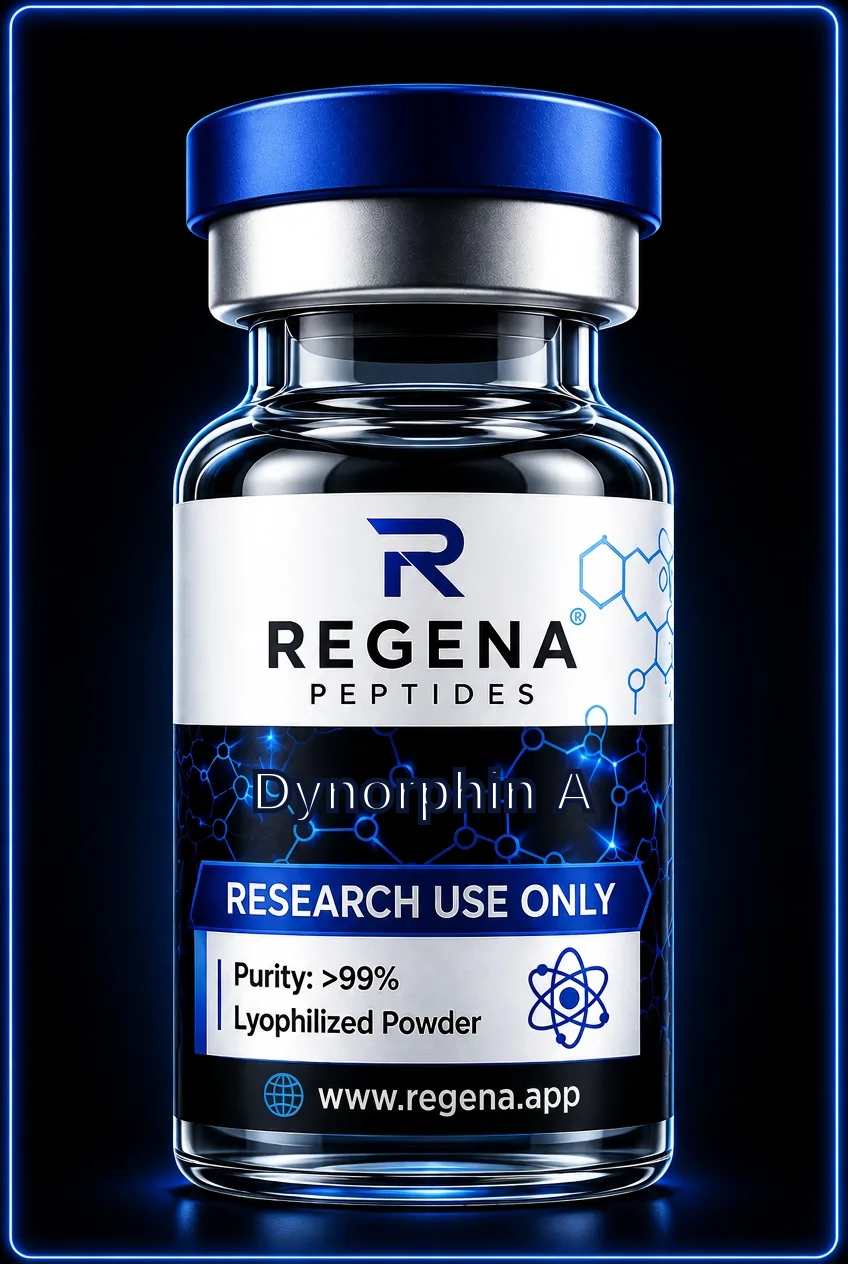
Cognitive · Opioid peptide fragment
Dynorphin A (1-8)
A truncated form of Dynorphin A, this octapeptide is a potent kappa-opioid receptor agonist used in neuroscience research models.
- Length
- 8 amino acids
- Half-life
- Very short, typically minutes in plasma.
- Mechanism
- This octapeptide fragment of Dynorphin A is a high-affinity agonist for the kappa-opioid receptor (KOR).
- Studied in
- It serves as a tool compound in laboratory research to probe KOR-mediated signaling in the central and peripheral nervous systems.
About Dynorphin A (1-8)
Dynorphin A (1-8) is an eight-amino-acid fragment of the larger Dynorphin A peptide, with the sequence Tyr-Gly-Gly-Phe-Leu-Arg-Arg-Ile. It represents the N-terminal portion which is critical for opioid receptor binding. This fragment is itself an endogenous metabolite of Dynorphin A.
This octapeptide functions as a potent and selective agonist at the kappa-opioid receptor (KOR). Due to its high affinity, it is frequently used in competitive binding assays and functional studies to characterize KOR pharmacology and signaling. Its activity is investigated in experimental models of pain modulation, addiction, and mood regulation.
Laboratory notes
- Highly susceptible to peptidase activity; use of peptidase inhibitors is recommended for in vitro studies with biological fluids.
- Ensure complete dissolution in an appropriate aqueous buffer before adding to experimental systems.
- Store stock solutions at -80°C to maintain integrity.
Storage and reconstitution basics: storage guide.
Questions about Dynorphin A (1-8)
What is the source of Dynorphin A (1-8)?
It is an endogenous metabolite of the larger Dynorphin A peptide, both of which are derived from the prodynorphin gene product.
What is its primary molecular target?
It is a high-affinity agonist for the kappa-opioid receptor (KOR).
Why is this fragment studied instead of the full-length peptide?
This N-terminal fragment retains potent KOR agonist activity and is a useful tool for studying the minimal structural requirements for receptor activation.
Is Dynorphin A (1-8) for human use?
No. It is supplied strictly for in-vitro laboratory research and is not for human or animal consumption.
Related research peptides
All products are sold for laboratory research use only. Not for human consumption, not a medicine, not for diagnosing, treating or preventing any condition.