
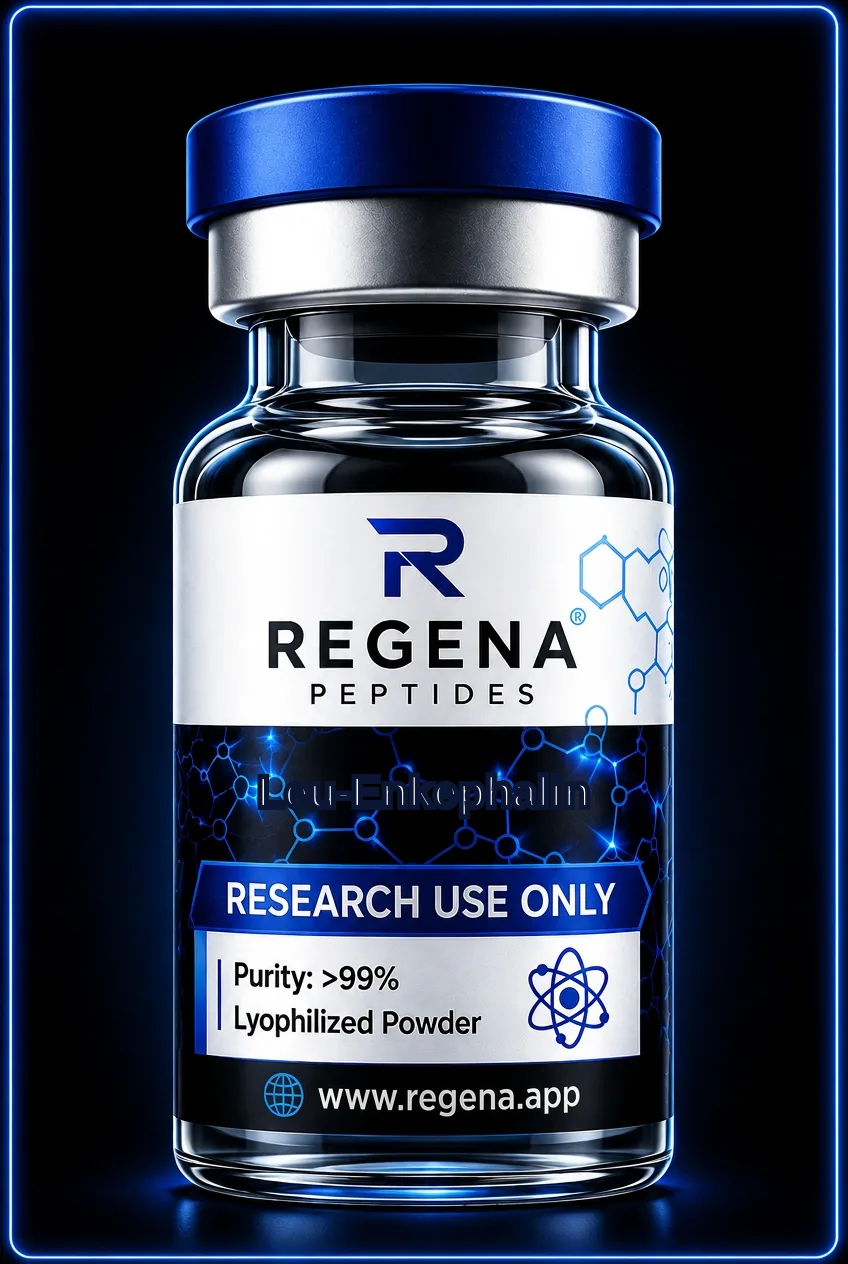
Cognitive · Opioid peptide
Leu-Enkephalin
Also known as Leucine-enkephalin
A naturally occurring pentapeptide, Leu-Enkephalin is an endogenous agonist for the delta-opioid receptor used in neurological research.
- Length
- 5 amino acids
- Half-life
- Extremely short (seconds to minutes) in plasma.
- Mechanism
- This endogenous pentapeptide is a primary ligand for the delta-opioid receptor and also binds to the mu-opioid receptor.
- Studied in
- It is a standard tool in pharmacology and neuroscience for investigating delta-opioid receptor function, signal transduction, and pain modulation pathways.
About Leu-Enkephalin
Leu-Enkephalin is a pentapeptide with the sequence Tyr-Gly-Gly-Phe-Leu, differing from Met-Enkephalin only by its C-terminal amino acid. It is also derived from the proenkephalin precursor protein and is widely distributed in the brain, spinal cord, and adrenal medulla.
As a key endogenous opioid, it functions as a neurotransmitter and neuromodulator. Leu-Enkephalin exhibits a higher affinity for the delta-opioid receptor (DOR) compared to the mu-opioid receptor (MOR), making it a valuable probe for studying DOR-specific functions. Its use in the laboratory is fundamental to research on endogenous pain control mechanisms and emotional regulation.
Laboratory notes
- Like Met-Enkephalin, it is subject to rapid enzymatic degradation; peptidase inhibitors are necessary for most functional assays.
- For reconstitution, use high-purity water or buffer and avoid vigorous vortexing to prevent aggregation.
- Aliquoting reconstituted solutions is recommended to preserve peptide integrity across multiple experiments.
Storage and reconstitution basics: storage guide.
Questions about Leu-Enkephalin
How does Leu-Enkephalin differ from Met-Enkephalin?
They differ by a single amino acid at the C-terminus: Leu-Enkephalin has a Leucine, while Met-Enkephalin has a Methionine.
What is its primary receptor target?
Leu-Enkephalin shows a higher binding affinity for the delta-opioid receptor (DOR) than for other opioid receptors.
Where is Leu-Enkephalin found endogenously?
It is found throughout the central nervous system, particularly in regions involved in pain perception, and also in the adrenal glands.
Is Leu-Enkephalin for human use?
No. It is supplied strictly for in-vitro laboratory research and is not for human or animal consumption.
Related research peptides
All products are sold for laboratory research use only. Not for human consumption, not a medicine, not for diagnosing, treating or preventing any condition.