
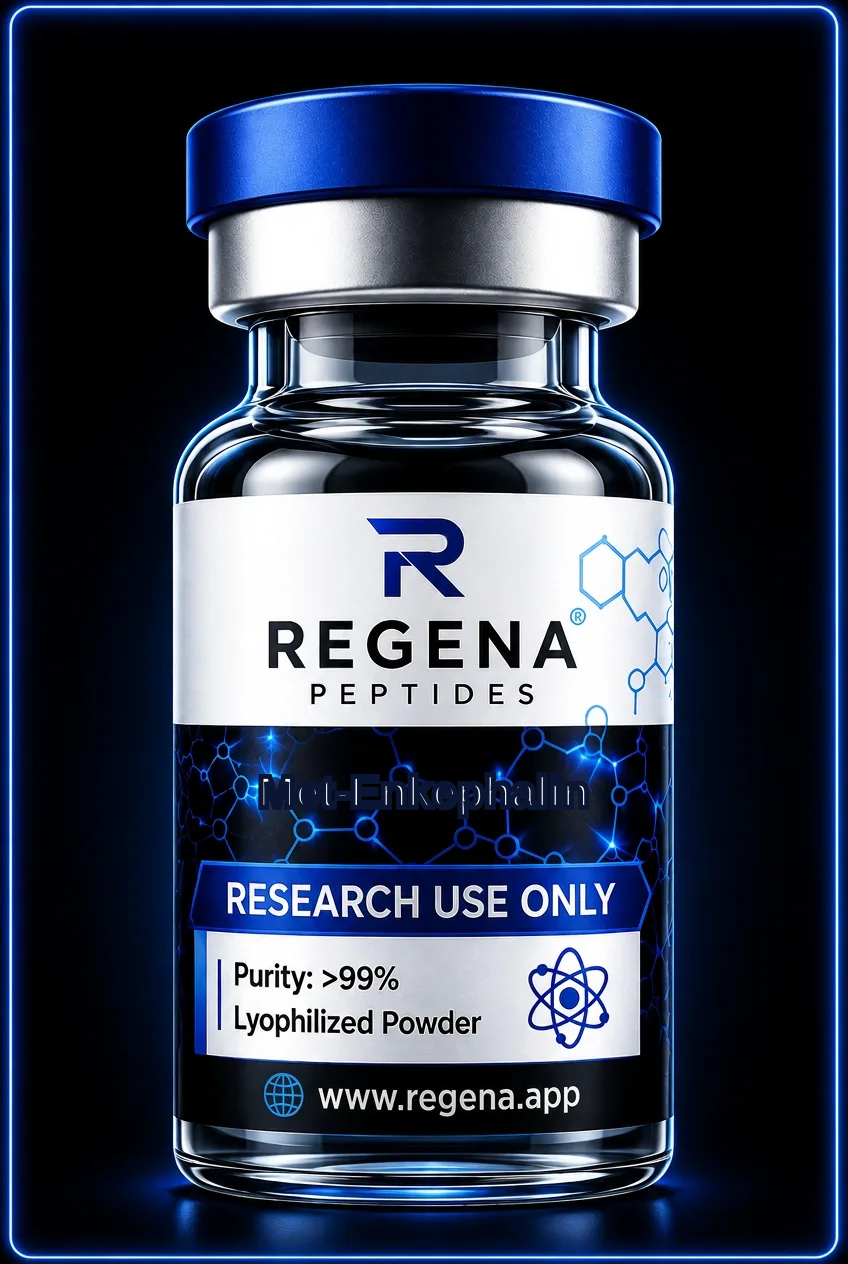
Cognitive · Opioid peptide
Met-Enkephalin
Also known as Methionine-enkephalin
An endogenous pentapeptide, Met-Enkephalin is a mu- and delta-opioid receptor agonist used in basic neuroscience and pharmacology research.
- Length
- 5 amino acids
- Half-life
- Extremely short (seconds to minutes) in plasma.
- Mechanism
- This endogenous pentapeptide acts as an agonist primarily at the mu- and delta-opioid receptors.
- Studied in
- It is used as a reference compound in studies of nociception, neuroregulation, and the pharmacology of the endogenous opioid system.
About Met-Enkephalin
Met-Enkephalin is an endogenous pentapeptide with the sequence Tyr-Gly-Gly-Phe-Met. It is one of the two primary forms of enkephalins discovered, the other being Leu-Enkephalin. These peptides are produced throughout the central and peripheral nervous systems from the precursor protein proenkephalin.
Functioning as a neurotransmitter or neuromodulator, Met-Enkephalin binds preferentially to mu- and delta-opioid receptors. Its discovery was a key step in understanding the physiological basis for opioid receptor function. In the laboratory, it serves as a classical tool for studying receptor binding, signal transduction, and the roles of endogenous opioids in cellular models.
Laboratory notes
- Extremely rapid degradation by aminopeptidases and enkephalinases requires the use of peptidase inhibitors like bestatin or thiorphan for many in vitro applications.
- Reconstitute in sterile water or a suitable buffer immediately before use.
- Lyophilised product should be stored desiccated at -20°C.
Storage and reconstitution basics: storage guide.
Questions about Met-Enkephalin
What is the sequence of Met-Enkephalin?
The amino acid sequence is Tyrosine-Glycine-Glycine-Phenylalanine-Methionine (Y-G-G-F-M).
Which receptors does Met-Enkephalin bind to?
It primarily acts as an agonist at the mu-opioid receptor (MOR) and the delta-opioid receptor (DOR).
Why is its half-life so short?
It is rapidly broken down by enzymes called peptidases, specifically aminopeptidases and enkephalinases, which are abundant in biological tissues and fluids.
Is Met-Enkephalin for human use?
No. It is supplied strictly for in-vitro laboratory research and is not for human or animal consumption.
Related research peptides
All products are sold for laboratory research use only. Not for human consumption, not a medicine, not for diagnosing, treating or preventing any condition.