
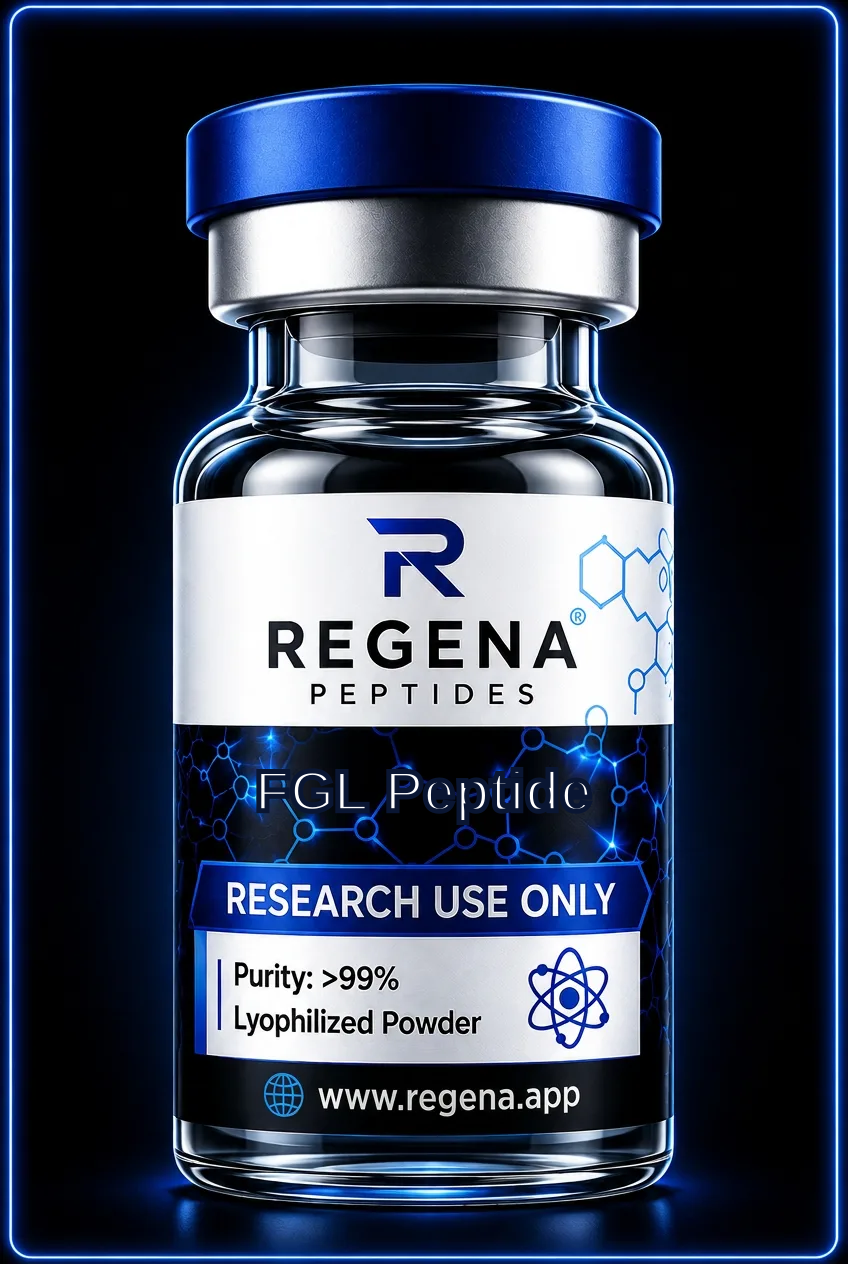
Cognitive · Neuropeptide mimetic
FGL Peptide
Also known as Fibroblast Growth Factor Loop
A synthetic peptide mimetic of the NCAM FGF-receptor-binding loop studied for its role in modulating synaptic plasticity in cognitive research models.
- Length
- 13 amino acids
- Half-life
- Not well characterised
- Mechanism
- Functions as a mimetic of the neural cell adhesion molecule (NCAM) second fibroblast growth factor (FGF) receptor-binding loop, modulating synaptic plasticity.
- Studied in
- Investigated in laboratory models for its effects on neuronal plasticity, learning, and memory formation.
About FGL Peptide
FGL is a synthetic 13-amino-acid peptide derived from the second F-loop of the neural cell adhesion molecule (NCAM). It mimics a specific region of NCAM that interacts with the fibroblast growth factor (FGF) receptor. This interaction is central to the molecular processes that underpin neuronal connectivity and communication, and its structure allows it to be studied as a specific modulator of these pathways.
Research primarily utilises FGL to explore the mechanisms of synaptic plasticity, a fundamental process for learning and memory. In-vitro studies often examine its effects on long-term potentiation (LTP) in hippocampal slice preparations. In-vivo animal models are used to investigate its potential influence on cognitive functions following induced deficits.
Laboratory notes
- FGL is a synthetic peptide sequence; it is not an endogenous molecule.
- Its activity is linked to the modulation of FGF receptor signalling cascades in neuronal cells.
- Solubility and stability should be confirmed for the specific buffer system used in cell culture or other in-vitro assays.
Storage and reconstitution basics: storage guide.
Questions about FGL Peptide
What does 'FGL' stand for?
FGL refers to the 'Fibroblast Growth Factor Loop' peptide, a sequence derived from the neural cell adhesion molecule (NCAM).
Is FGL an endogenous peptide?
No, FGL is a synthetic peptide mimetic designed to replicate the function of a specific domain of the endogenous NCAM protein.
What is the primary receptor system associated with FGL?
FGL's mechanism of action involves the fibroblast growth factor (FGF) receptor system, which plays a role in neuronal development and plasticity.
Is FGL Peptide for human use?
No. It is supplied strictly for in-vitro laboratory research and is not for human or animal consumption.
Related research peptides
All products are sold for laboratory research use only. Not for human consumption, not a medicine, not for diagnosing, treating or preventing any condition.