
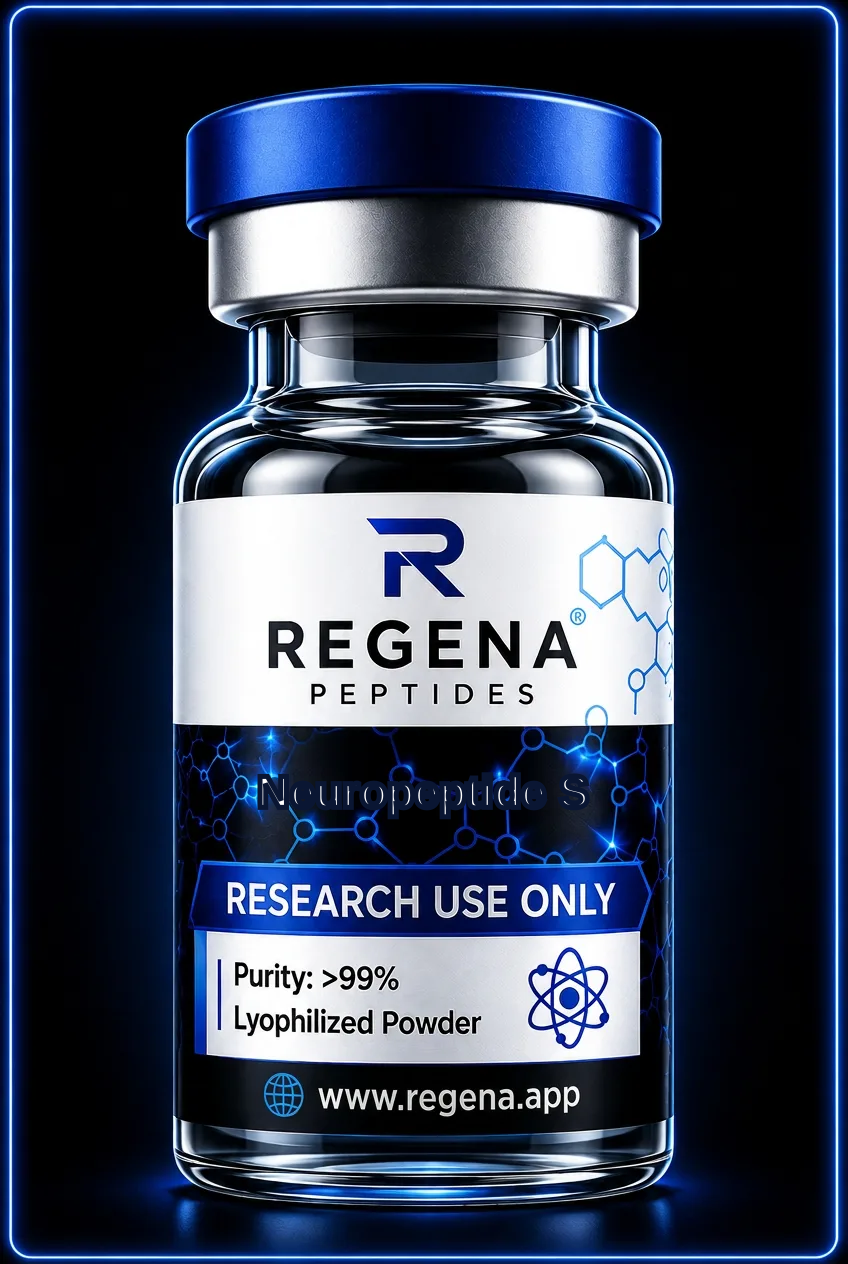
Cognitive · Neuropeptide
Neuropeptide S
Also known as NPS
An endogenous 20-amino-acid neuropeptide that activates the NPSR1 receptor, used in research on arousal, anxiety, and sleep-wake regulation.
- Length
- 20 amino acids
- Half-life
- Not well characterised
- Mechanism
- Acts as the endogenous ligand for the G protein-coupled neuropeptide S receptor (NPSR1), modulating arousal, anxiety, and wakefulness.
- Studied in
- Employed in laboratory models to study sleep-wake cycles, anxiety-like behaviors, and the modulation of fear extinction memory.
About Neuropeptide S
Neuropeptide S (NPS) is a 20-amino-acid peptide originally isolated from the rat brain. It is the sole known endogenous ligand for the G protein-coupled receptor NPSR1. The NPS/NPSR1 system is expressed in specific brain regions associated with arousal, emotion, and cognition, including the amygdala, hypothalamus, and thalamus.
The primary focus of NPS research is its potent effect on arousal and wakefulness. In-vivo rodent models are used to investigate its role in suppressing sleep and increasing locomotion. Further studies explore its anxiolytic-like properties and its ability to facilitate the extinction of conditioned fear responses, making it a tool for studying emotional memory processing.
Laboratory notes
- Human and rodent sequences of Neuropeptide S differ slightly, which may be relevant for species-specific receptor binding assays.
- NPS is susceptible to enzymatic degradation in biological samples; use of protease inhibitors may be required for certain ex-vivo experiments.
- The NPSR1 receptor is known to couple to both Gq/11 and Gs proteins, leading to intracellular calcium mobilization and cAMP accumulation, respectively.
Storage and reconstitution basics: storage guide.
Questions about Neuropeptide S
What is Neuropeptide S (NPS)?
NPS is an endogenous neuropeptide composed of 20 amino acids that acts as a neurotransmitter, primarily involved in regulating arousal and anxiety.
What is the receptor for NPS?
NPS binds specifically to the G protein-coupled receptor NPSR1, which is its only known endogenous receptor.
Where is the NPS system primarily located?
The NPS system is concentrated in brain areas related to sleep, arousal, and emotional regulation, such as the brainstem, thalamus, and amygdala.
Is Neuropeptide S for human use?
No. It is supplied strictly for in-vitro laboratory research and is not for human or animal consumption.
Related research peptides
All products are sold for laboratory research use only. Not for human consumption, not a medicine, not for diagnosing, treating or preventing any condition.