
Cosmetic · Hexapeptide
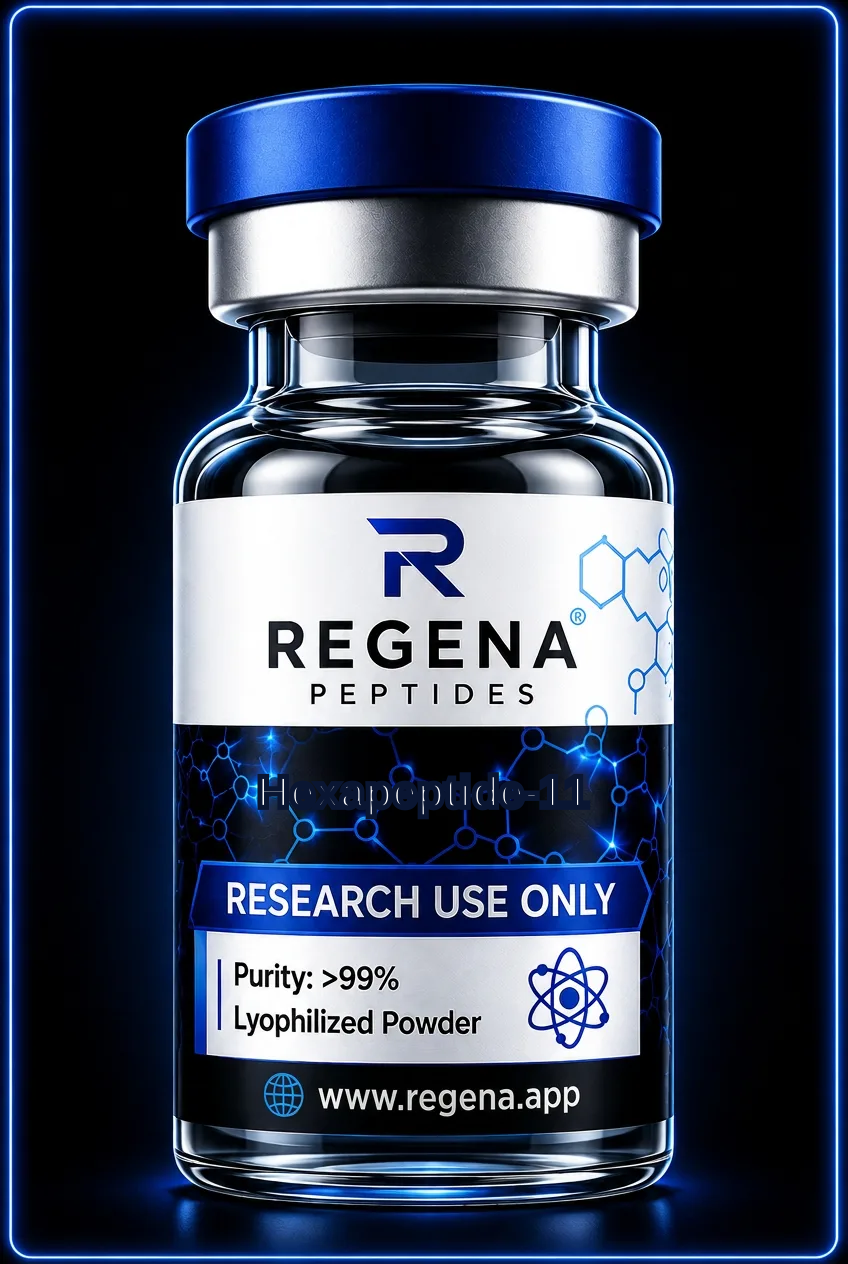
Hexapeptide-11
Also known as Phe-Val-Ala-Pro-Phe-Pro, FVAPFP
A hexapeptide derived from yeast fermentation, studied using transcriptomic tools to understand its broad effects on gene expression in fibroblasts.
- Length
- 6 amino acids
- Half-life
- Not well characterised
- Mechanism
- This peptide is proposed to modulate the expression of genes associated with extracellular matrix proteins and cellular metabolism by interacting with membrane receptors in in vitro models.
- Studied in
- It is studied using transcriptomic analysis (e.g., DNA microarrays) on human dermal fibroblast cultures to identify its influence on gene networks related to skin structure and function.
About Hexapeptide-11
Hexapeptide-11 is a peptide with the sequence Phe-Val-Ala-Pro-Phe-Pro, originally isolated from yeast extracts. Its proline-rich sequence gives it a relatively rigid structure, and its hydrophobic nature influences its interactions within biological systems. It is studied for its ability to modulate a wide range of cellular functions.
Research into Hexapeptide-11 often involves broad, systems-level approaches like transcriptomics. DNA microarray analysis of treated human dermal fibroblasts has been used to show that the peptide can upregulate genes encoding for key extracellular matrix (ECM) proteins, as well as those involved in lipid metabolism and cellular growth factor signaling. These studies provide a comprehensive view of its potential cellular targets.
Laboratory notes
- Due to its broad effects on gene expression, it is crucial to use a vehicle control and perform rigorous statistical analysis on microarray or RNA-seq data.
- The peptide's hydrophobicity may cause aggregation; prepare stock solutions in a suitable organic solvent like DMSO and sonicate if necessary.
- Follow-up validation of transcriptomic hits using qPCR and protein analysis (Western blot/ELISA) is essential to confirm functional effects.
Storage and reconstitution basics: storage guide.
Questions about Hexapeptide-11
What is the amino acid sequence of Hexapeptide-11?
The sequence is Phenylalanyl-Valyl-Alanyl-Prolyl-Phenylalanyl-Proline, abbreviated as FVAPFP.
Why is transcriptomic analysis used to study this peptide?
Because Hexapeptide-11 does not have a single, well-defined receptor target, transcriptomics allows researchers to observe its influence across thousands of genes simultaneously to identify relevant biological pathways.
What is the origin of Hexapeptide-11?
It is a naturally derived peptide sequence that was first identified from the fermentation products of the yeast Saccharomyces cerevisiae.
Is Hexapeptide-11 for human use?
No. It is supplied strictly for in-vitro laboratory research and is not for human or animal consumption.
Related research peptides
All products are sold for laboratory research use only. Not for human consumption, not a medicine, not for diagnosing, treating or preventing any condition.