
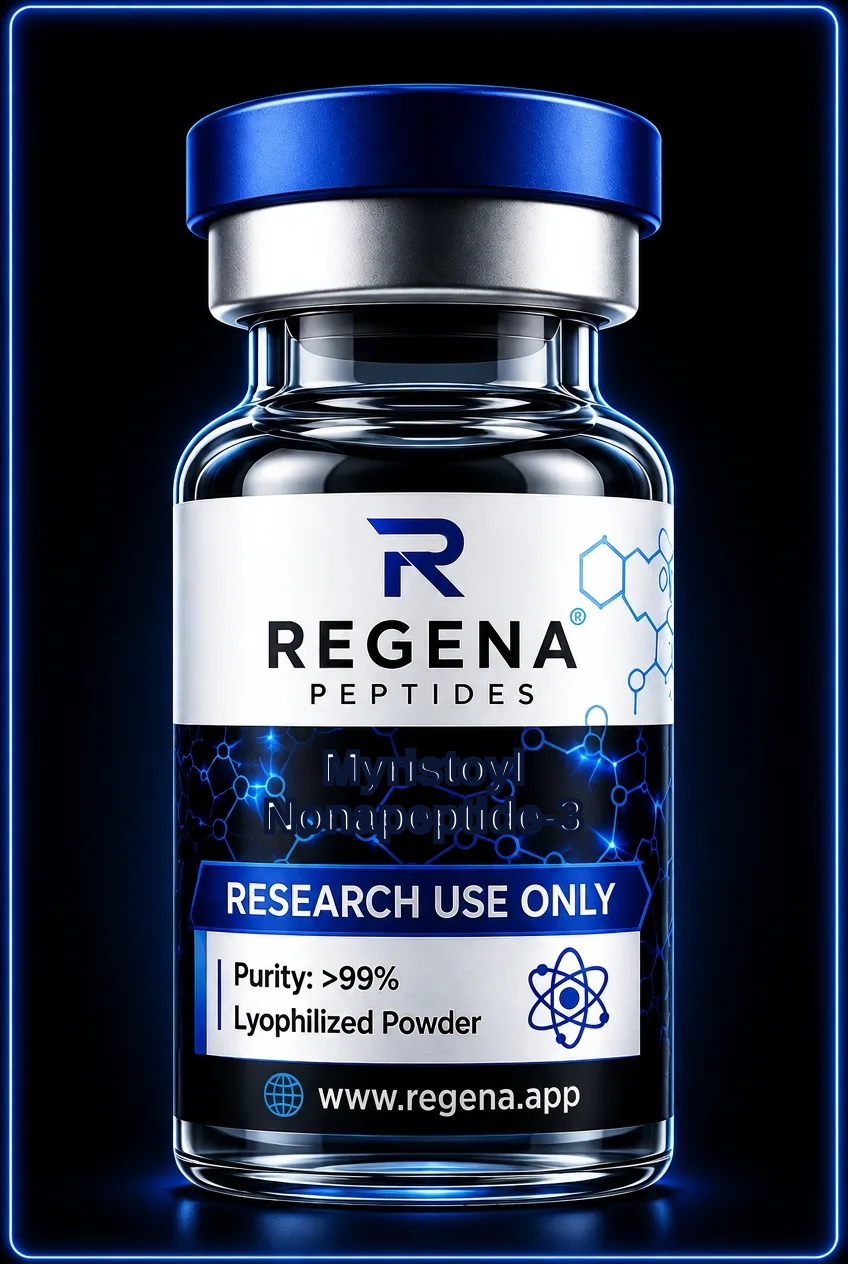
Cosmetic · Lipopeptide
Myristoyl Nonapeptide-3
Also known as Retinal-Peptide
A synthetic lipopeptide designed to support the conversion of retinal to retinoic acid for in-vitro studies of skin cell function and signaling.
- Length
- 9 amino acids
- Half-life
- Not well characterised
- Mechanism
- This peptide mimics a fragment of retinol-binding protein, facilitating the conversion of retinaldehyde to retinoic acid within keratinocytes.
- Studied in
- Laboratory studies investigate its role in cellular differentiation, proliferation, and extracellular matrix protein synthesis in skin cell models.
About Myristoyl Nonapeptide-3
Myristoyl Nonapeptide-3 is a synthetic lipopeptide that consists of a nine-amino-acid sequence conjugated to myristic acid. The lipid moiety is designed to enhance its stability and association with cellular lipid structures in experimental settings. This compound structurally mimics a functional domain of a protein involved in retinoid metabolism.
In laboratory models using keratinocytes and fibroblasts, this peptide is studied for its effects on gene expression related to cellular turnover and the synthesis of structural proteins like collagen. Research focuses on its capacity to modulate pathways typically activated by retinoids, providing a tool for studying retinoid signaling without using retinoic acid directly.
Laboratory notes
- Due to the myristoyl group, ensure complete solubilisation in a suitable solvent like DMSO before dilution in aqueous buffers for cell culture experiments.
- When used in conjunction with retinal (retinaldehyde) in cell assays, run appropriate vehicle controls for both compounds.
- Store lyophilised powder at -20°C and protect from light; reconstituted solutions should be used promptly or aliquoted and frozen.
Storage and reconstitution basics: storage guide.
Questions about Myristoyl Nonapeptide-3
What is the function of the myristoyl group on this peptide?
The myristoyl group is a C14 fatty acid attached to the peptide's N-terminus. In research settings, this lipid tail is intended to increase the peptide's association with the lipid bilayers of cell membranes, potentially aiding its interaction with intracellular targets.
What type of cell models are typically used to study Myristoyl Nonapeptide-3?
It is most commonly studied using in-vitro models of human skin, such as primary human epidermal keratinocytes, dermal fibroblasts, or 3D reconstructed skin equivalents.
Is this peptide the same as retinoic acid?
No, it is structurally and mechanistically distinct. It is a peptide designed to support the endogenous conversion of retinaldehyde to retinoic acid within cells, allowing for the study of this specific metabolic step.
Is Myristoyl Nonapeptide-3 for human use?
No. It is supplied strictly for in-vitro laboratory research and is not for human or animal consumption.
Related research peptides
All products are sold for laboratory research use only. Not for human consumption, not a medicine, not for diagnosing, treating or preventing any condition.