
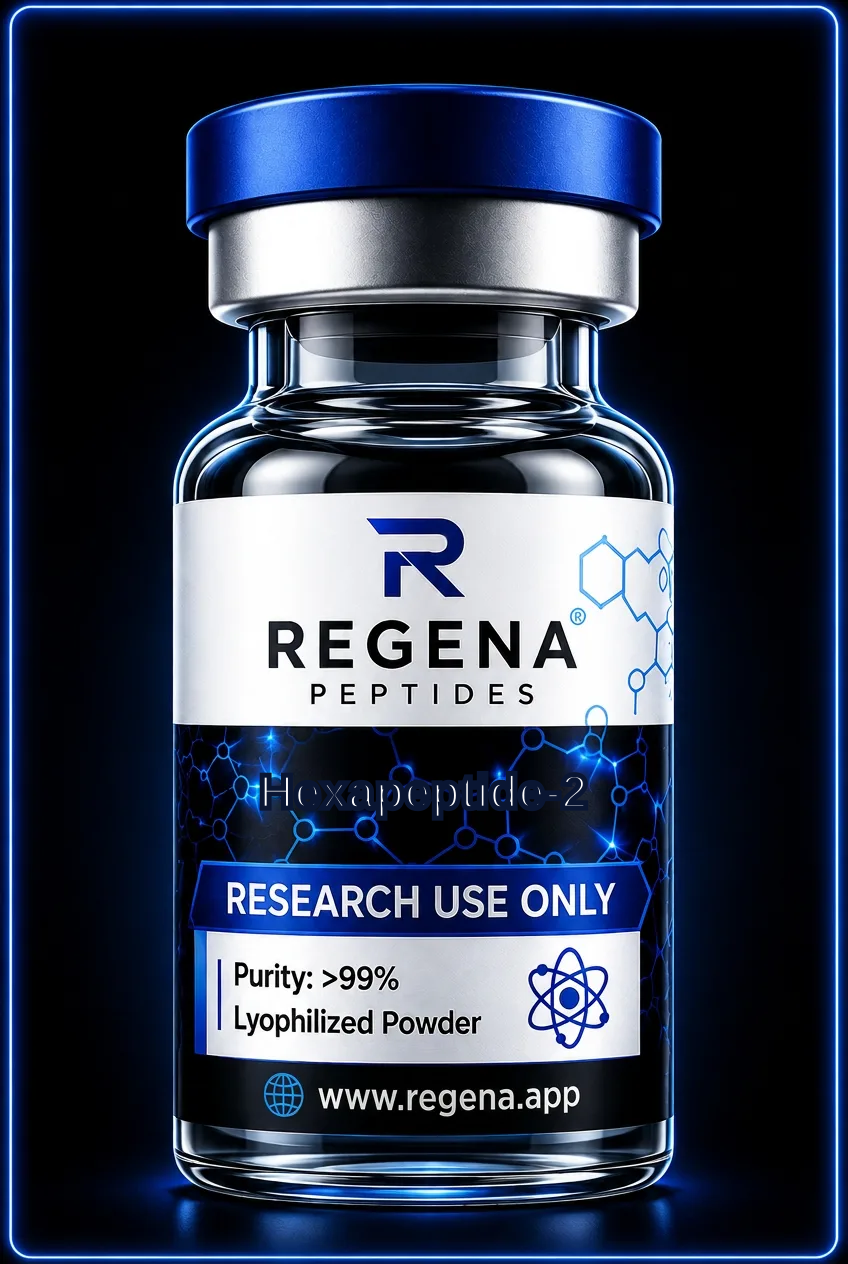
Cosmetic · Hexapeptide
Hexapeptide-2
A synthetic hexapeptide antagonist of α-MSH, used in melanocyte culture systems to study melanogenesis regulation.
- Length
- 6 amino acids
- Half-life
- Not well characterised
- Mechanism
- It is designed to act as a competitive antagonist of alpha-melanocyte-stimulating hormone (α-MSH) at the melanocortin 1 receptor (MC1R).
- Studied in
- In vitro studies using melanoma cell lines or primary melanocytes investigate its ability to modulate melanin synthesis.
About Hexapeptide-2
Hexapeptide-2 is a synthetic peptide with the amino acid sequence H-Ala-His-D-2-Nal-Ala-Trp-D-Phe-NH2. Its structure incorporates non-standard amino acids (D-2-Nal, D-Phe) to increase stability and receptor affinity compared to endogenous ligands. It is designed to compete with α-MSH for binding to its receptor.
The primary application in research is the study of melanogenesis. By acting as an antagonist at the MC1R on melanocytes, it is expected to downregulate the signaling cascade that leads to melanin production. Experiments typically involve treating melanocyte cultures with the peptide and measuring subsequent changes in tyrosinase activity and melanin content.
Laboratory notes
- The presence of D-amino acids and an amidated C-terminus enhances resistance to proteolysis in cell culture.
- Solubilise in a minimal volume of DMSO or acetic acid before diluting with aqueous buffer for experiments.
- Use appropriate controls, such as α-MSH, to confirm antagonistic activity in cell-based assays.
Storage and reconstitution basics: storage guide.
Questions about Hexapeptide-2
What is an antagonist in this context?
An antagonist is a molecule that binds to a receptor, like the MC1R, but does not activate it, thereby blocking the binding and action of the natural activating ligand (the agonist), such as α-MSH.
What is the role of the MC1R?
The Melanocortin 1 Receptor (MC1R) is a key protein on the surface of melanocytes that, when activated by hormones like α-MSH, initiates the biochemical pathway for melanin production.
How is melanin production measured in the lab?
Common methods include the L-DOPA oxidation assay to measure tyrosinase enzyme activity and spectrophotometric quantification of melanin extracted from cultured cells.
Is Hexapeptide-2 for human use?
No. It is supplied strictly for in-vitro laboratory research and is not for human or animal consumption.
Related research peptides
All products are sold for laboratory research use only. Not for human consumption, not a medicine, not for diagnosing, treating or preventing any condition.