
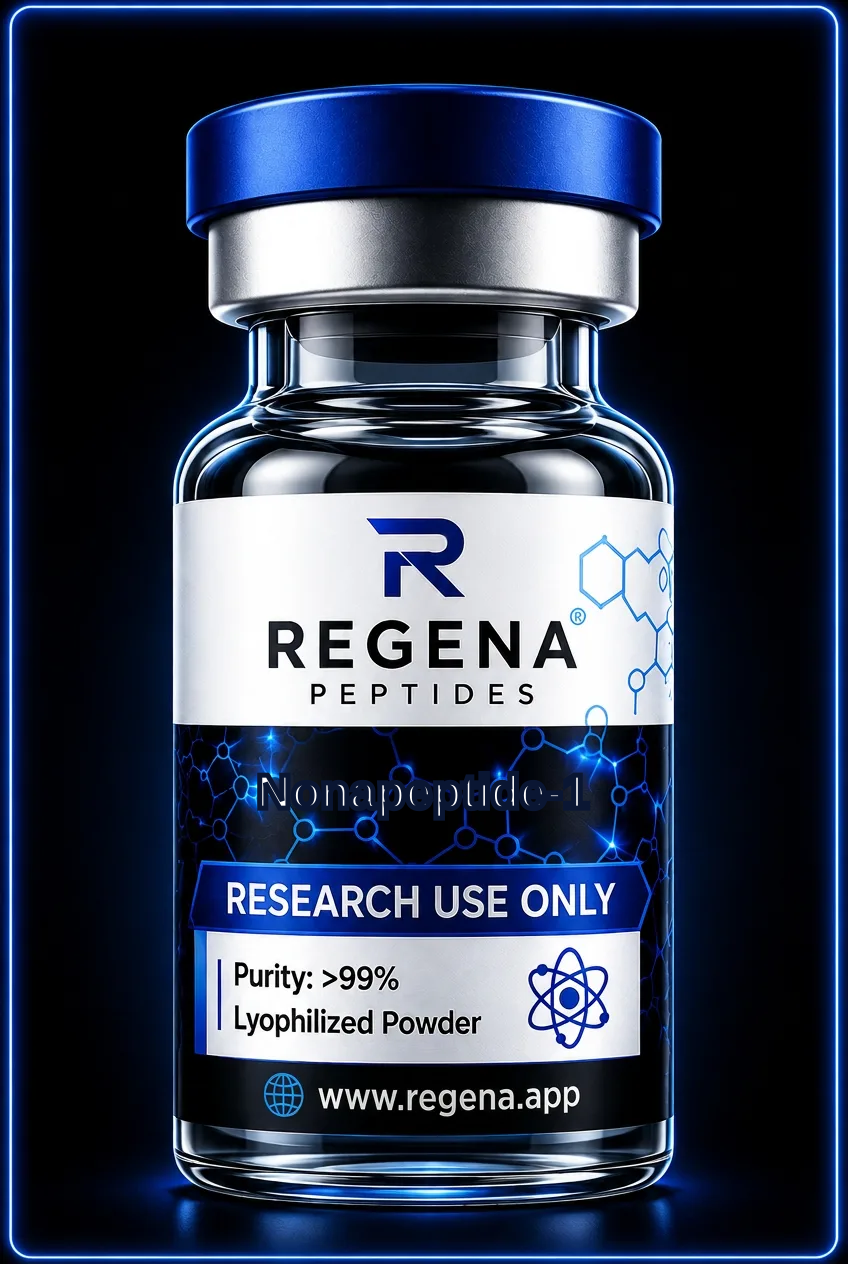
Cosmetic · Nonapeptide
Nonapeptide-1 (Melanostatin-5)
Also known as Melanostatin-5
A nonapeptide antagonist of the MC1R, used in laboratory cell cultures to study the molecular control of melanogenesis.
- Length
- 9 amino acids
- Half-life
- Not well characterised
- Mechanism
- This peptide acts as a competitive antagonist of the melanocortin 1 receptor (MC1R), blocking the binding of alpha-melanocyte-stimulating hormone (α-MSH).
- Studied in
- It is utilized in melanocyte cell culture models to investigate the inhibition of tyrosinase activity and the downstream pathway of melanin synthesis.
About Nonapeptide-1 (Melanostatin-5)
Nonapeptide-1, also known as Melanostatin-5, is a synthetic biomimetic peptide with the sequence Met-Pro-D-Phe-Arg-D-Trp-Phe-Lys-Pro-Val-NH2. It was designed to mimic the N-terminal region of α-MSH-related proteins that show inhibitory properties. The inclusion of D-amino acids enhances its stability against enzymatic breakdown in experimental conditions.
In laboratory research, Nonapeptide-1 serves as a tool to probe the regulation of melanin production. By competitively inhibiting the MC1R on melanocytes, it prevents the α-MSH-induced signal transduction cascade. This allows researchers to study the effects of blocking this pathway on key endpoints like tyrosinase expression, tyrosinase activity, and overall melanin content in cell culture systems.
Laboratory notes
- For cell culture experiments, dissolve in sterile DMSO as a stock solution and dilute to final working concentration in culture media.
- The C-terminal amidation and internal D-amino acids contribute to a longer half-life in biological buffers compared to unmodified peptides.
- Purity should be confirmed by HPLC prior to use in quantitative assays to ensure accurate molar concentrations.
Storage and reconstitution basics: storage guide.
Questions about Nonapeptide-1 (Melanostatin-5)
What is the difference between Nonapeptide-1 and Hexapeptide-2?
Both are MC1R antagonists used to study melanogenesis, but they have different amino acid sequences, lengths (9 vs 6), and origins of design, which may result in different binding affinities and potencies in vitro.
What is α-MSH?
Alpha-melanocyte-stimulating hormone (α-MSH) is an endogenous peptide hormone that is the primary activator of the MC1R, leading to the stimulation of melanin synthesis in melanocytes.
How is its antagonistic activity verified?
Activity is typically verified in a cell-based assay by co-incubating melanocytes with α-MSH and varying concentrations of Nonapeptide-1, then measuring the inhibition of the expected α-MSH-induced melanin increase.
Is Nonapeptide-1 (Melanostatin-5) for human use?
No. It is supplied strictly for in-vitro laboratory research and is not for human or animal consumption.
Related research peptides
All products are sold for laboratory research use only. Not for human consumption, not a medicine, not for diagnosing, treating or preventing any condition.