
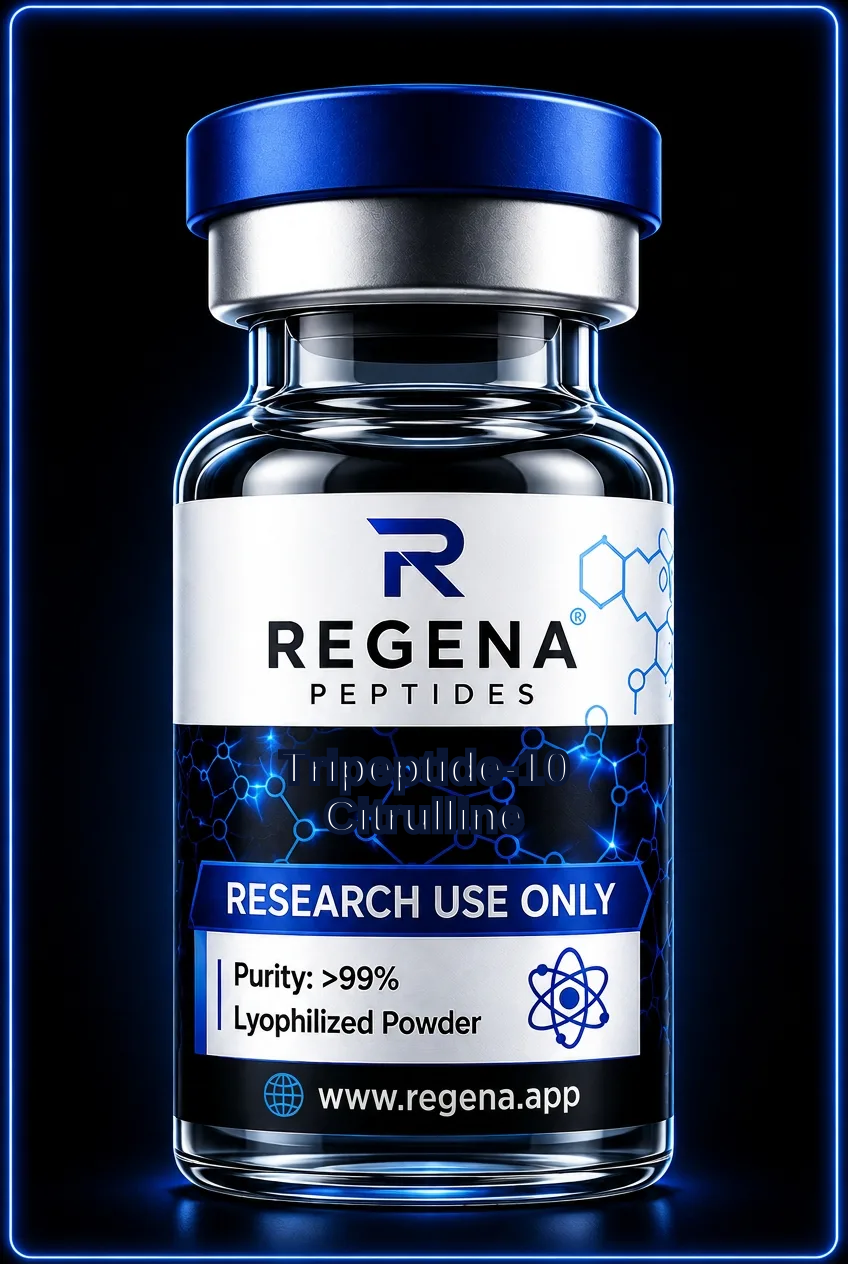
Cosmetic · Synthetic peptide
Tripeptide-10 Citrulline
Tripeptide-10 Citrulline is a synthetic peptide used in research to study collagen fibril organization and extracellular matrix homeostasis.
- Length
- 3 amino acids (modified)
- Half-life
- Not well characterised
- Mechanism
- It is designed to mimic the function of decorin by binding to collagen fibrils, thereby influencing fibril organization.
- Studied in
- Investigated in dermatological and cell culture models for its effects on collagen fibril uniformity and extracellular matrix regulation.
About Tripeptide-10 Citrulline
Tripeptide-10 Citrulline is a synthetic peptide created by linking the tripeptide sequence His-Asp-Ala to citrulline. The design of this peptide is based on a binding site within decorin, a small leucine-rich proteoglycan that plays a crucial role in the proper assembly and spacing of collagen fibrils within the extracellular matrix (ECM).
In a research context, this peptide is used to study the complex interactions governing collagen fibrillogenesis. By potentially mimicking decorin's function, it allows scientists to investigate how these interactions affect the uniformity, diameter, and spacing of collagen fibrils in in-vitro models of connective tissue. This makes it a useful tool for studying the fundamental biology of ECM architecture and integrity.
Laboratory notes
- The peptide sequence is designed to mimic a specific binding motif within the decorin protein.
- Citrulline is a non-proteinogenic amino acid incorporated into this synthetic sequence to modify its properties.
- Solubility in aqueous buffers should be verified for specific experimental concentrations and conditions.
Storage and reconstitution basics: storage guide.
Questions about Tripeptide-10 Citrulline
What biological molecule does Tripeptide-10 Citrulline mimic?
It is designed to mimic the function of decorin, a proteoglycan that binds to collagen and influences the organization of collagen fibrils.
What is the purpose of the citrulline modification?
The incorporation of the non-standard amino acid citrulline can alter the peptide's binding properties, charge, and stability compared to a standard amino acid sequence.
In what type of research is this peptide used?
It is primarily used in cell biology and dermatological research to investigate the mechanisms of extracellular matrix assembly, particularly the organization of collagen fibers.
Is Tripeptide-10 Citrulline for human use?
No. It is supplied strictly for in-vitro laboratory research and is not for human or animal consumption.
Related research peptides
All products are sold for laboratory research use only. Not for human consumption, not a medicine, not for diagnosing, treating or preventing any condition.