
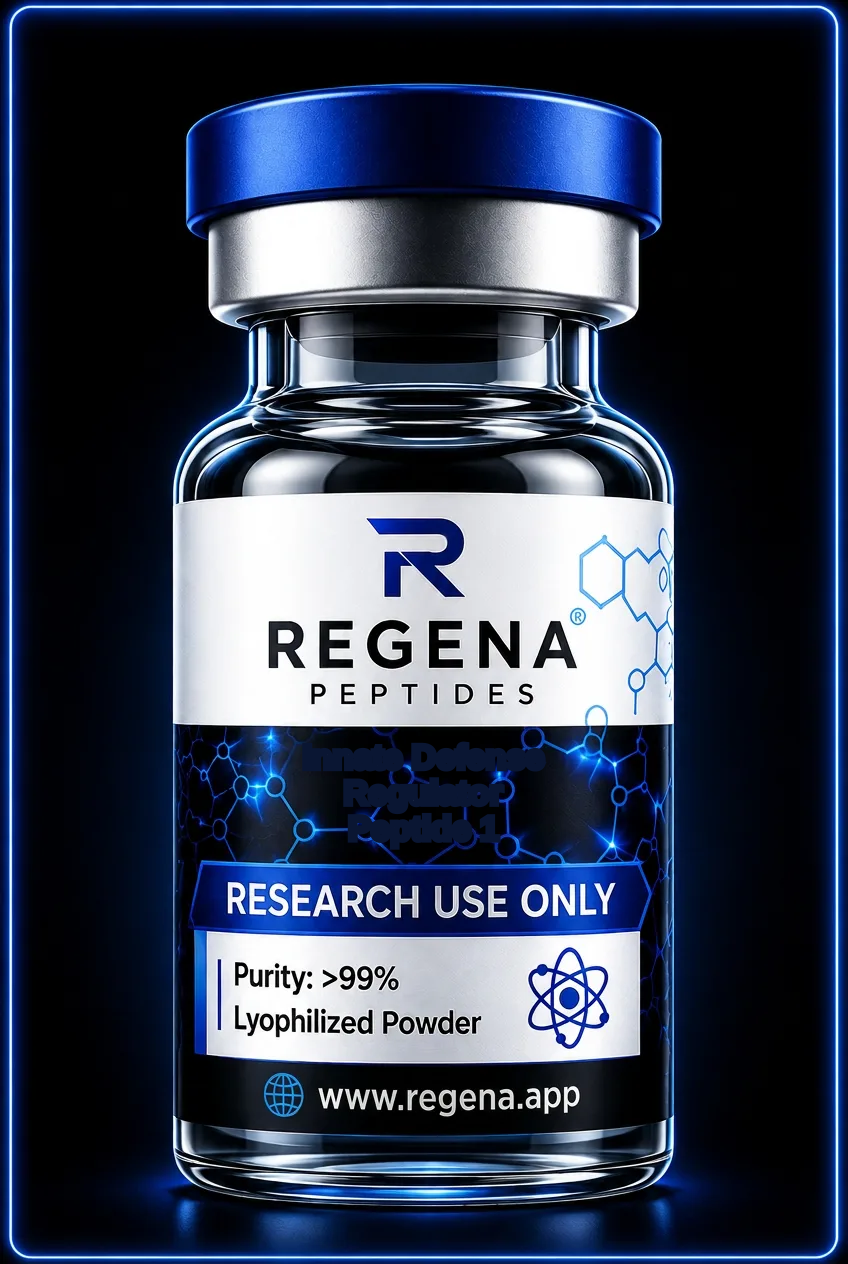
Immune · Synthetic cationic innate defence regulator peptide
Innate Defense Regulator Peptide 1 (IDR-1)
Also known as IDR-1; IDR1
A synthetic 13-residue peptide studied for innate immune signalling and chemokine regulation, rather than direct antimicrobial activity.
- Length
- 13 amino acids
- Half-life
- Not well characterised
- Mechanism
- IDR-1 modulates innate immune signalling, including p38 MAPK- and ERK-associated responses, altering chemokine production and stimulus-dependent inflammatory signalling. A single definitive receptor target has not been established, and its defining experimental activity is immunomodulatory rather than direct microbial killing.
- Studied in
- Research examines IDR-1 in monocytes, macrophages, peripheral blood mononuclear cell cultures and murine bacterial challenge models to investigate chemokine regulation and innate immune cell recruitment.
About Innate Defense Regulator Peptide 1 (IDR-1)
IDR-1 is a synthetic peptide with the sequence KSRIVPAIPVSLL, commonly described with a C-terminal amide. Its lysine and arginine residues contribute positive charge, while several non-polar residues create a substantial hydrophobic component. Reported in 2007, it emerged from research into the immunomodulatory properties of host defence peptides. Unlike peptides selected chiefly for membrane-disrupting antimicrobial activity, IDR-1 was characterised for its capacity to alter innate immune responses without appreciable direct antibacterial activity under the tested conditions.
Cell-based investigations have examined chemokines such as CCL2, also known as monocyte chemoattractant protein-1, alongside changes in inflammatory mediator production after microbial stimulation. MAPK pathway studies implicate p38 and ERK signalling, but these observations do not establish a unique cell-surface receptor. Murine bacterial challenge experiments have also explored the contribution of monocytes and macrophages. Results should be interpreted within each experimental context, because cell composition, activation state and peptide preparation can influence the measured response.
Laboratory notes
- Confirm sequence and C-terminal amidation against the certificate of analysis; a free-acid variant differs in charge and should not be assumed to behave identically.
- Use material with documented endotoxin testing and include endotoxin controls, especially when measuring cytokines or chemokines in monocytes and macrophages.
- Account for adsorption and medium effects by using suitable low-binding labware and matched serum conditions; include viability controls alongside immune-signalling readouts.
Storage and reconstitution basics: storage guide.
Questions about Innate Defense Regulator Peptide 1 (IDR-1)
Is IDR-1 a conventional antimicrobial peptide?
It belongs to the broader host defence peptide research field, but its defining studies emphasised immune modulation without appreciable direct antibacterial activity under the conditions examined. Direct killing must be tested separately in a defined microbial assay.
Which receptor does IDR-1 activate?
A single definitive receptor has not been established. Changes in p38 or ERK signalling identify associated pathways, not necessarily direct binding targets.
Which controls help interpret an IDR-1 chemokine assay?
Useful controls include unstimulated cells, stimulus-only wells, peptide-only wells, a matched vehicle and a viability readout. Endotoxin assessment is particularly important because trace contamination can independently alter innate immune signalling.
Is Innate Defense Regulator Peptide 1 (IDR-1) for human use?
No. It is supplied strictly for in-vitro laboratory research and is not for human or animal consumption.
Related research peptides
All products are sold for laboratory research use only. Not for human consumption, not a medicine, not for diagnosing, treating or preventing any condition.