
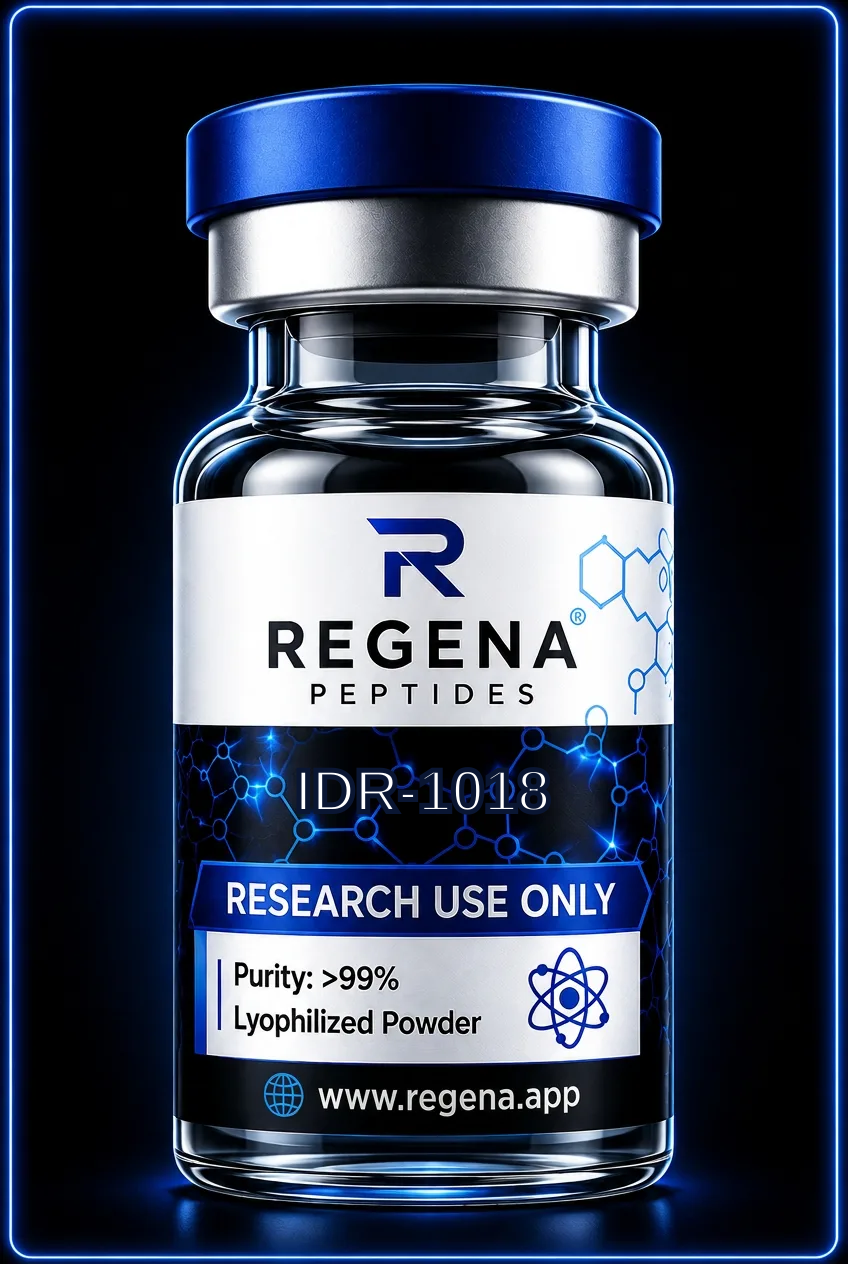
Immune · Synthetic cationic innate defence regulator peptide
IDR-1018
Also known as Peptide 1018; Innate defence regulator 1018
A synthetic 12-residue innate defence regulator investigated in biofilm systems and models of innate immune signalling.
- Length
- 12 amino acids
- Half-life
- Not well characterised
- Mechanism
- IDR-1018 modulates innate immune signalling and disrupts biofilm-associated processes in experimental systems, without an established single receptor target. Interaction with the bacterial stringent-response nucleotides (p)ppGpp has been proposed, but their role as a specific, universal molecular target remains disputed.
- Studied in
- Bacterial biofilm cultures, innate immune-cell assays and animal infection models are used to investigate biofilm biology and host-response modulation.
About IDR-1018
IDR-1018 is a synthetic 12-residue peptide with the sequence VRLIVAVRIWRR, commonly prepared with a C-terminal amide. It emerged from efforts to develop short innate defence regulators inspired by host-defence peptides, with sequence development linked to bovine bactenecin-derived scaffolds. Its arginine-rich, hydrophobic composition supports interactions with membranes and other anionic molecular surfaces. The terminal chemistry is part of the reference structure and should be specified when comparing preparations across laboratories.
Biofilm research brought particular attention to IDR-1018 through studies linking its activity to the bacterial stringent response. An influential model proposed binding to and promoting depletion of (p)ppGpp, signalling nucleotides that coordinate stress adaptation. Subsequent work questioned whether this explains activity across organisms and conditions. Separately, immune-cell experiments examine cytokine and chemokine responses. These observations support several experimental lines of enquiry, not a single settled receptor mechanism or a universal biofilm-selective effect.
Laboratory notes
- Confirm C-terminal amidation and peptide content, including counterion and water contributions, before preparing comparative assay stocks.
- Measure planktonic growth and viability alongside biofilm biomass; reduced staining alone does not establish biofilm-specific activity.
- Use stringent-response mutants, complemented strains and direct nucleotide measurements when testing a proposed (p)ppGpp-dependent mechanism.
Storage and reconstitution basics: storage guide.
Questions about IDR-1018
Is (p)ppGpp an established exclusive target of IDR-1018?
No. It is a proposed mechanistic link with supporting and conflicting findings. Target specificity and dependence should be tested in the selected bacterial system.
What distinguishes a biofilm assay from a conventional growth assay?
Biofilm assays assess surface-associated communities, matrix or attached biomass. Parallel growth and viable-count measurements help distinguish altered biofilm formation from general bacterial inhibition.
Does IDR-1018 bind a defined immune receptor?
A single definitive immune receptor has not been established. Its effects are generally investigated through cellular signalling and cytokine-response assays.
Is IDR-1018 for human use?
No. It is supplied strictly for in-vitro laboratory research and is not for human or animal consumption.
Related research peptides
All products are sold for laboratory research use only. Not for human consumption, not a medicine, not for diagnosing, treating or preventing any condition.