
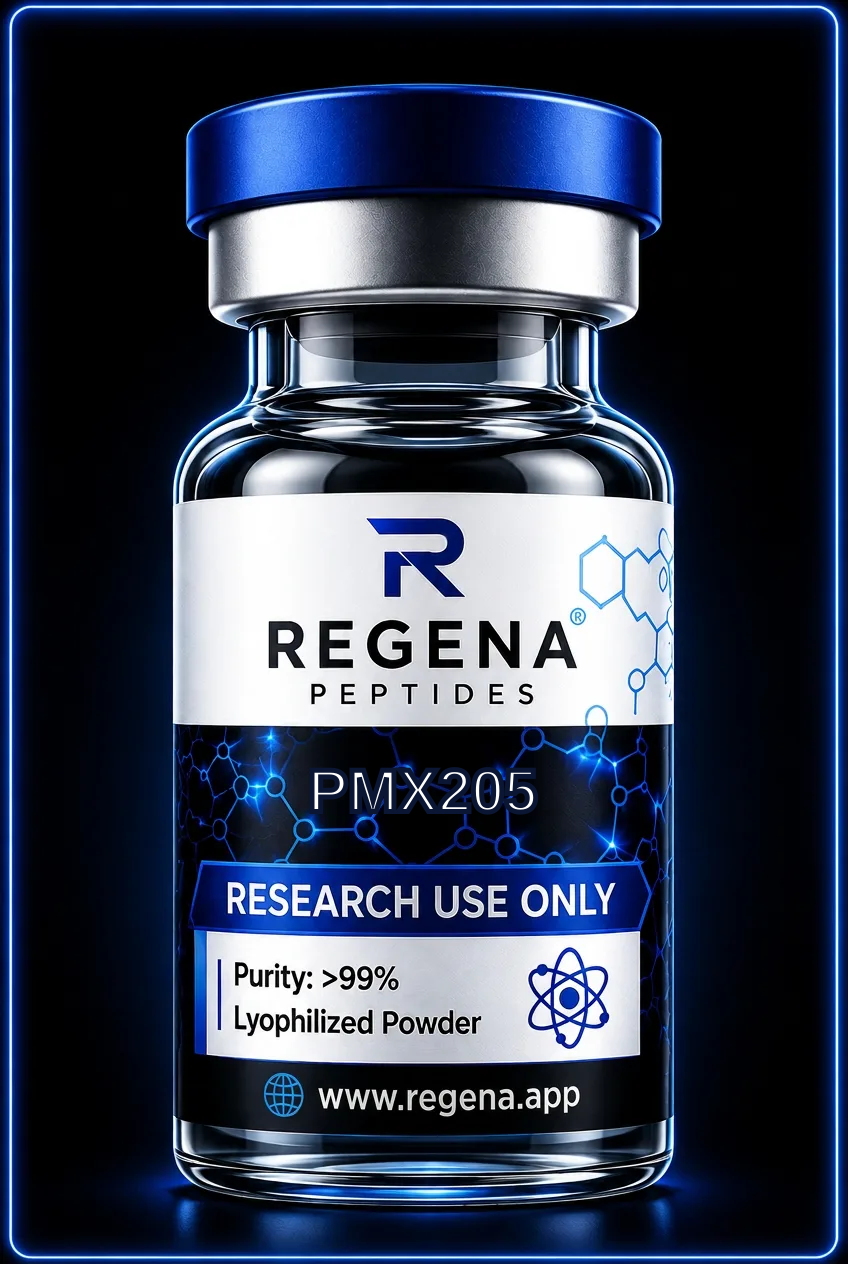
Immune · Cyclic peptidomimetic C5aR1 antagonist
PMX205
Also known as PMX-205
A hydrocinnamoyl-modified cyclic pentapeptide antagonist for investigating C5aR1-dependent signalling in experimental systems.
- Length
- 5 amino acid residues with an N-terminal hydrocinnamoyl group
- Half-life
- Not well characterised
- Mechanism
- PMX205 antagonises C5aR1/CD88 and limits receptor activation by C5a. Its constrained peptide ring and hydrophobic N-terminal group support receptor recognition, although functional potency depends on the experimental system.
- Studied in
- PMX205 is studied in C5aR1 functional assays, glial and leukocyte systems, and animal models examining complement-dependent neuroinflammatory processes.
About PMX205
PMX205 was developed within the same C5a-derived antagonist series as PMX53, but it replaces the acetylated phenylalanine portion with a hydrocinnamoyl group. Its structure is commonly written as hydrocinnamoyl-[Orn-Pro-D-Cha-Trp-Arg]. The five amino acid residues form a lactam ring through the ornithine side chain and terminal arginine carboxyl group. Hydrocinnamoyl is a non-peptide acyl substituent, so the compound should not be described as an unmodified natural peptide.
The compound is used to interrogate C5aR1 signalling in cellular assays and experimental animal systems, including studies involving nervous-system inflammation. Investigators measure endpoints such as calcium responses, inflammatory mediator production and changes in glial or leukocyte activation markers. Its modified hydrophobic region distinguishes its physicochemical behaviour from PMX53, but assay potency and sample exposure require independent verification. Receptor antagonism should also be distinguished from direct inhibition of complement proteases or terminal complement assembly.
Laboratory notes
- Verify that the analytical specification identifies the hydrocinnamoyl analogue rather than PMX53.
- Assess solubility and precipitation after dilution into aqueous assay medium, using matched vehicle controls.
- Validate C5aR1-dependent activity in the selected species and cell system rather than relying on potency reported in a different assay.
Storage and reconstitution basics: storage guide.
Questions about PMX205
How does PMX205 differ structurally from PMX53?
PMX205 carries a hydrocinnamoyl group in place of the acetylated phenylalanine portion of PMX53, while retaining the constrained five-residue ring.
Is hydrocinnamoyl an amino acid residue?
No. It is an acyl group derived from hydrocinnamic acid and is not counted among the five amino acid residues.
Can PMX205 and PMX53 be treated as interchangeable assay reagents?
No. Their structural difference can affect solubility, sample exposure and assay behaviour; each requires its own analytical and functional validation.
Is PMX205 for human use?
No. It is supplied strictly for in-vitro laboratory research and is not for human or animal consumption.
Related research peptides
All products are sold for laboratory research use only. Not for human consumption, not a medicine, not for diagnosing, treating or preventing any condition.