
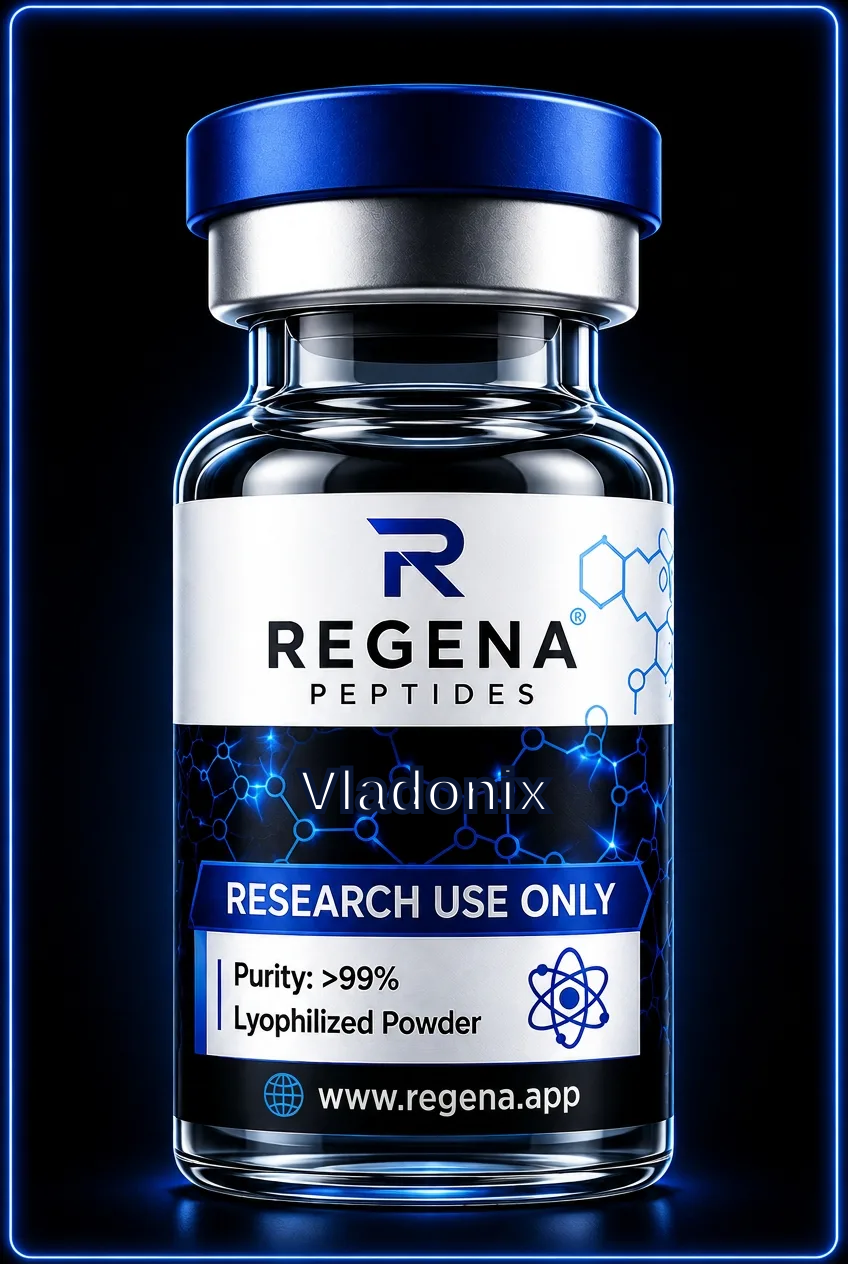
Immune · Dipeptide
Vladonix
Also known as Lys-Glu
A synthetic dipeptide (Lys-Glu) used in laboratory settings to study its effects on lymphocyte function and immune cell activity in-vitro.
- Length
- 2 amino acids
- Half-life
- Not well characterised
- Mechanism
- The dipeptide Lys-Glu is investigated for its potential to modulate T-cell differentiation and activity within in-vitro models of the immune system.
- Studied in
- Laboratory research uses this peptide in lymphocyte co-culture systems to assess its influence on cytokine profiles and immune cell proliferation.
About Vladonix
Vladonix is the common name for the dipeptide L-Lysyl-L-Glutamic acid (Lys-Glu). This specific peptide was identified as a component of thymus gland extracts. Producing the peptide synthetically ensures a high degree of purity and eliminates the variability associated with biological extracts for research applications.
Its mechanism of action is explored in the context of immunomodulation. Studies focus on its interaction with cells of the immune system, particularly T-lymphocytes. In-vitro assays are used to observe its effects on cellular proliferation, differentiation markers, and the secretion of various cytokines, providing insight into its potential role in immune signaling pathways.
Laboratory notes
- The peptide is highly hygroscopic; handle the lyophilized powder in a low-humidity environment.
- For cell-based assays, dissolve in a suitable sterile buffer like PBS or RPMI-1640 medium immediately before use.
- Confirm peptide identity and purity via HPLC and mass spectrometry prior to experimental use.
Storage and reconstitution basics: storage guide.
Questions about Vladonix
What is the amino acid composition of Vladonix?
Vladonix is a dipeptide composed of L-Lysine and L-Glutamic acid (Lys-Glu).
What area of biology does Vladonix research pertain to?
It is studied in the field of immunology, specifically for its potential interactions with T-lymphocytes and other immune cells.
How are its effects typically measured in the lab?
Effects are often quantified using flow cytometry to analyze immune cell populations, and ELISAs to measure cytokine levels (e.g., IL-2, IFN-γ) in cell culture supernatants.
Is Vladonix for human use?
No. It is supplied strictly for in-vitro laboratory research and is not for human or animal consumption.
Related research peptides
All products are sold for laboratory research use only. Not for human consumption, not a medicine, not for diagnosing, treating or preventing any condition.