
Longevity · Tetrapeptide
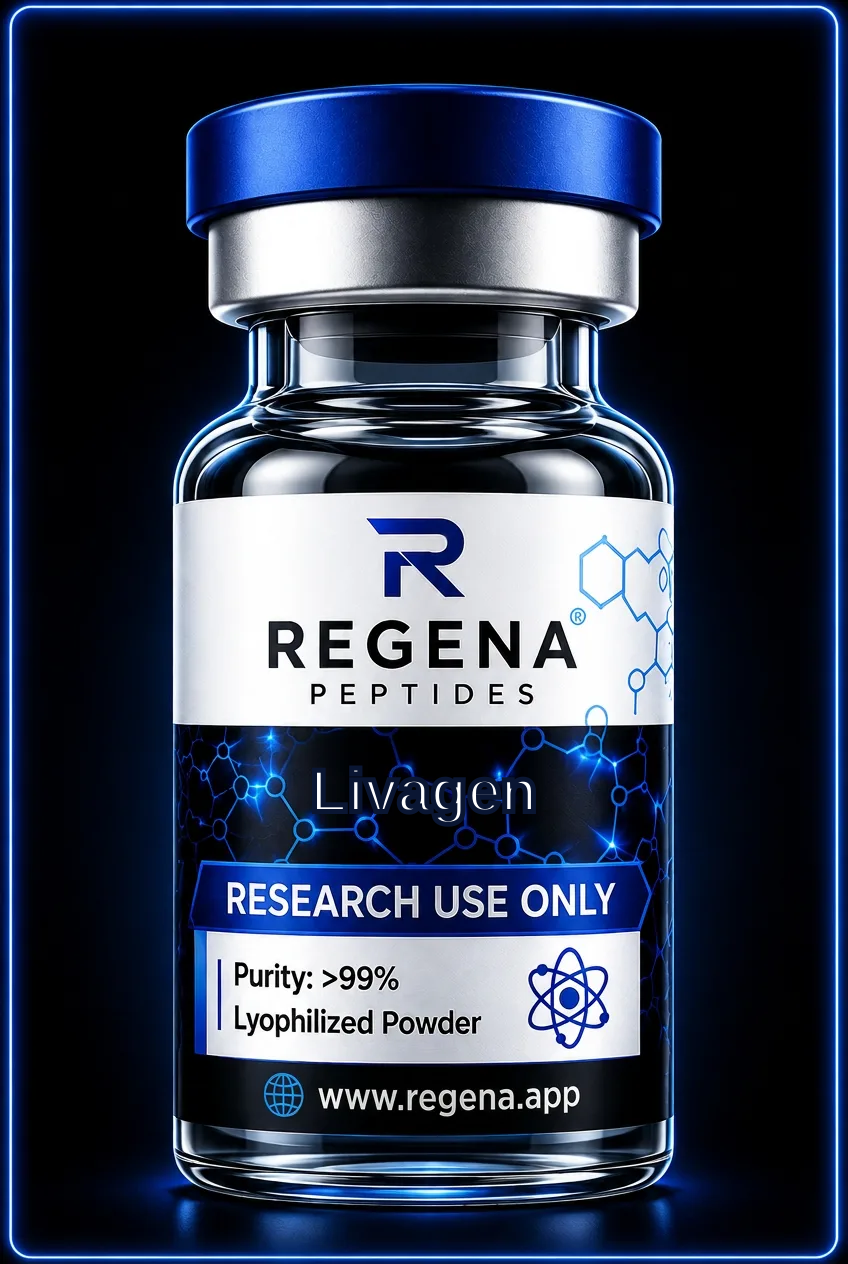
Livagen
A synthetic tetrapeptide (Lys-Glu-Asp-Ala) researched for its effects on hepatocyte cell cultures and liver-related gene expression.
- Length
- 4 amino acids
- Half-life
- Not well characterised
- Mechanism
- The molecular mechanism is under investigation; some studies propose it interacts with chromatin or transcription factors to modulate gene expression in hepatic cells.
- Studied in
- Used in laboratory settings to study its effects on hepatocyte cell lines, focusing on cell proliferation, function, and response to toxic insults.
About Livagen
Livagen is a synthetic tetrapeptide comprised of the amino acids Lysine-Glutamic acid-Aspartic acid-Alanine (Lys-Glu-Asp-Ala). It is one of several short peptides developed for research into cellular regulation. Its design is based on peptides identified in cardiovascular tissue.
The primary application of Livagen in research is the study of liver cells (hepatocytes). In vitro experiments investigate its influence on the function and regenerative capacity of hepatocyte cell cultures, as well as its potential to modulate cellular responses to chemical-induced stress or injury.
Laboratory notes
- When using with hepatocyte cell lines (e.g., HepG2), perform concentration-response curves to determine the optimal concentration for the specific endpoint being measured.
- To study effects on gene expression, quantitative PCR (qPCR) for liver-specific genes like albumin or cytochrome P450 enzymes can be employed.
- Ensure peptide is fully dissolved in a suitable sterile solvent before adding to cell culture media to avoid precipitation.
Storage and reconstitution basics: storage guide.
Questions about Livagen
What is the amino acid sequence of Livagen?
Livagen is a tetrapeptide with the sequence Lys-Glu-Asp-Ala.
What cell types are typically used for Livagen research?
Research on Livagen often utilizes in vitro models with liver cells, such as primary hepatocytes or established hepatoma cell lines.
How does Livagen differ from Cortagen?
Although both are tetrapeptides studied in similar contexts, they have different amino acid sequences and are typically used to research different cell systems: Livagen for liver cells and Cortagen for neuronal cells.
Is Livagen for human use?
No. It is supplied strictly for in-vitro laboratory research and is not for human or animal consumption.
Related research peptides
All products are sold for laboratory research use only. Not for human consumption, not a medicine, not for diagnosing, treating or preventing any condition.