
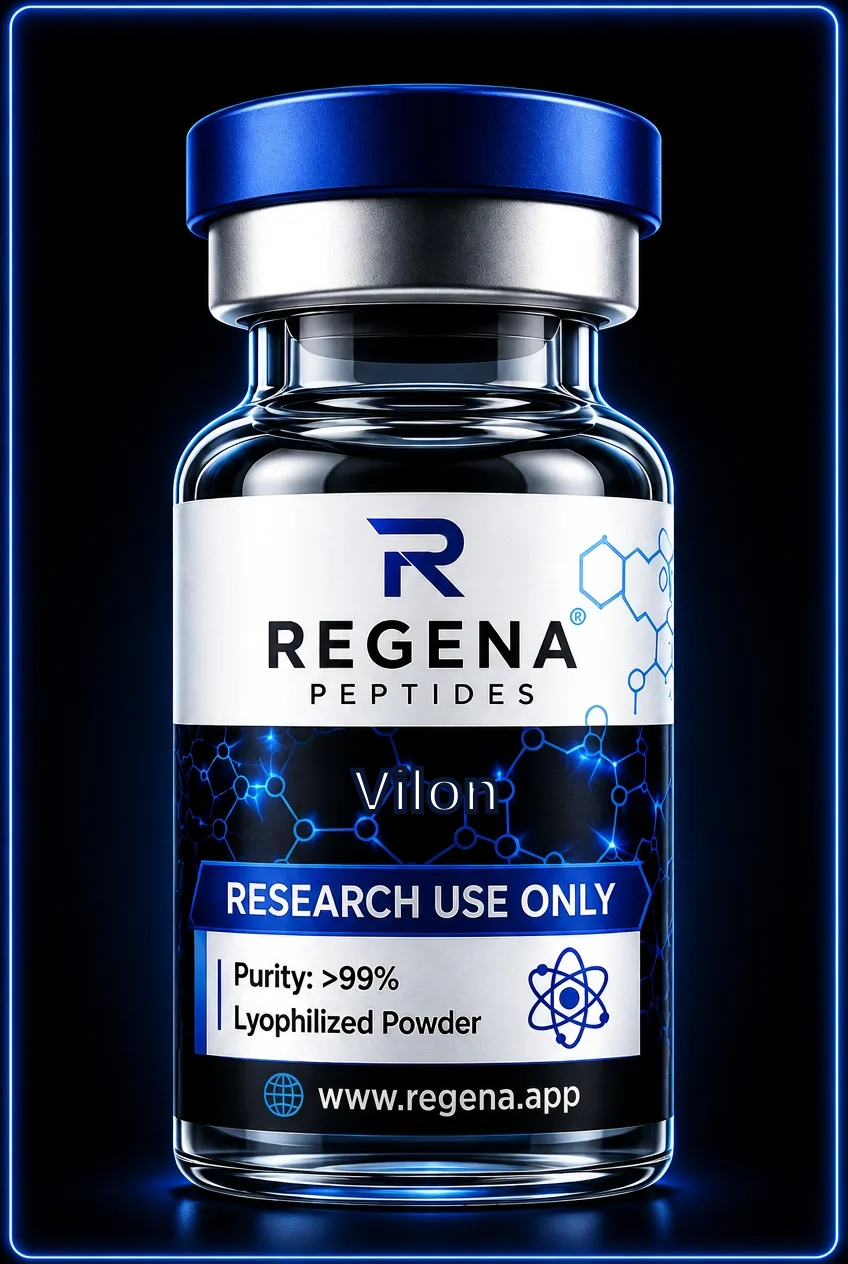
Longevity · Dipeptide
Vilon
A dipeptide (Lys-Glu) studied in laboratory models for its effects on immune cell function and markers of cellular aging.
- Length
- 2 amino acids
- Half-life
- Not well characterised
- Mechanism
- This dipeptide is proposed in some literature to interact with cellular pathways related to immune function and gene expression, though its precise molecular targets are not fully elucidated.
- Studied in
- Laboratory investigations explore its effects on lymphocyte proliferation, cytokine profiles in cell cultures, and markers of cellular senescence.
About Vilon
Vilon is the dipeptide Lysyl-Glutamic acid (Lys-Glu). It is classified as one of several short peptide bioregulators originally investigated based on substances isolated from animal thymus tissue. Its small size allows for potential interaction with various cellular components.
Research models use Vilon to study its effects on immune system cells. In vitro experiments often assess its influence on T-lymphocyte function, interferon production, and other immunological parameters. Other lines of inquiry focus on its potential to modulate gene expression and influence markers associated with cellular aging in cultured cells.
Laboratory notes
- Vilon is highly water-soluble. Reconstitute in sterile, nuclease-free water or standard cell culture medium.
- Due to its short sequence, mass spectrometry is the preferred method for identity confirmation.
- When studying gene expression, it is critical to use appropriate time-course experiments, as effects may be transient.
Storage and reconstitution basics: storage guide.
Questions about Vilon
What is the structure of Vilon?
Vilon is a simple dipeptide composed of the amino acids Lysine and Glutamic acid, with the sequence Lys-Glu.
Which biological system is the focus of Vilon research?
Much of the available literature investigates the effects of Vilon on parameters of the immune system, particularly T-cell function, in various in vitro models.
Is Vilon related to Epithalon?
Both are short peptides studied in similar research contexts, but they are structurally distinct. Vilon is a dipeptide (Lys-Glu), while Epithalon is a tetrapeptide (Ala-Glu-Asp-Gly).
Is Vilon for human use?
No. It is supplied strictly for in-vitro laboratory research and is not for human or animal consumption.
Related research peptides
All products are sold for laboratory research use only. Not for human consumption, not a medicine, not for diagnosing, treating or preventing any condition.