
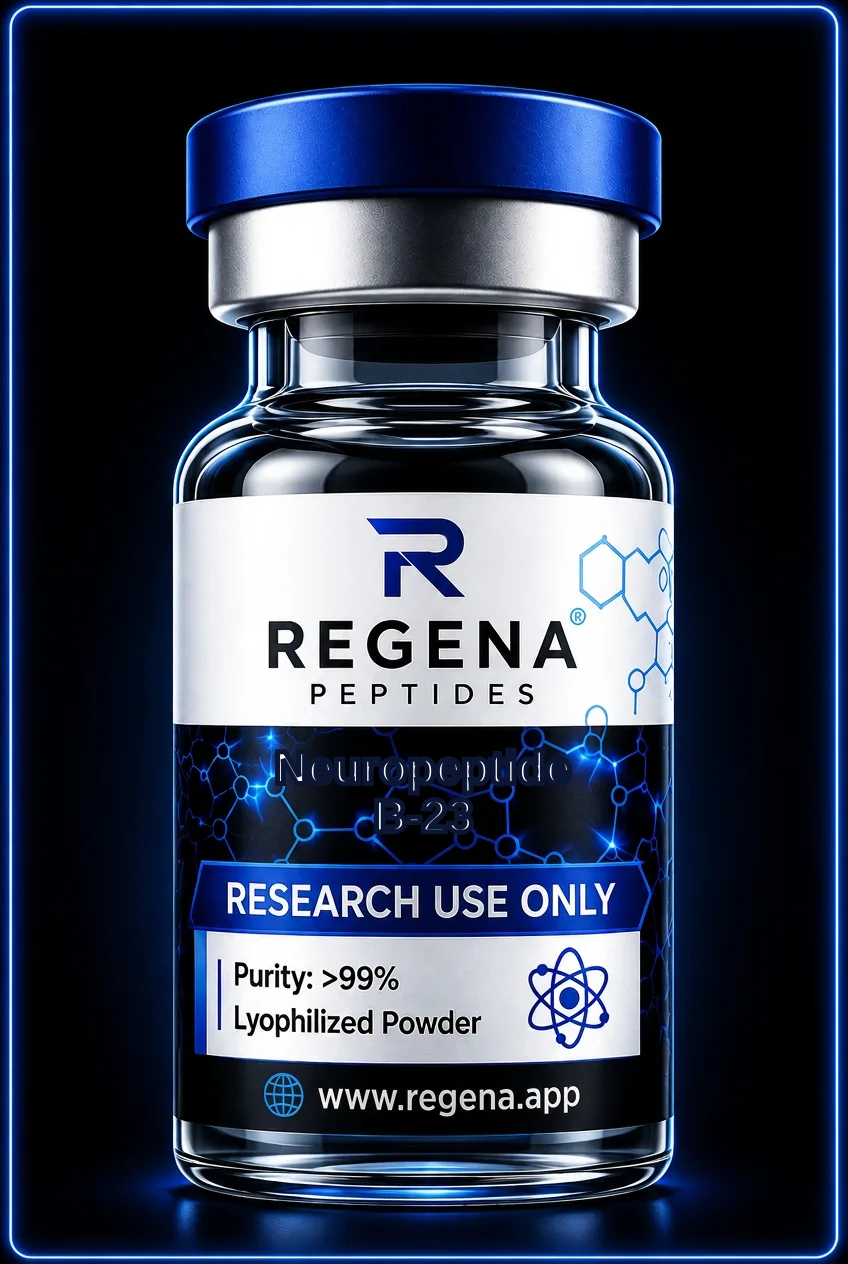
Cognitive · Neuropeptide
Neuropeptide B-23
Also known as NPB23
A 23-amino acid neuropeptide that activates GPR7 and GPR8 receptors, researched for its influence on motor activity and energy regulation.
- Length
- 23 amino acids
- Half-life
- Not well characterised
- Mechanism
- It functions as an endogenous agonist for the G protein-coupled receptors GPR7 (NPBWR1) and GPR8 (NPBWR2), similar to Neuropeptide W.
- Studied in
- Studied in animal models for its effects on locomotion, feeding behavior, and as a potential modulator of the endogenous opioid system.
About Neuropeptide B-23
Neuropeptide B-23 (NPB23) is a 23-amino acid peptide derived from a precursor protein distinct from that of Neuropeptide W (NPW). Despite its different origin, it shares the ability to bind and activate the same receptors as NPW. Endogenous expression of NPB is found in various brain regions, including the hypothalamus and pons.
Like NPW, NPB23 acts as a ligand for the NPBWR1 (GPR7) and NPBWR2 (GPR8) receptors. In vitro and in vivo studies suggest its involvement in a range of physiological processes. Laboratory research using rodent models has examined its role in modulating arousal, locomotor activity, and appetite, often showing overlapping but distinct effects compared to NPW.
Laboratory notes
- NPB and NPW are distinct peptides but are often studied together as the two known endogenous ligands for the GPR7/GPR8 receptor system.
- NPB has a brominated tryptophan residue in some aquatic species, but the synthetic version for research is typically non-brominated.
- For cell-based assays, confirm receptor expression (GPR7/GPR8) in the chosen cell line for meaningful results.
Storage and reconstitution basics: storage guide.
Questions about Neuropeptide B-23
Do Neuropeptide B and Neuropeptide W come from the same gene?
No, they are encoded by separate genes and derived from different precursor proteins, but they activate the same pair of receptors.
What are the primary research areas for NPB23?
Research focuses on its role in the central regulation of energy homeostasis, arousal, and its interactions with other neuroregulatory systems like the opioid system.
How long is the NPB23 peptide?
As the name suggests, it is 23 amino acids in length. A longer 29-amino acid form (NPB29) also exists.
Is Neuropeptide B-23 for human use?
No. It is supplied strictly for in-vitro laboratory research and is not for human or animal consumption.
Related research peptides
All products are sold for laboratory research use only. Not for human consumption, not a medicine, not for diagnosing, treating or preventing any condition.