
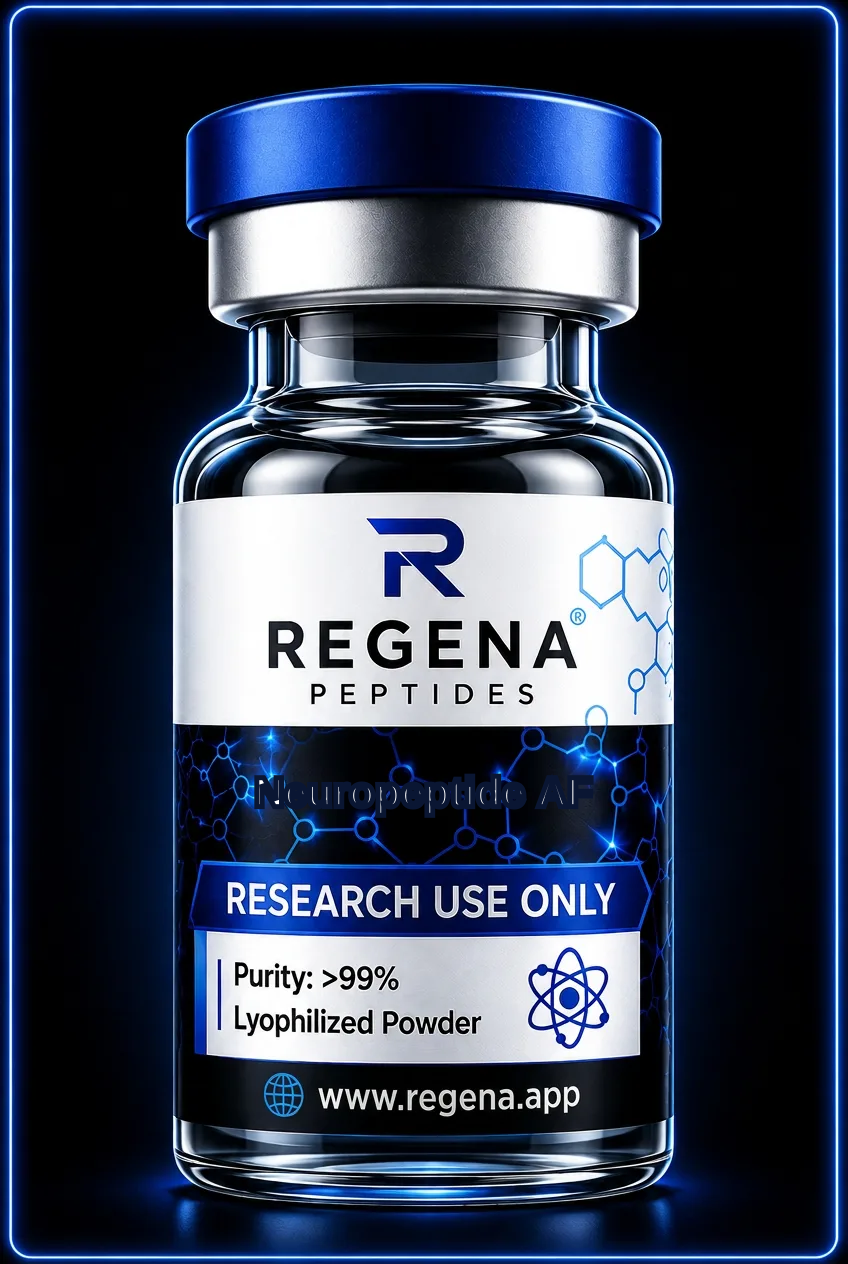
Cognitive · RF-amide peptide
Neuropeptide AF
Also known as NPAF
An 18-amino acid RF-amide peptide that acts on NPFF receptors, studied for its role in modulating pain pathways and opioid signaling.
- Length
- 18 amino acids
- Half-life
- Not well characterised
- Mechanism
- It is a ligand for the neuropeptide FF receptor 1 (NPFFR1) and NPFFR2, both G protein-coupled receptors, and functions as a modulator of opioid receptor signaling.
- Studied in
- Used in neuroscience research to investigate pain modulation, opioid tolerance, and the regulation of cardiovascular and endocrine functions.
About Neuropeptide AF
Neuropeptide AF (NPAF) is an 18-amino acid peptide belonging to the RF-amide family, named for the characteristic Arginine-Phenylalanine-amide motif at its C-terminus. It is derived from the same pro-A-neuropeptide precursor as Neuropeptide FF (NPFF). NPAF is found in the central and peripheral nervous systems, particularly in areas associated with pain processing like the dorsal horn of the spinal cord.
NPAF acts as an agonist at the G-protein coupled receptors NPFFR1 and NPFFR2. Through these receptors, it is known to exert complex, often anti-opioid, effects. In experimental models, NPAF is studied for its ability to modulate the analgesic effects of opioids and its potential involvement in the development of opioid tolerance and dependence.
Laboratory notes
- The C-terminal Arg-Phe-amide motif is essential for receptor binding and activity.
- NPAF and NPFF are co-expressed and often studied in parallel to understand the NPFF system.
- Due to its anti-opioid effects in some models, it should be used with careful consideration in experiments involving opioid agonists.
Storage and reconstitution basics: storage guide.
Questions about Neuropeptide AF
What is an RF-amide peptide?
It is a family of peptides characterized by a common C-terminal sequence of Arginine-Phenylalanine-NH2, which is critical for their biological activity.
What is the relationship between NPAF and NPFF?
They are both RF-amide peptides cleaved from the same precursor protein, pro-A-neuropeptide, and they act on the same family of receptors (NPFFR1 and NPFFR2).
What is a major focus of NPAF research?
A significant area of research is its role as a modulator of the endogenous opioid system, particularly its anti-analgesic and anti-opioid properties observed in various preclinical models.
Is Neuropeptide AF for human use?
No. It is supplied strictly for in-vitro laboratory research and is not for human or animal consumption.
Related research peptides
All products are sold for laboratory research use only. Not for human consumption, not a medicine, not for diagnosing, treating or preventing any condition.