
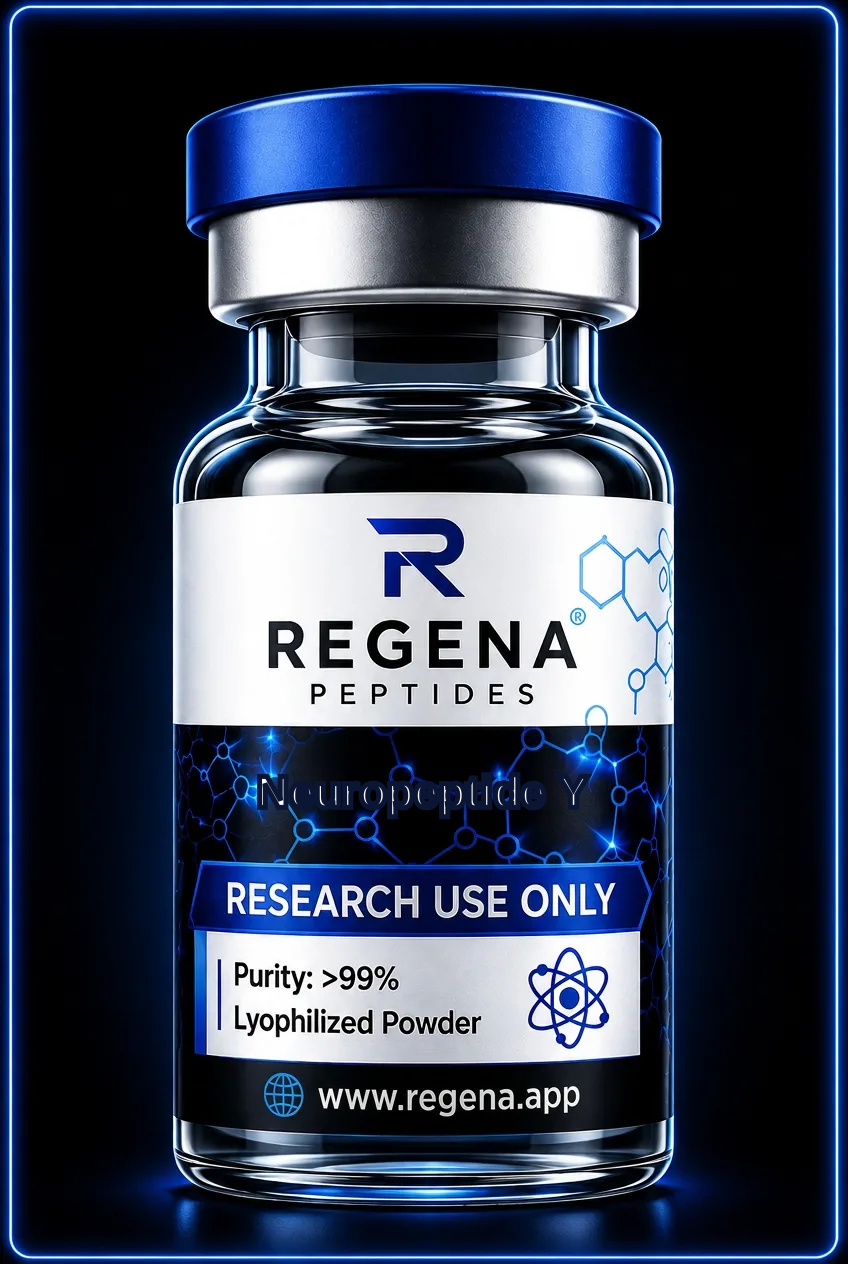
Other · C-terminal neuropeptide Y fragment
Neuropeptide Y (18-36)
Also known as NPY(18–36); NPY18–36
A 19-residue NPY fragment used to examine C-terminal receptor recognition and Y2-associated signalling.
- Length
- 19 amino acids
- Half-life
- Not well characterised
- Mechanism
- This C-terminal NPY fragment can activate Y-family receptors, with Y2-mediated activity reported in experimental systems. These receptors predominantly couple to Gi/o proteins; potency and apparent subtype selectivity depend on receptor expression, species and assay conditions.
- Studied in
- Recombinant receptor assays, isolated neural preparations and animal tissue models use NPY(18–36) to investigate C-terminal recognition and presynaptic modulation.
About Neuropeptide Y (18-36)
Neuropeptide Y (18-36) comprises the final 19 residues of the 36-residue parent peptide, which was first isolated from porcine brain in 1982. For the canonical mammalian sequence, the fragment is ARYYSALRHYINLITRQRY-NH2. Its amidated C-terminal tyrosine is an important recognition feature for NPY receptors. Removing the N-terminal region makes this fragment useful for mapping how different parts of NPY contribute to receptor binding and activation.
Unlike intact NPY, this short fragment lacks much of the sequence supporting the characteristic pancreatic-polypeptide fold. Experimental activity is commonly associated with Y2 receptors, although it should not be treated as a universally selective probe. Y2 receptors typically inhibit adenylyl cyclase through Gi/o coupling and can regulate transmitter release in neural preparations. Binding, cyclic AMP and functional tissue assays help distinguish receptor affinity from signalling efficacy and preparation-dependent effects.
Laboratory notes
- Confirm the supplied sequence and C-terminal amidation by mass spectrometry; a free-acid analogue is not analytically or functionally interchangeable.
- Use low-binding tubes and validate recovery at low assay concentrations, where surface adsorption can distort apparent potency.
- Include intact NPY, receptor-subtype controls and a validated antagonist where appropriate; avoid assigning Y2 selectivity from a single functional readout.
Storage and reconstitution basics: storage guide.
Questions about Neuropeptide Y (18-36)
Is NPY(18–36) the same as NPY(3–36)?
No. NPY(18–36) contains 19 residues, whereas NPY(3–36) contains 34. Their truncations differ substantially, so receptor-binding and functional data should not be transferred between them.
Why does C-terminal amidation matter?
The terminal amide contributes to receptor recognition. Replacing it with a free carboxyl group changes the peptide's charge and can alter binding and activity.
Can it be used as a definitive Y2-selective control?
Not without validation. Test activity across relevant receptor subtypes and use pharmacological or genetic controls to establish which receptor drives the assay response.
Is Neuropeptide Y (18-36) for human use?
No. It is supplied strictly for in-vitro laboratory research and is not for human or animal consumption.
Related research peptides
All products are sold for laboratory research use only. Not for human consumption, not a medicine, not for diagnosing, treating or preventing any condition.