
Metabolic · Neuropeptide
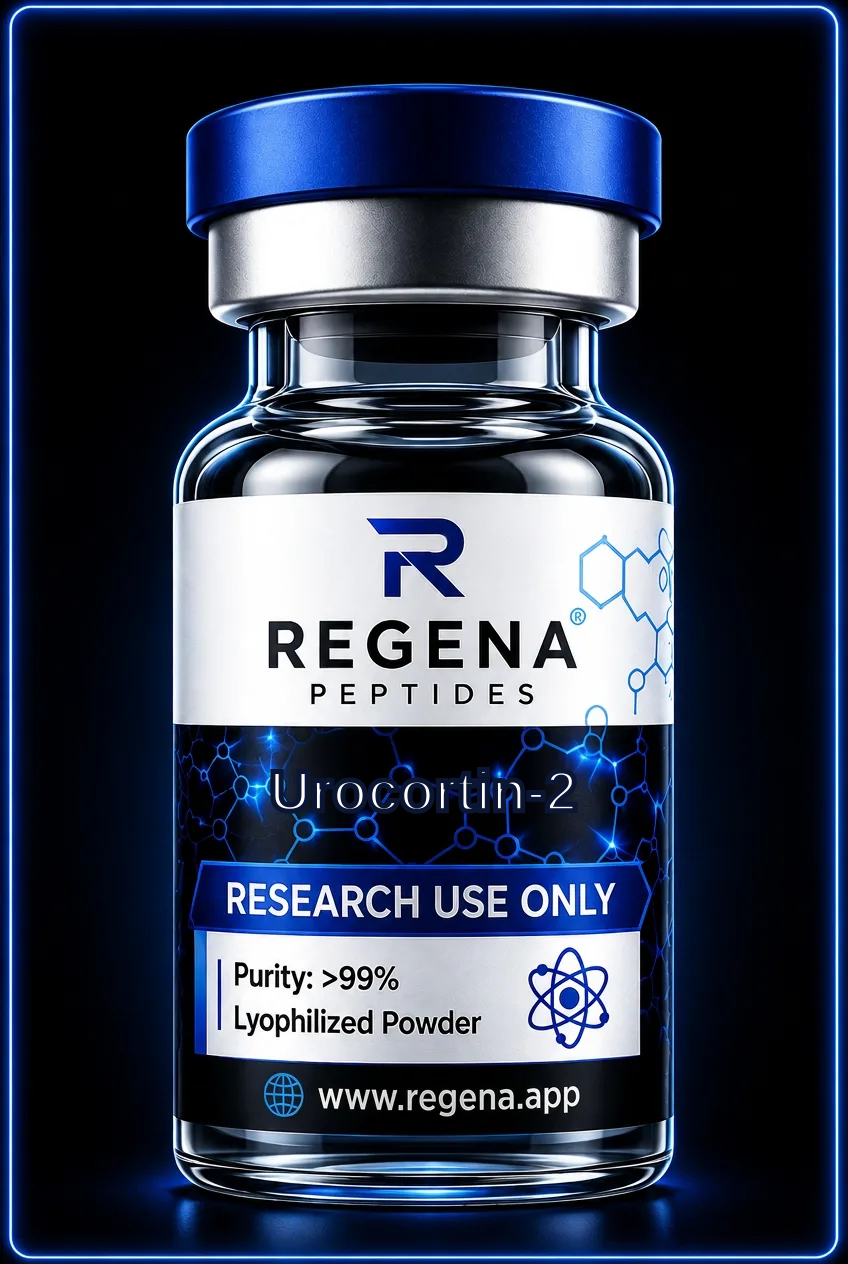
Urocortin-2
Also known as UCN2, Stresscopin-related peptide
Urocortin-2 is a neuropeptide and selective agonist for the CRF-R2 receptor, used in research to investigate its role in metabolism and stress.
- Length
- 38 amino acids
- Half-life
- Not well characterised
- Mechanism
- Acts as a highly selective agonist for the corticotropin-releasing factor receptor 2 (CRF-R2).
- Studied in
- Employed in research models to isolate and study the physiological roles of CRF-R2 activation, particularly in cardiovascular function, metabolism, and anxiety.
About Urocortin-2
Urocortin-2 is a member of the CRF peptide family with high structural homology to Urocortin-3 and a more distant relation to CRF and Urocortin-1. It is expressed in the central nervous system, particularly in the hypothalamus, as well as in peripheral tissues such as skeletal muscle. Its defining pharmacological characteristic is its high selectivity for the CRF-R2 receptor.
This receptor specificity makes Urocortin-2 an invaluable research tool. By using Urocortin-2, scientists can investigate the functions mediated specifically by CRF-R2, without the confounding activation of CRF-R1. This is critical for studying its role in appetite suppression, skeletal muscle glucose uptake, and its effects in models of cardiac stress.
Laboratory notes
- Use Urocortin-2 specifically when the experimental goal is to probe CRF-R2 pathways without activating CRF-R1.
- Store lyophilised peptide at -20°C or colder. Reconstituted aliquots can be stored at -80°C to minimize degradation.
- In comparative studies, use Urocortin-1 as a non-selective control and CRF as a CRF-R1 selective control.
Storage and reconstitution basics: storage guide.
Questions about Urocortin-2
What is the primary advantage of using Urocortin-2 over Urocortin-1?
Its primary advantage is its selectivity. Urocortin-2 specifically activates CRF-R2, allowing researchers to study the functions of this receptor in isolation.
Where is Urocortin-2's receptor primarily located?
CRF-R2 is expressed in various brain regions (e.g., hypothalamus) and peripherally in the heart, skeletal muscle, and gastrointestinal tract.
Does Urocortin-2 strongly regulate the HPA axis?
It has a much weaker effect on the HPA axis compared to CRF or Urocortin-1 because ACTH release is primarily driven by CRF-R1 activation in the pituitary.
Is Urocortin-2 for human use?
No. It is supplied strictly for in-vitro laboratory research and is not for human or animal consumption.
Related research peptides
All products are sold for laboratory research use only. Not for human consumption, not a medicine, not for diagnosing, treating or preventing any condition.