
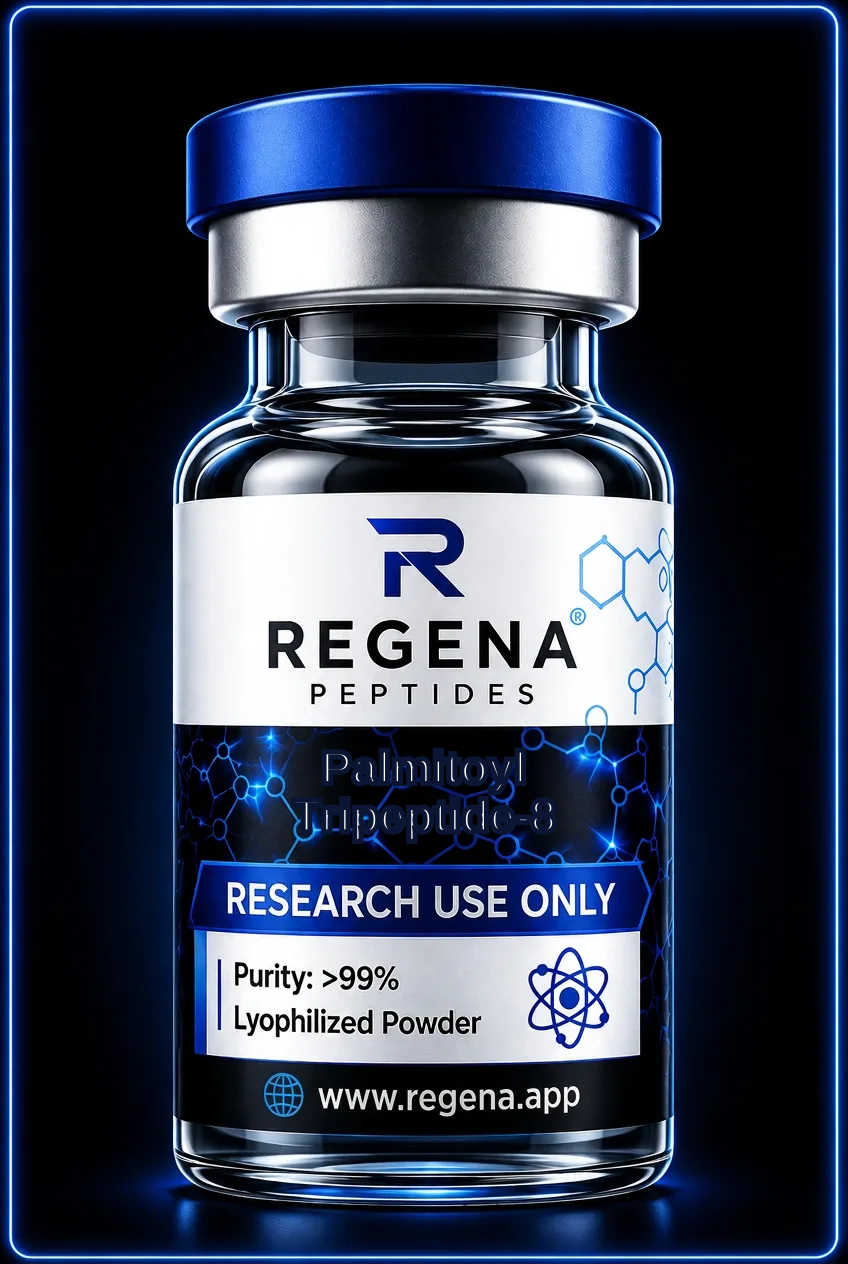
Cosmetic · Lipopeptide
Palmitoyl Tripeptide-8
Palmitoyl Tripeptide-8 is a synthetic lipopeptide used in skin cell models to investigate its potential to modulate neurogenic inflammation.
- Length
- 3 amino acids
- Half-life
- Not well characterised
- Mechanism
- This peptide is designed to interact with neuropeptide signaling pathways to reduce inflammatory markers in stimulated skin cell cultures.
- Studied in
- It is used in vitro to study the modulation of neurogenic inflammation, particularly its effect on cytokine release following exposure to irritants.
About Palmitoyl Tripeptide-8
Palmitoyl Tripeptide-8 is a biomimetic lipopeptide, created by attaching a palmitoyl fatty acid to a tripeptide sequence. This lipid modification enhances its stability and affinity for lipid-rich environments, such as cell membranes, which is relevant for its use in cell-based assays. The peptide portion is engineered to interfere with specific inflammatory signaling cascades.
The primary research application for this peptide is in the study of neurogenic inflammation in skin cell models. In vitro experiments typically involve challenging keratinocytes or neurons with a stimulus (e.g., substance P) and measuring the subsequent release of pro-inflammatory cytokines like IL-1 and TNF-α. Palmitoyl Tripeptide-8 is added to these systems to evaluate its capacity to downregulate these inflammatory responses.
Laboratory notes
- Due to the palmitoyl group, this peptide is lipophilic and requires solubilization in an appropriate organic solvent (e.g., DMSO) before dilution into aqueous media.
- Verify the stability and solubility of the final working concentration in your specific culture medium to avoid precipitation.
- Control experiments should include the vehicle (solvent) alone to account for any effects independent of the peptide.
Storage and reconstitution basics: storage guide.
Questions about Palmitoyl Tripeptide-8
What is the purpose of the palmitoyl group?
The palmitoyl fatty acid chain is added to increase the peptide's lipophilicity, improving its interaction with cell membranes and enhancing stability.
What type of inflammation is Palmitoyl Tripeptide-8 used to study?
It is primarily used as a tool in laboratory models to investigate neurogenic inflammation, which involves the interaction between nerve cells and immune responses in the skin.
Why is this peptide sold for research use only?
Regena products, including Palmitoyl Tripeptide-8, are intended exclusively for in-vitro laboratory research and are not for human or animal consumption or administration.
Is Palmitoyl Tripeptide-8 for human use?
No. It is supplied strictly for in-vitro laboratory research and is not for human or animal consumption.
Related research peptides
All products are sold for laboratory research use only. Not for human consumption, not a medicine, not for diagnosing, treating or preventing any condition.