
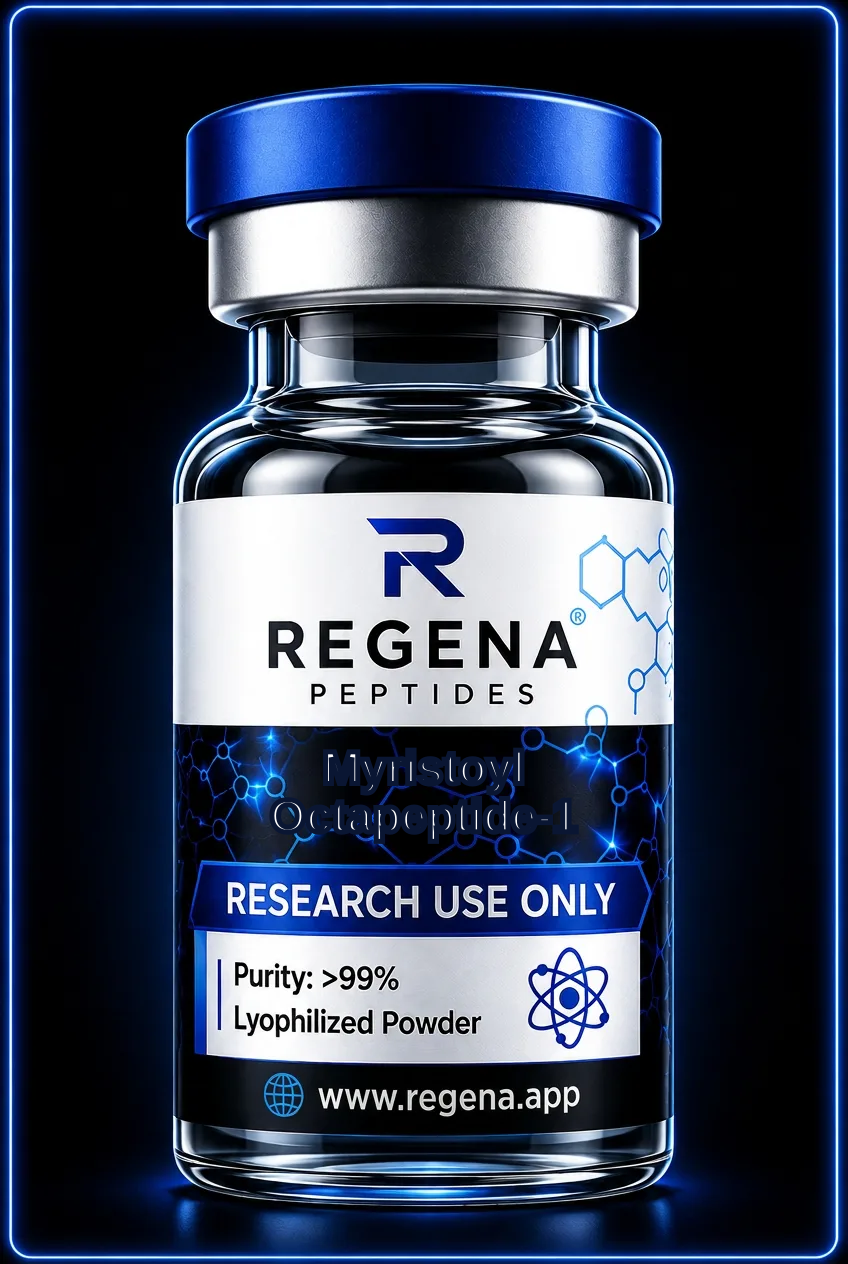
Cosmetic · Lipopeptide
Myristoyl Octapeptide-1
Myristoyl Octapeptide-1 is a synthetic lipopeptide used in hair follicle cell culture models to study Wnt/β-catenin signaling.
- Length
- 8 amino acids
- Half-life
- Not well characterised
- Mechanism
- The proposed mechanism involves the modulation of Wnt/β-catenin signaling pathways in dermal papilla cells to influence hair follicle-related gene expression.
- Studied in
- This peptide is employed in ex vivo hair follicle culture models and in vitro dermal papilla cell assays to study its effects on cell proliferation and differentiation.
About Myristoyl Octapeptide-1
Myristoyl Octapeptide-1 is a synthetic lipopeptide consisting of an eight-amino-acid sequence conjugated to a myristoyl fatty acid. The myristoylation enhances the peptide's stability and ability to penetrate cellular structures in experimental models. The peptide sequence is designed to interact with specific cellular signaling pathways.
Its primary use in a research context is for studying the biology of the hair follicle. In vitro assays with human dermal papilla cells or ex vivo hair follicle organ cultures utilize this peptide to investigate its influence on the Wnt/β-catenin signaling pathway. Researchers measure changes in key markers like β-catenin levels and the expression of downstream genes to understand its role in hair follicle cell dynamics.
Laboratory notes
- Myristoylation confers significant lipophilicity; reconstitution typically requires a solvent like DMSO before further dilution.
- For hair follicle organ culture experiments, ensure proper maintenance of culture conditions to maintain follicle viability throughout the study period.
- Use of qPCR to measure expression of Wnt pathway target genes (e.g., LEF1, Axin2) is a common method for quantifying peptide activity.
Storage and reconstitution basics: storage guide.
Questions about Myristoyl Octapeptide-1
What cellular pathway is Myristoyl Octapeptide-1 used to investigate?
It is primarily used to study the Wnt/β-catenin signaling pathway, particularly in cells related to the hair follicle, like dermal papilla cells.
What is the function of myristoylation on this peptide?
The addition of a myristoyl group increases the peptide's lipophilicity and stability, facilitating its use in cell-based experimental systems.
What type of models use this peptide?
It is typically used in in-vitro assays with dermal papilla cells and in ex-vivo organ culture models of hair follicles.
Is Myristoyl Octapeptide-1 for human use?
No. It is supplied strictly for in-vitro laboratory research and is not for human or animal consumption.
Related research peptides
All products are sold for laboratory research use only. Not for human consumption, not a medicine, not for diagnosing, treating or preventing any condition.