
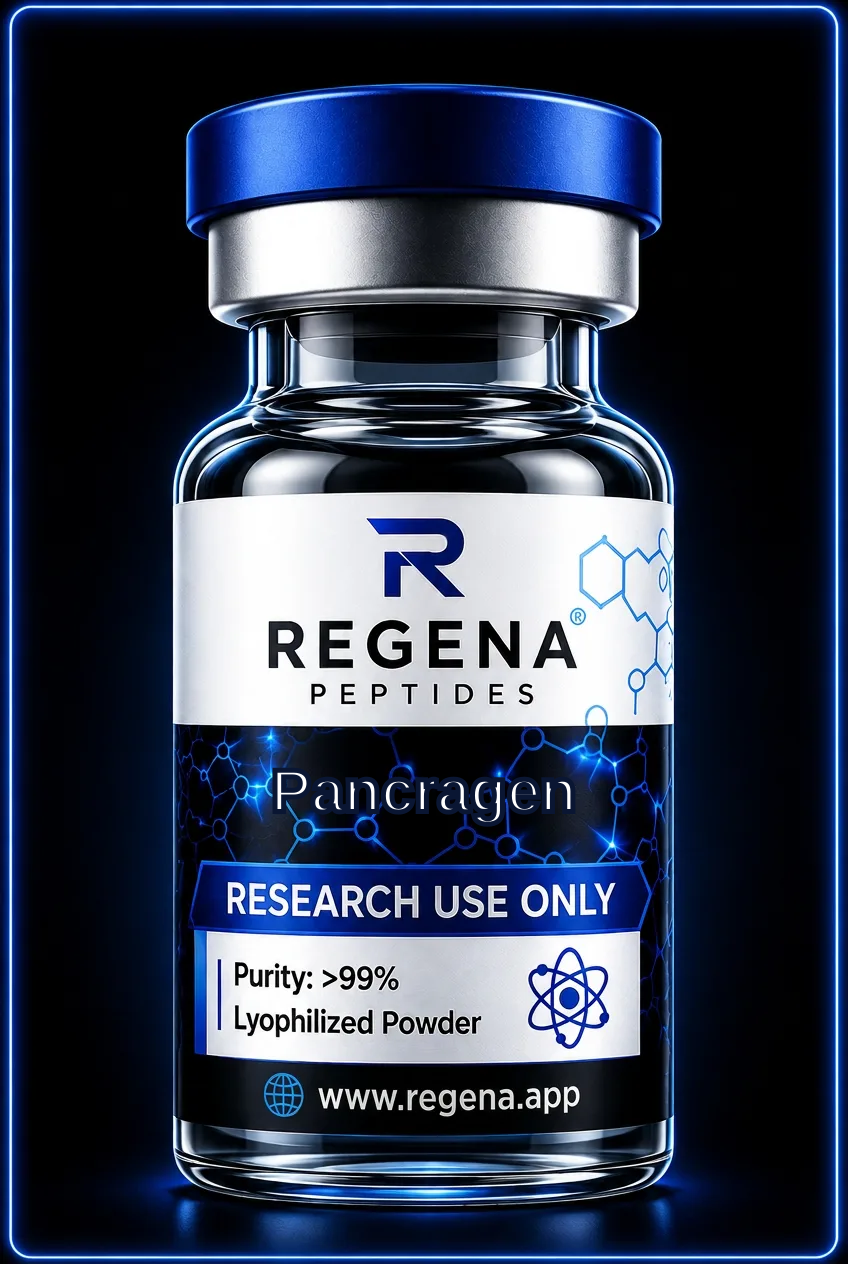
Metabolic · Synthetic tetrapeptide studied as a peptide bioregulator
Pancragen
Also known as KEDW; Lys-Glu-Asp-Trp
The KEDW tetrapeptide, investigated in pancreatic experimental models with an unresolved direct mechanism.
- Length
- 4 amino acids
- Half-life
- Not well characterised
- Mechanism
- Pancragen has been investigated for effects on pancreatic-cell function and gene-expression markers. A direct binding target and a specific receptor-mediated signalling mechanism have not been established.
- Studied in
- Reported experimental work uses pancreatic-cell or tissue preparations and animal models to examine pancreatic endocrine markers and metabolic regulation.
About Pancragen
Pancragen is the synthetic tetrapeptide Lys-Glu-Asp-Trp, abbreviated KEDW, described in the short-peptide bioregulator literature. Its pancreatic research association should not be mistaken for proof that it is an endogenous pancreatic hormone or a fragment of a recognised hormone precursor. The sequence includes tryptophan, which provides an aromatic spectroscopic feature absent from many related short peptides. Product documentation should establish sequence and terminal chemistry rather than relying on the research name alone.
Experimental investigations address pancreatic functional markers, endocrine signalling readouts and gene-expression changes in laboratory preparations and animal models. These endpoints can involve several interacting cell types and do not identify a direct receptor target. Evidence for tissue specificity or direct nucleic-acid recognition would require additional mechanistic experiments. When comparing reports, investigators should distinguish intact-tissue observations from isolated-cell findings and check whether the same chemical form, analytical purity and experimental controls were used.
Laboratory notes
- Monitor tryptophan oxidation during stability assessment and avoid unnecessary light or oxidative exposure during sample preparation.
- Account for aromatic absorbance and fluorescence when selecting optical assays; include peptide-only blanks where relevant.
- Document pancreatic cell-type composition and use orthogonal molecular and functional readouts rather than relying on a single secreted marker.
Storage and reconstitution basics: storage guide.
Questions about Pancragen
Is Pancragen a recognised pancreatic hormone?
No. It is described as a synthetic tetrapeptide studied in pancreatic experimental systems, not as an established endogenous hormone.
Does KEDW have a confirmed receptor?
A specific receptor target has not been established. Changes in endocrine markers do not by themselves demonstrate direct receptor binding.
Why is its tryptophan residue analytically relevant?
Tryptophan contributes ultraviolet absorbance and intrinsic fluorescence and can undergo oxidation. These properties matter for optical assay controls and stability testing.
Is Pancragen for human use?
No. It is supplied strictly for in-vitro laboratory research and is not for human or animal consumption.
Related research peptides
All products are sold for laboratory research use only. Not for human consumption, not a medicine, not for diagnosing, treating or preventing any condition.