
Metabolic · Prohormone-derived regulatory peptide
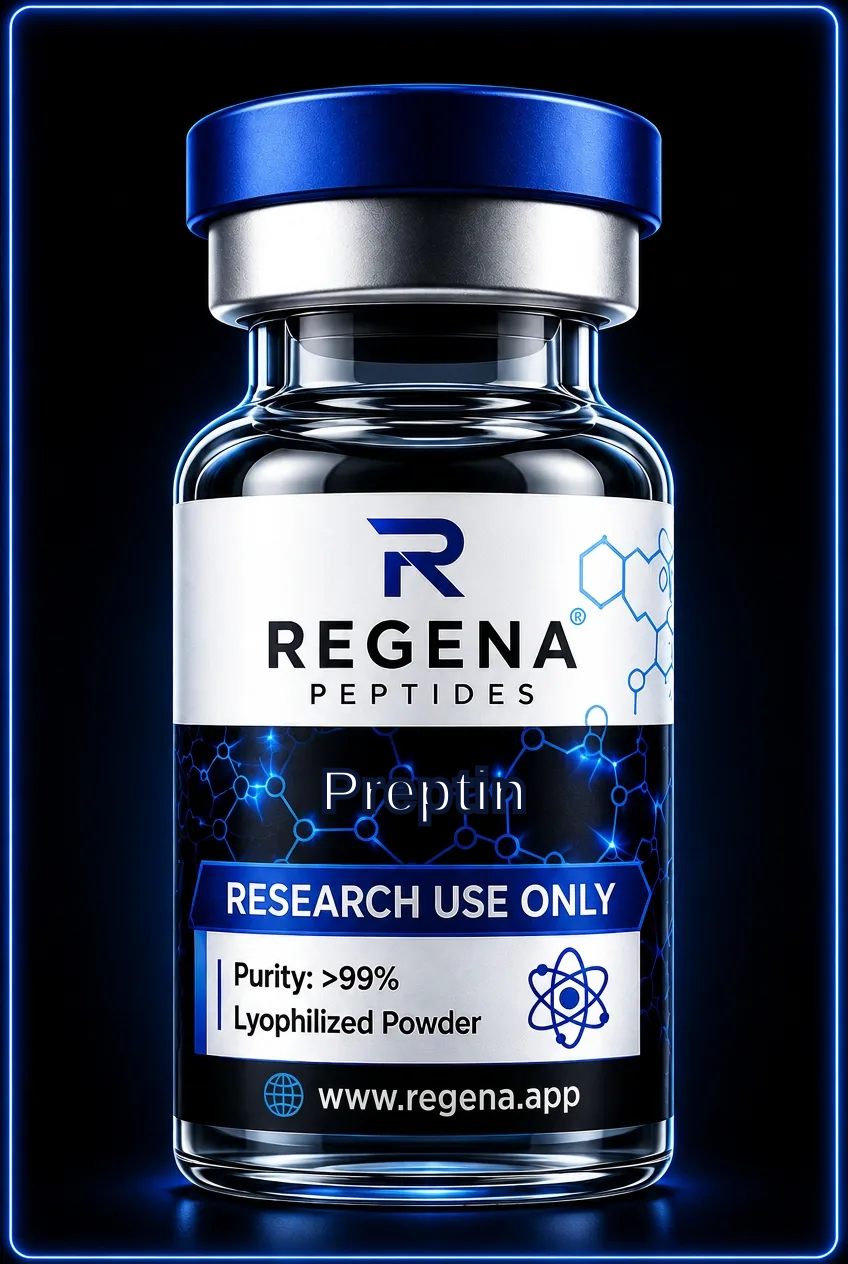
Preptin
Also known as Pro-IGF-II-derived preptin
A 34-residue pro-IGF-II fragment investigated in pancreatic secretion assays and osteoblast cell models.
- Length
- 34 amino acids
- Half-life
- Not well characterised
- Mechanism
- Preptin potentiates glucose-stimulated insulin secretion in experimental pancreatic preparations and is associated with calcium-dependent signalling. A specific cognate receptor has not been established, and its origin within pro-IGF-II does not demonstrate binding to IGF receptors.
- Studied in
- Pancreatic beta-cell lines, isolated islets and osteoblast cultures are used to examine secretion dynamics, intracellular signalling and cell differentiation.
About Preptin
Preptin was isolated from secretory granules of a murine pancreatic beta-cell line and described in 2001. It is a 34-amino-acid fragment of the E-domain of pro-insulin-like growth factor II, commonly mapped to pro-IGF-II residues 69–102 when the signal peptide is excluded from numbering. This region lies outside mature IGF-II. Preptin is therefore a distinct processing product rather than a shortened version of the mature growth factor, and species-specific sequences should be checked.
Its initial characterisation focused on co-secretion with insulin and amplification of glucose-stimulated secretion in pancreatic experimental systems. Subsequent work extended to osteoblast cultures, where researchers examine proliferation, differentiation markers and intracellular signalling. Calcium-dependent processes and kinase pathways have been implicated, but no specific preptin receptor is firmly established. Findings from pancreatic and bone-cell preparations should remain model-specific, particularly when comparing full-length preptin with shorter fragments that may have different stability or activity.
Laboratory notes
- Record the species sequence and numbering convention; inclusion of the signal peptide changes the stated precursor coordinates.
- Control glucose concentration, basal secretion and cell viability in pancreatic assays to distinguish stimulus-dependent responses from nonspecific release.
- Confirm intact-peptide recovery during prolonged incubations, particularly in serum-containing media where proteolytic processing may occur.
Storage and reconstitution basics: storage guide.
Questions about Preptin
Is preptin a fragment of mature IGF-II?
No. It originates from the E-domain of the pro-IGF-II precursor, outside the sequence retained in mature IGF-II.
Does preptin necessarily bind an IGF receptor?
No. Shared precursor origin is not evidence of shared receptor binding, and a specific cognate receptor for preptin remains unconfirmed.
Why are glucose-matched controls important?
Preptin is studied as a modifier of glucose-stimulated secretion. Differences in ambient glucose can change the baseline response and obscure peptide-specific effects.
Is Preptin for human use?
No. It is supplied strictly for in-vitro laboratory research and is not for human or animal consumption.
Related research peptides
All products are sold for laboratory research use only. Not for human consumption, not a medicine, not for diagnosing, treating or preventing any condition.