
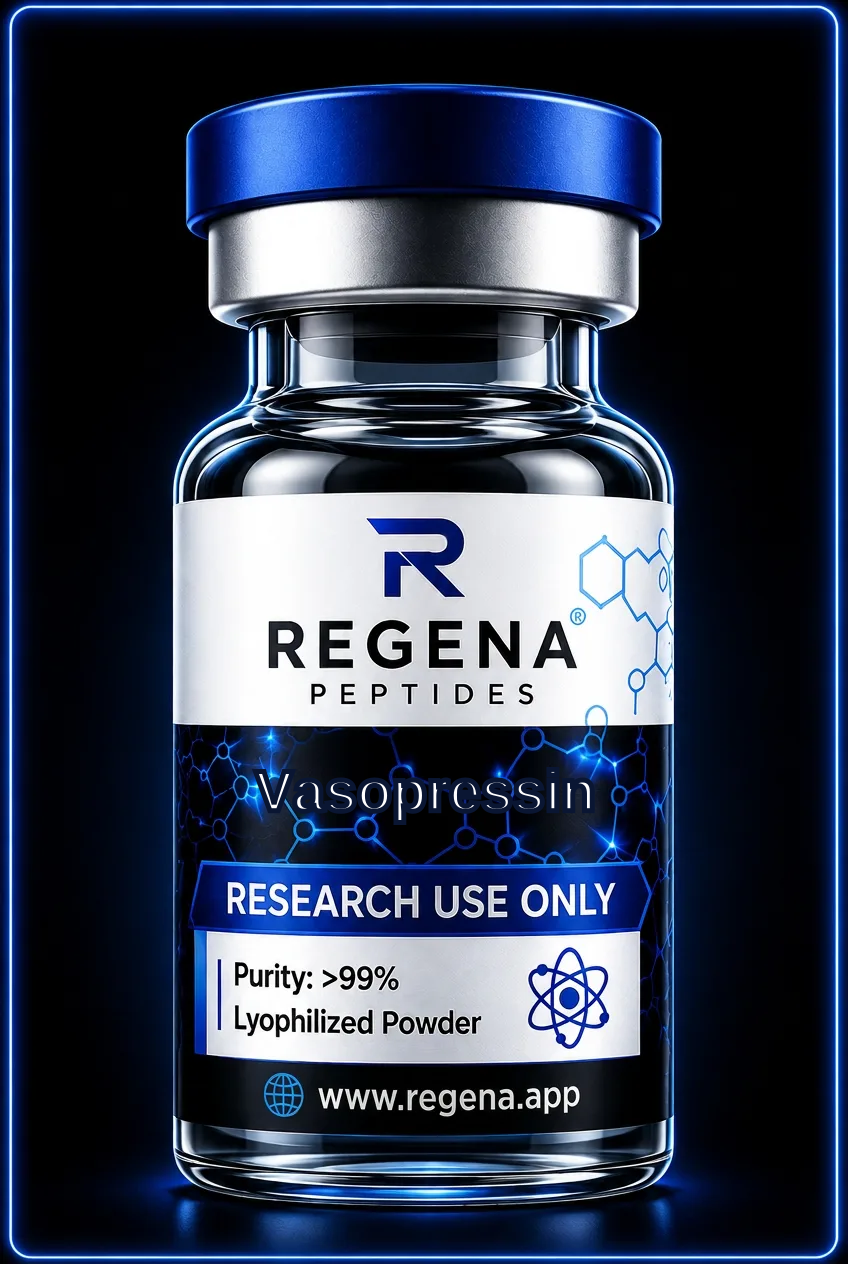
Hormone · Peptide Hormone
Vasopressin
Also known as Arginine Vasopressin (AVP), Antidiuretic Hormone (ADH)
A 9-amino-acid hormone, also called ADH, that regulates water balance, blood pressure, and is studied for its role in social behavior.
- Length
- 9 amino acids
- Half-life
- 10-20 minutes in plasma
- Mechanism
- A nonapeptide that regulates water retention by binding to V2 receptors in the kidneys and modulates blood pressure by binding to V1a receptors on vascular smooth muscle.
- Studied in
- Investigated in laboratory settings for its roles in osmoregulation, blood pressure control, social behavior, and memory formation.
About Vasopressin
Vasopressin, also known as arginine vasopressin (AVP) or antidiuretic hormone (ADH), is a nine-amino-acid peptide hormone synthesized in the hypothalamus and released from the posterior pituitary. Its structure includes a disulfide bond between two cysteine residues, forming a cyclic 6-amino-acid ring with a 3-amino-acid tail. This structure is very similar to that of oxytocin, differing by only two amino acids.
This hormone has two primary physiological functions defined by its receptor subtypes. By acting on V2 receptors in the renal collecting ducts, it increases water reabsorption, thus concentrating urine and decreasing plasma osmolality. By acting on V1a receptors on vascular smooth muscle, it causes vasoconstriction. Beyond these classical roles, vasopressin is a subject of extensive neuroscience research for its modulation of social recognition, bonding, and aggression in various animal models. This molecule is a reference compound with a clinical history.
Laboratory notes
- The disulfide bridge between Cys1 and Cys6 is essential for its biological activity.
- Structurally very similar to oxytocin, differing at positions 3 and 8, which can lead to some cross-reactivity at high concentrations.
- The term 'arginine vasopressin' specifies the human/mammalian form, as some species have lysine at position 8 (lysine vasopressin).
Storage and reconstitution basics: storage guide.
Questions about Vasopressin
What is the difference between Vasopressin and ADH?
There is no difference. Vasopressin and Antidiuretic Hormone (ADH) are two names for the same peptide. 'ADH' describes its function in the kidneys, while 'Vasopressin' describes its effect on blood pressure.
What are the main receptors for Vasopressin?
The main receptors are V1a, V1b, and V2. V1a receptors are involved in vasoconstriction and social behavior, V1b in pituitary function, and V2 in water reabsorption in the kidneys.
Is Vasopressin related to Oxytocin?
Yes, they are structurally very similar nonapeptides that differ by only two amino acids. Both are synthesized in the hypothalamus and released from the posterior pituitary.
Is Vasopressin for human use?
No. It is supplied strictly for in-vitro laboratory research and is not for human or animal consumption.
Related research peptides
All products are sold for laboratory research use only. Not for human consumption, not a medicine, not for diagnosing, treating or preventing any condition.