
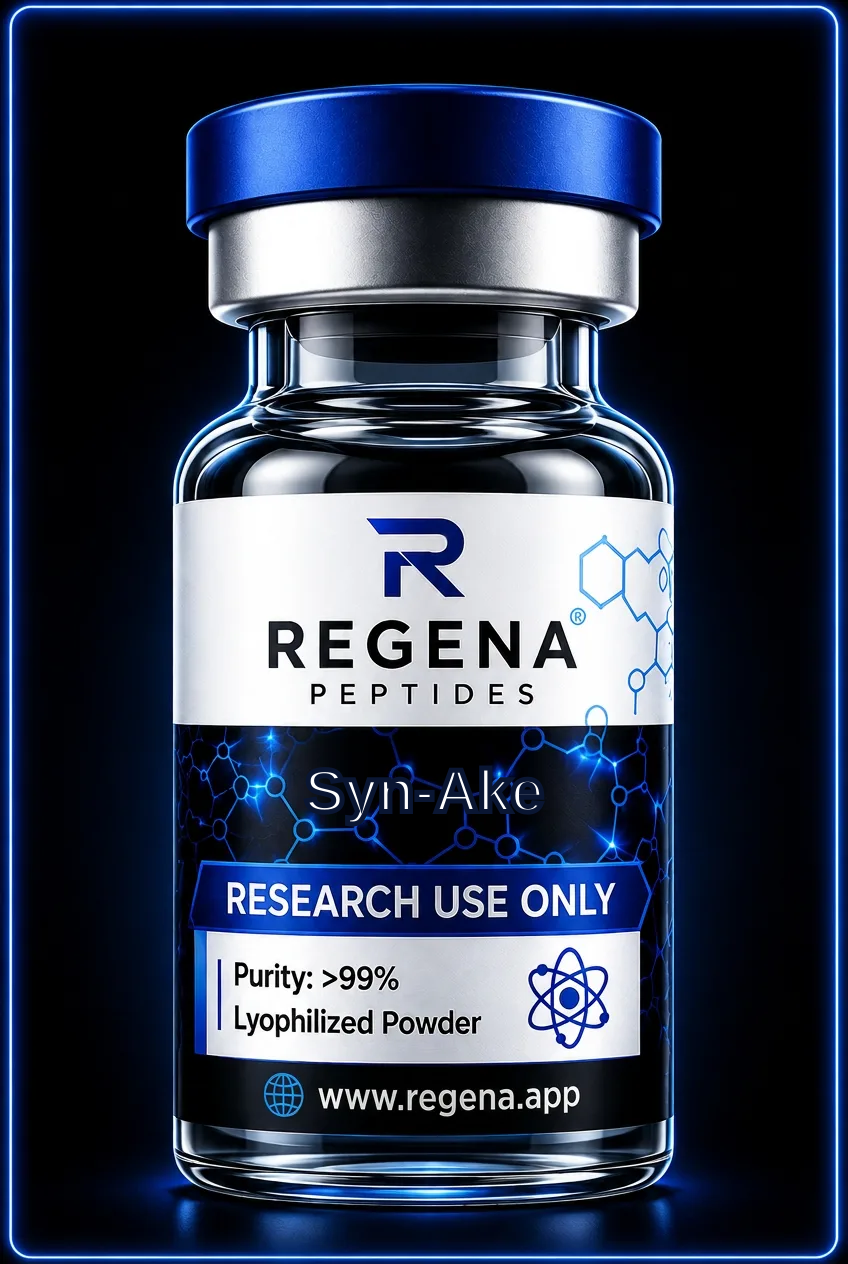
Cosmetic · Synthetic Peptide Analogue
Syn-Ake
Also known as Dipeptide Diaminobutyroyl Benzylamide Diacetate
A synthetic tripeptide analogue that acts as a competitive antagonist of the muscle nicotinic acetylcholine receptor, studied for its muscle-relaxing properties in vitro.
- Length
- A tripeptide derivative
- Half-life
- Not well characterised
- Mechanism
- This small synthetic peptide functions as a reversible antagonist of the muscle-type nicotinic acetylcholine receptor (nAChR), blocking ion flow and preventing depolarization.
- Studied in
- Ex vivo and in vitro models, such as innervated muscle preparations or cells expressing nAChR, are used to study its ability to inhibit muscle cell contraction.
About Syn-Ake
Syn-Ake is the trade name for Dipeptide Diaminobutyroyl Benzylamide Diacetate, a small synthetic peptide derivative. It was designed as a functional mimic of Waglerin-1, a peptide component found in the venom of the temple viper, *Tropidolaemus wagleri*. Despite its venom-inspired origin, it is a synthetically produced, non-toxic molecule for laboratory research.
Its mechanism of action is post-synaptic, unlike SNARE-inhibiting peptides. It acts as a competitive antagonist at the muscle-type nicotinic acetylcholine receptor (nAChR). By binding to the receptor, it prevents acetylcholine from binding, which in turn blocks the influx of sodium ions and prevents the depolarization of the muscle cell membrane. This blockade of the neuromuscular signal is investigated in vitro for its muscle-relaxing effects.
Laboratory notes
- The chemical name is Dipeptide Diaminobutyroyl Benzylamide Diacetate.
- Unlike SNARE inhibitors (e.g., Argireline), this peptide acts post-synaptically on the muscle cell's receptor.
- Its activity can be quantified using electrophysiological techniques (e.g., patch-clamp) on cells expressing nAChR to measure the inhibition of acetylcholine-induced currents.
Storage and reconstitution basics: storage guide.
Questions about Syn-Ake
Is Syn-Ake a venom?
No. It is a small, synthetic peptide created in a laboratory. Its structure was inspired by a peptide found in viper venom, but it is not a venom itself and does not contain venom components.
How does its mechanism differ from Leuphasyl (Pentapeptide-18)?
Syn-Ake acts post-synaptically, blocking acetylcholine receptors on the muscle cell. Leuphasyl acts pre-synaptically, reducing the neuron's excitability and thus decreasing the amount of acetylcholine released in the first place. They target opposite sides of the neuromuscular junction.
What does 'antagonist of the nAChR' mean?
It means the peptide binds to the nicotinic acetylcholine receptor (nAChR) but does not activate it. By occupying the binding site, it physically blocks the natural ligand, acetylcholine, from activating the receptor and causing muscle contraction.
Is Syn-Ake for human use?
No. It is supplied strictly for in-vitro laboratory research and is not for human or animal consumption.
Related research peptides
All products are sold for laboratory research use only. Not for human consumption, not a medicine, not for diagnosing, treating or preventing any condition.